
Your ceiling stains aren’t just ugly – they’re warning signs of attic water damage that could cost thousands if ignored. In Cincinnati’s climate, where freeze-thaw cycles and heavy spring rains are common, attic leaks develop silently for months before showing up as brown spots on your ceiling. By the time you see that water mark, the damage in your attic is already severe. How to Get Your Cincinnati Roof Replaced After a Major Hail Storm.
Water damage in your attic doesn’t stay contained. It spreads through wood framing, destroys insulation, and creates perfect conditions for mold growth. Cincinnati’s high humidity makes this worse, turning small leaks into major structural problems within weeks. The good news? You can spot these warning signs early if you know what to look for. Signs You Need a New Roof.
Visual Indicators on Wood and Rafters
Start by examining your attic’s wooden structures. Dark water stains on plywood decking create a characteristic ‘tide mark’ pattern – darker rings where water repeatedly enters during storms. These rings often form concentric circles, showing the path water takes as it spreads across the surface.. Read more about How Poor Drip Edge Installation Causes Water to Rot Your Cincinnati Home.
Soft or spongy rafters indicate rot has already begun. Press firmly with a screwdriver – if the wood gives way or feels mushy, the structural integrity is compromised. This is especially common in older Cincinnati homes in neighborhoods like Hyde Park and Oakley, where original wood framing has weathered decades of Ohio weather cycles. Ohio Residential Code Chapter 9.
White, black, or gray fuzzy spots on wood surfaces are mold colonies. Cincinnati’s humidity creates ideal conditions for attic mold growth once moisture is present. These colonies spread rapidly, releasing spores that can affect your home’s air quality.

Diagram showing how water stains form concentric rings on attic decking, with mold growth patterns and structural weakening progression.. Read more about Common Signs Your Roof Decking is Getting Soft in Finneytown.
Insulation and Flooring Red Flags
Walk carefully across your attic floor – compressed or clumped insulation signals past water exposure. Fiberglass insulation that’s been wet loses its R-value and becomes a breeding ground for mold. In Cincinnati homes, cellulose insulation often turns dark gray or black when contaminated with water and mold.
Check for musty odors when you first enter the attic. Cincinnati’s clay-heavy soil contributes to basement moisture issues that can rise through your home’s structure. A damp, earthy smell indicates active moisture problems even if you don’t see visible water.
Look for areas where insulation has been pushed aside or disturbed. This often happens when animals seek shelter – a common issue in Cincinnati’s wooded suburbs like Anderson Township and Indian Hill. Pest damage creates openings for water infiltration.
Hardware and Structural Signs
Rusted roofing nails protruding through the decking are called ‘shiners’ in the roofing trade. These nails missed the framing during installation and create perfect entry points for water. The rust indicates these have been leaking for some time – a serious issue in Cincinnati’s freeze-thaw climate where water expands and contracts in these tiny openings. Is Metal Roofing Worth the Investment for Your Anderson Township Home?.
Check around exhaust fans and plumbing vents. Water dripping from these areas during rain indicates failed flashing or deteriorated seals. Cincinnati building codes (ORC Chapter 9) require specific flashing techniques around these penetrations, but improper installation is common in homes built before 2010.
Wet spots around chimneys or skylights point to flashing failure. The Ohio valley’s high winds can lift flashing edges, allowing water to seep underneath. This is particularly problematic for homes near the Ohio River where wind patterns are intensified.
Cincinnati-Specific Considerations
Ice damming is a major winter threat in Cincinnati. When snow melts on warm roof sections and refreezes at the eaves, it creates ice dams that force water under shingles. Hamilton County building codes require ice barrier installation (R905.1.2) in our climate zone, but many older homes lack this protection.
Condensation vs. actual leaks confuses many Cincinnati homeowners. Our high humidity means attic condensation can mimic leak damage. The key difference: condensation appears uniformly across surfaces and worsens during humid summer nights, while leaks create isolated, worsening stains after rain.. Read more about Understanding the Difference Between a Roof Leak and Simple Condensation.
Recent wind or hail damage is common in the Tri-State area. Cincinnati sits in Ohio’s ‘hail alley’ where summer thunderstorms frequently produce damaging hail. Even small hail impacts can crack shingle seals, creating vulnerabilities that water exploits months later.
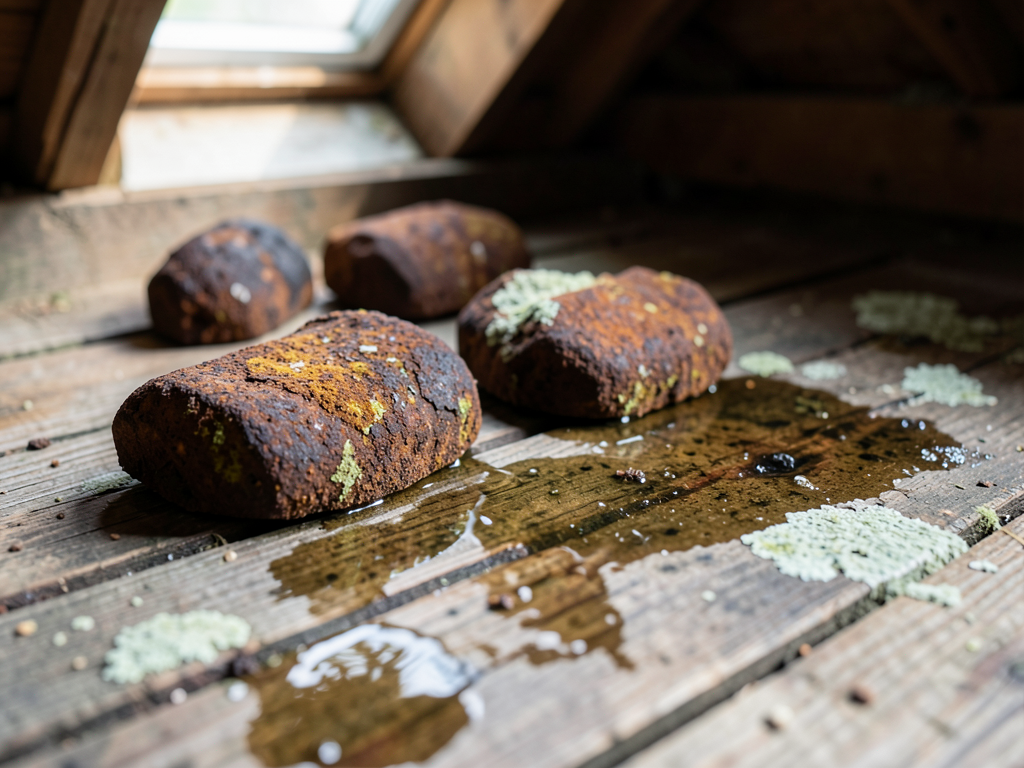
Photo showing rusted ‘shiners’ on attic decking, with close-up of water-stained plywood and mold growth patterns common in Cincinnati attics.
The Attic Health Checklist
Perform this inspection twice yearly – spring and fall. Cincinnati’s seasonal transitions are when most attic damage becomes apparent.
Visual Inspection Steps:
- Check all wood surfaces for dark stains or discoloration
- Press wood with a screwdriver to test for rot
- Examine insulation for compression, discoloration, or clumping
- Look for rusted nails or metal hardware
- Check around all roof penetrations (vents, chimneys, fans)
- Sniff for musty or damp odors
- Look for daylight through roof boards (indicates holes)
Moisture Testing:
Use a moisture meter on suspicious areas. Readings above 20% indicate active moisture problems. This is crucial in Cincinnati where seasonal humidity variations can mask ongoing issues.
Structural Assessment:
Check for sagging roof decking or rafters. Cincinnati’s clay soil causes foundation settling that can stress roof structures over time. Sagging indicates water has compromised structural integrity.
When to Call a Professional
Call immediately if you find any of these conditions:
- Active water dripping or standing water
- Extensive mold covering more than 10 square feet
- Soft or spongy wood anywhere in the attic
- Daylight visible through roof boards
- Musty odors accompanied by visible moisture
Cincinnati’s building codes require professional assessment for any structural damage. DIY repairs often miss underlying issues that continue causing damage. EPA Mold Guidelines.
Photo of a professional roofer using thermal imaging camera in an attic to detect hidden moisture patterns behind walls and under insulation.. Read more about The Hidden Danger of Leaving Old Satellite Dishes Bolted to Your Roof.
Preventing Future Damage
Prevention starts with proper attic ventilation. Cincinnati homes need balanced intake and exhaust vents to prevent moisture buildup. The ‘rule of thumb’ is 1 square foot of vent per 300 square feet of attic space, but local conditions may require more.
Ice and water shield installation is crucial for Cincinnati homes. This rubberized membrane prevents water infiltration even when ice dams form. Building codes require it in our climate zone, but many pre-2000 homes lack adequate protection.
Regular gutter maintenance prevents ice dam formation. Clogged gutters cause water to back up under shingles during winter thaws. Cincinnati’s heavy spring rains make this even more critical.
Health Implications
Ohio-specific mold types commonly found in damp attics include Stachybotrys (black mold) and Aspergillus. These release mycotoxins that can cause respiratory issues, especially problematic for Cincinnati residents with existing conditions like asthma or allergies.
Black mold exposure symptoms include persistent coughing, eye irritation, and fatigue. Children and elderly residents are particularly vulnerable. Cincinnati’s already high humidity levels make mold growth more aggressive once moisture is present.
Cost Factors for Repairs
Attic water damage repair costs in Cincinnati typically range from $1,500 to $8,000 depending on severity. Early detection keeps costs on the lower end. Factors affecting price include: Reliable Flat Roof Repair Services for Over-the-Rhine Business Owners.
| Damage Type | Typical Cost Range | Common in Cincinnati? |
|---|---|---|
| Surface mold removal | $500 – $2,000 | Yes |
| Insulation replacement | $1,000 – $3,500 | Yes |
| Structural repairs | $2,500 – $8,000+ | Common in older homes |
| Complete remediation | $3,000 – $10,000+ | Varies by neighborhood |
Older Cincinnati neighborhoods like Clifton and Over-the-Rhine often face higher repair costs due to historic building materials and stricter renovation requirements. Roof Repair Services.
Frequently Asked Questions
How often should I check my attic for water damage?
Inspect your attic twice yearly – spring and fall. Cincinnati’s seasonal transitions are when most attic damage becomes apparent. Also check after any major storm or if you notice ceiling stains.
Can I repair attic water damage myself?
Minor surface mold cleaning might be DIY-safe, but structural repairs require professionals. Cincinnati building codes require licensed contractors for any work affecting structural integrity or involving electrical systems.
How long does it take for water damage to cause ceiling stains?
Water can travel along rafters for weeks or months before appearing as ceiling stains. By the time you see the stain, the attic damage is already significant. This is why proactive inspection is crucial in Cincinnati’s climate.
Take Action Before It’s Too Late
Don’t wait for ceiling stains to appear. Cincinnati’s weather patterns make attic water damage a year-round threat. The freeze-thaw cycles, high humidity, and severe storms unique to our region create perfect conditions for hidden leaks to develop and spread.
A professional inspection can identify problems while they’re still manageable. Our 21-point attic inspection includes thermal imaging to detect hidden moisture, structural assessment, and ventilation evaluation specific to Cincinnati’s climate challenges.
Call (513) 223-5511 today to schedule your inspection. Early detection can save you thousands in repair costs and prevent the health hazards associated with mold growth. Don’t let a small leak turn into a major renovation project.
Pick up the phone and call (513) 223-5511 before the next storm hits. Your ceiling – and your wallet – will thank you.
You may also find this helpful. Navigating Insurance Denials for Roof Wind Damage in Green Township.
{
“@context”: “https://schema.org”,
“@type”: “BlogPosting”,
“headline”: “How to Spot Hidden Water Damage in Your Attic Before it Ruins Your Ceiling”,
“description”: “Learn how to identify attic water damage in Cincinnati homes with our expert guide. Spot mold, stains, and structural issues before they cause expensive ceiling repairs.”,
“wordCount”: 1516,
“datePublished”: “2026-04-07T07:19:00.000Z”,
“dateModified”: “2026-04-07T07:19:00.000Z”,
“inLanguage”: “en-US”,
“mainEntityOfPage”: {
“@type”: “WebPage”,
“@id”: “https://firstchoiceroofingcincinnati.com”
},
“publisher”: {
“@type”: “LocalBusiness”,
“name”: “First Choice Roofing Cincinnati”,
“url”: “https://firstchoiceroofingcincinnati.com”
},
“author”: {
“@type”: “Organization”,
“name”: “First Choice Roofing Cincinnati”,
“url”: “https://firstchoiceroofingcincinnati.com”
},
“image”: {
“@type”: “ImageObject”,
“url”: “https://firstchoiceroofingcincinnati.com/wp-content/uploads/2026/03/how-to-spot-hidden-water-damage-in-your-attic-befo-1.png”
}
}
{
“@context”: “https://schema.org”,
“@type”: “RoofingContractor”,
“name”: “First Choice Roofing Cincinnati”,
“url”: “https://firstchoiceroofingcincinnati.com”,
“address”: {
“@type”: “PostalAddress”,
“addressLocality”: “Cincinnati”
},
“areaServed”: {
“@type”: “City”,
“name”: “Cincinnati”
}
}
{
“@context”: “https://schema.org”,
“@type”: “FAQPage”,
“mainEntity”: [
{
“@type”: “Question”,
“name”: “How often should I check my attic for water damage?”,
“acceptedAnswer”: {
“@type”: “Answer”,
“text”: “Inspect your attic twice yearly – spring and fall. Cincinnati’s seasonal transitions are when most attic damage becomes apparent. Also check after any major storm or if you notice ceiling stains.”
}
},
{
“@type”: “Question”,
“name”: “Can I repair attic water damage myself?”,
“acceptedAnswer”: {
“@type”: “Answer”,
“text”: “Minor surface mold cleaning might be DIY-safe, but structural repairs require professionals. Cincinnati building codes require licensed contractors for any work affecting structural integrity or involving electrical systems.”
}
},
{
“@type”: “Question”,
“name”: “How long does it take for water damage to cause ceiling stains?”,
“acceptedAnswer”: {
“@type”: “Answer”,
“text”: “Water can travel along rafters for weeks or months before appearing as ceiling stains. By the time you see the stain, the attic damage is already significant. This is why proactive inspection is crucial in Cincinnati’s climate.”
}
}
]
}
{
“@context”: “https://schema.org”,
“@type”: “BreadcrumbList”,
“itemListElement”: [
{
“@type”: “ListItem”,
“position”: 1,
“name”: “Home”,
“item”: “https://firstchoiceroofingcincinnati.com”
},
{
“@type”: “ListItem”,
“position”: 2,
“name”: “Blog”,
“item”: “https://firstchoiceroofingcincinnati.com/blog”
},
{
“@type”: “ListItem”,
“position”: 3,
“name”: “How to Spot Hidden Water Damage in Your Attic Before it Ruins Your Ceiling”
}
]
}
{
“@context”: “https://schema.org”,
“@type”: “Service”,
“serviceType”: “Roofing”,
“provider”: {
“@type”: “LocalBusiness”,
“name”: “First Choice Roofing Cincinnati”,
“url”: “https://firstchoiceroofingcincinnati.com”
},
“areaServed”: {
“@type”: “City”,
“name”: “Cincinnati”
},
“description”: “Learn how to identify attic water damage in Cincinnati homes with our expert guide. Spot mold, stains, and structural issues before they cause expensive ceiling repairs.”
}