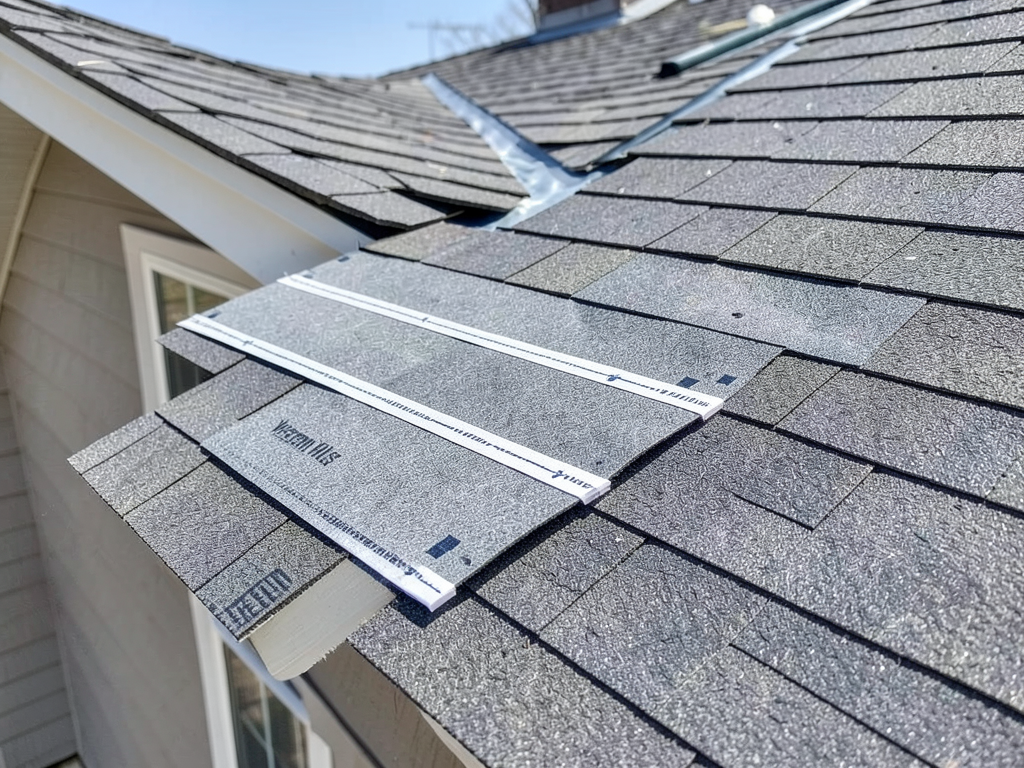

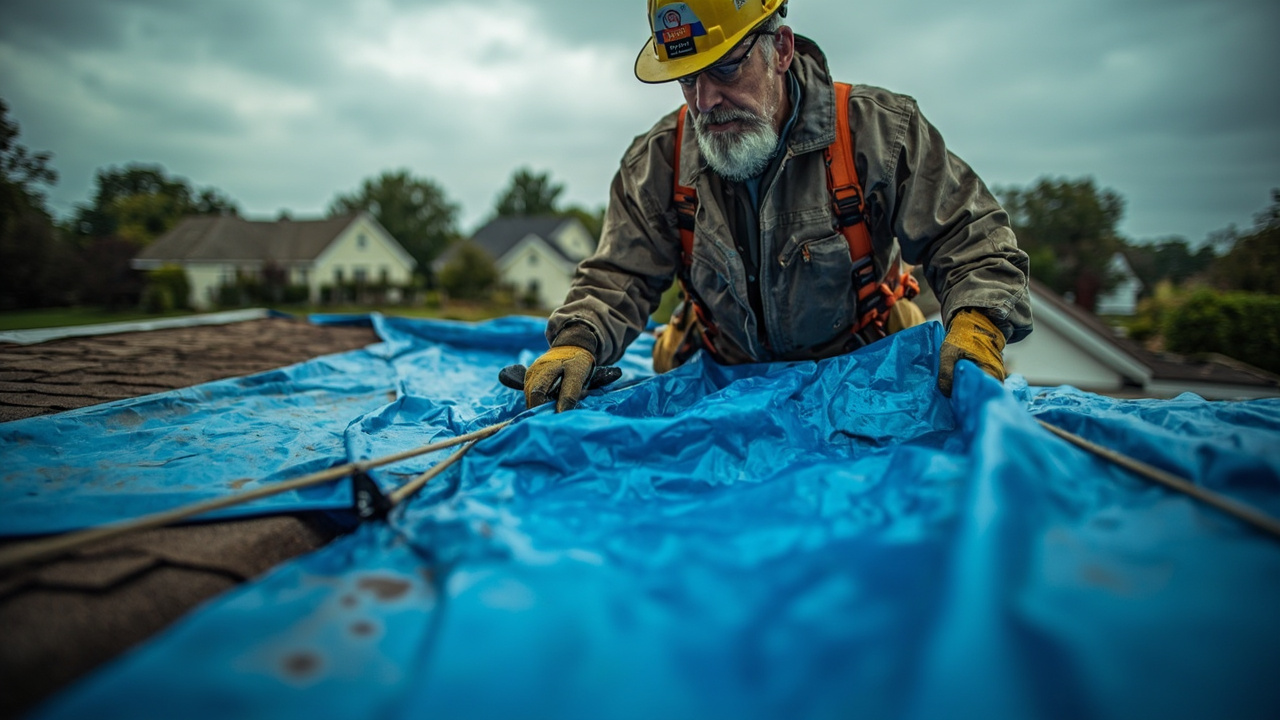
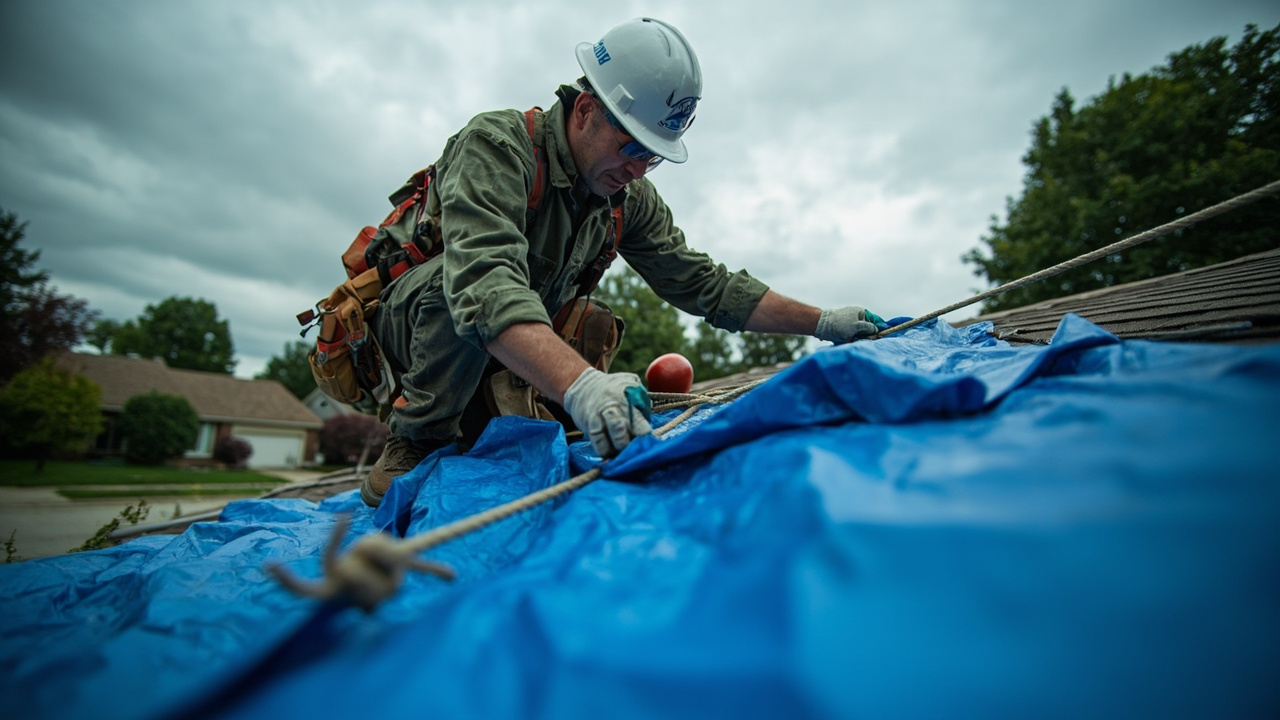
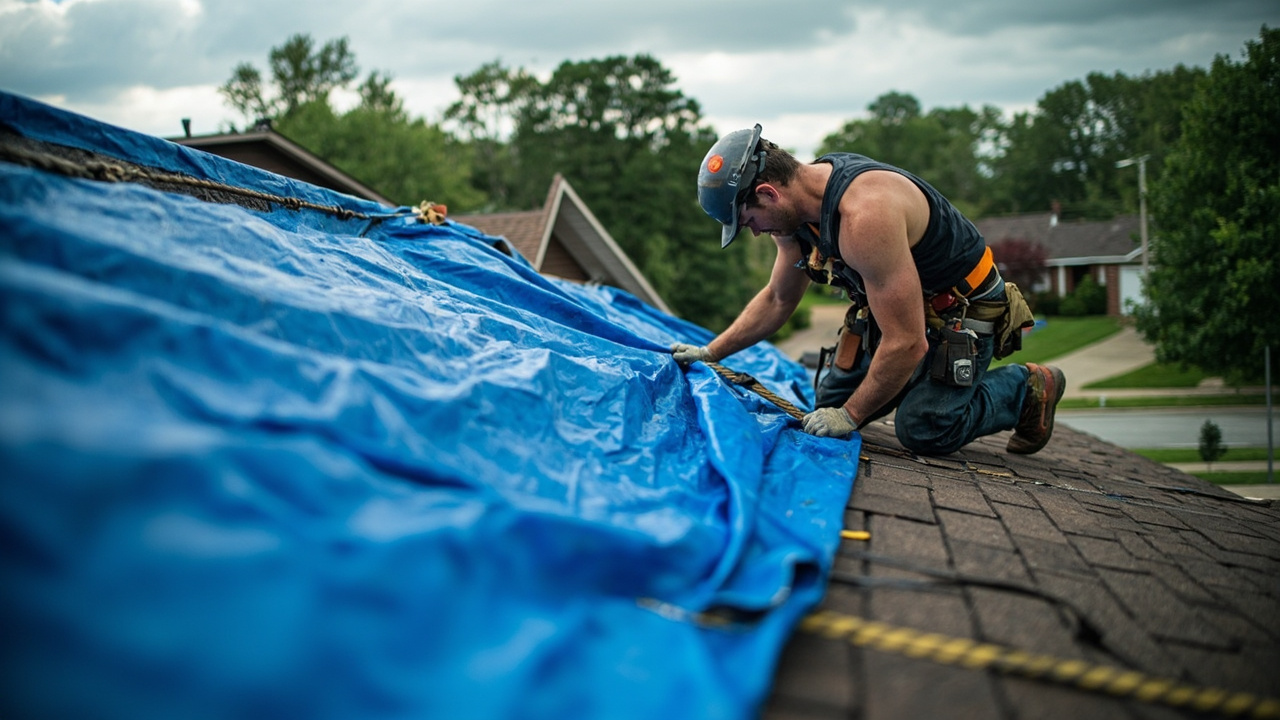
Cincinnati sits in the Ohio River Valley where weather systems collide with geographic intensity. Cold fronts sweep down from Canada and crash into warm, humid air pushing north from the Gulf. The result is severe thunderstorm frequency that ranks among the highest in Ohio. Spring and summer bring rotating supercells that spawn tornadoes and straight-line winds exceeding 70 mph. These wind events do not just damage weak roofs. They tear sections off structurally sound homes when gusts hit vulnerable points like ridge lines and roof-to-wall connections. The valley geography funnels and amplifies wind speed, creating localized damage patterns where one street gets hammered while the next block sees minor impact. Emergency roof tarp installation becomes essential because the next severe storm often arrives within 72 hours of the first, and exposed roof decking will not survive a second soaking.
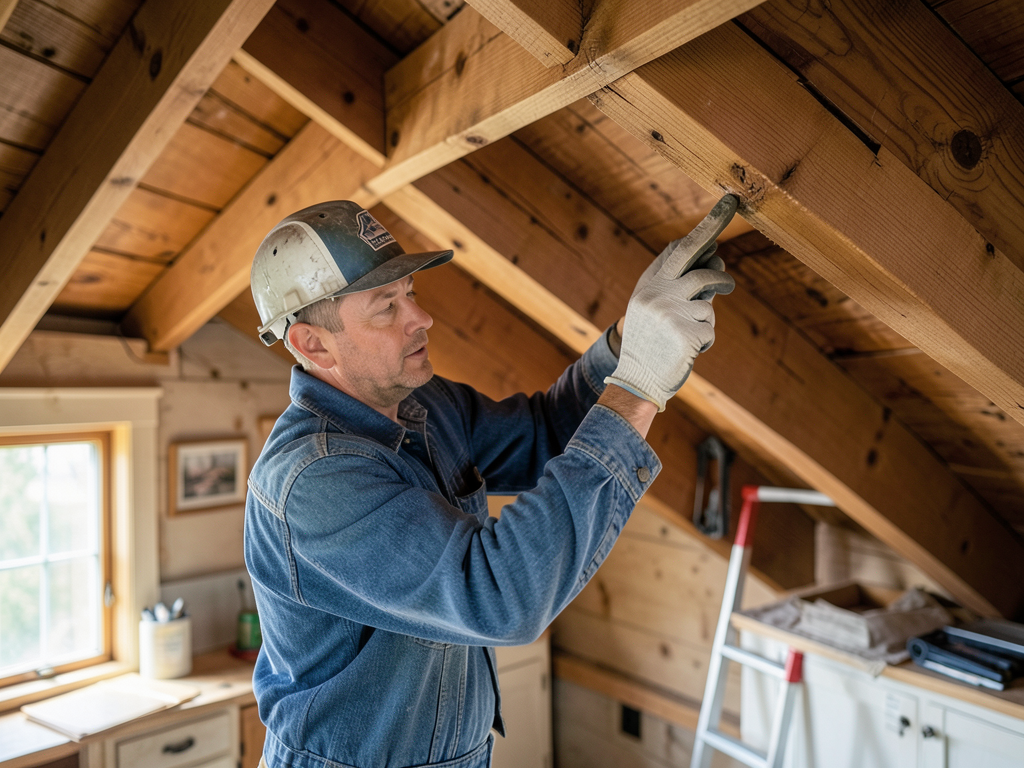
Hamilton County building codes require specific standards for temporary roof coverings after storm damage. Many homeowners do not realize that improper tarping can create liability issues or complicate insurance claims. First Choice Roofing Cincinnati understands local inspection requirements and documentation standards that adjusters expect. We have worked with every major insurance carrier that operates in this region. We know what they need to see in damage photos, how they calculate temporary repair costs, and what triggers disputes over coverage. Our crews tarp roofs throughout Greater Cincinnati, from the dense neighborhoods near the University of Cincinnati to the sprawling subdivisions in West Chester. That local presence means we understand the housing stock, the common failure points in different roof types, and the specific challenges that Cincinnati's climate creates for emergency repairs.