
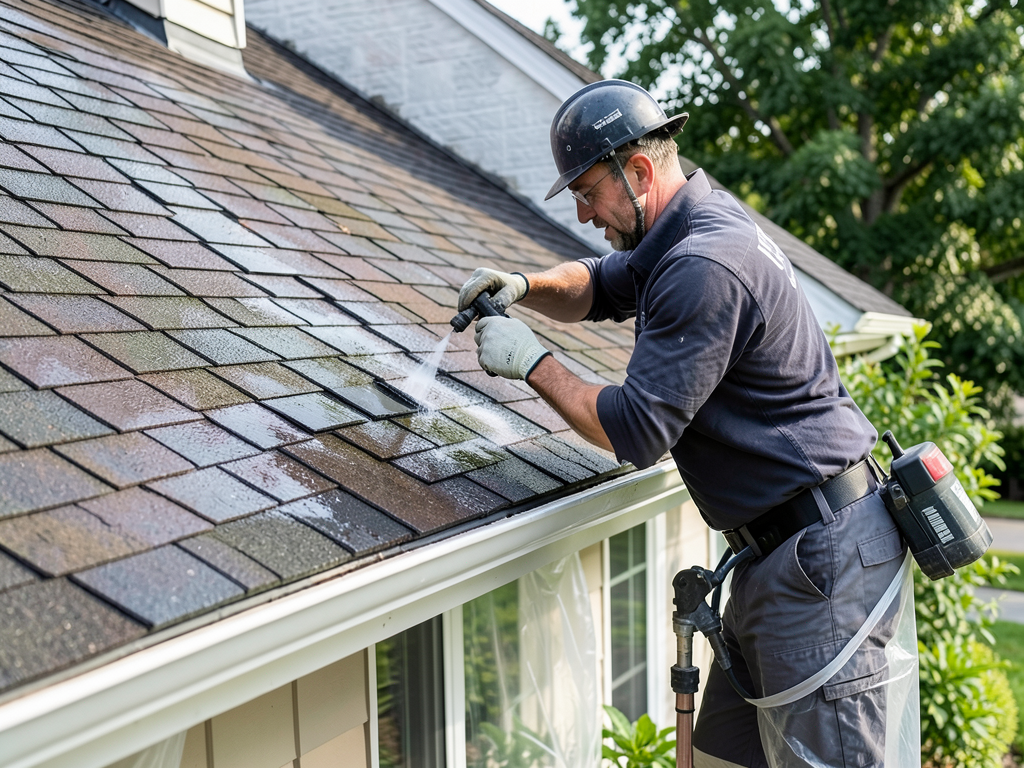
Why You Should Never Use a Pressure Washer on Your Cincinnati Shingles
Pressure washing your roof might seem like a quick fix for those dark streaks on your asphalt shingles, but in Cincinnati’s unique climate, it’s one of the most damaging things you can do to your home. Those black streaks aren’t just dirt—they’re Gloeocapsa magma, a hardy algae that thrives in our humid Ohio River Valley summers. Using high-pressure water to blast it away strips protective granules, voids manufacturer warranties, and can force you into a $10,000+ premature roof replacement. The safe solution is soft washing with biodegradable cleansers at under 100 PSI—exactly what professional roofers use to kill the algae at its root without destroying your shingles. Asphalt Roofing Manufacturers Association (ARMA).
The Hidden Dangers of Pressure Washing Your Cincinnati Roof
When Cincinnati homeowners see those dark streaks spreading across their roof, many reach for a pressure washer thinking they’re cleaning the surface. But what they’re actually doing is accelerating roof failure. The high-pressure spray—often exceeding 1,500 PSI—strips away the ceramic granules that protect your shingles from UV damage and weathering. Without these granules, your shingles become brittle, crack easily, and lose their fire resistance. The Asphalt Roofing Manufacturers Association (ARMA) explicitly warns against using any pressure above 200 PSI on asphalt shingles, yet most consumer pressure washers operate at three to five times that pressure. How to Get Your Cincinnati Roof Replaced After a Major Hail Storm.
The damage goes beyond surface granule loss. High-pressure water forces its way under shingles, breaking the adhesive seals that keep them locked together. This creates entry points for water, which in Cincinnati’s freeze-thaw cycles expands and contracts, causing further separation. Water intrusion leads to rotted underlayment, mold growth in your attic, and eventually ceiling leaks. The hydrostatic pressure from a pressure washer can also damage the felt underlayment and even compromise the roof deck if water gets trapped against the wood.
Perhaps most costly is the warranty issue. Major manufacturers like GAF and Owens Corning specifically void warranties if shingles are cleaned with high-pressure equipment. A Cincinnati homeowner who pressure washes their two-year-old roof could find themselves paying full price for a complete replacement when shingles fail prematurely. The algae itself—Gloeocapsa magma—isn’t killed by pressure washing; it’s merely dislodged. Within months, it regrows, often worse than before, because the underlying moisture problem hasn’t been addressed. GAF Shingle Manufacturer Warranty Information.
5 Critical Risks of Using High Pressure on Asphalt Shingles
Understanding exactly what happens when high-pressure water hits your roof helps explain why this DIY approach fails so badly in Cincinnati’s climate. Each of these five risks compounds the others, creating a perfect storm of roof damage.
- Granule Stripping and Accelerated Aging – The ceramic granules on asphalt shingles serve as a protective armor against UV radiation and physical weathering. High-pressure water acts like sandpaper, blasting these granules away. Once gone, the asphalt base becomes vulnerable to sun damage, cracking, and curling. In Cincinnati’s intense summer UV exposure, this accelerated aging can cut your roof’s lifespan in half.
- Warranty Voidance – Both GAF and Owens Corning, the two most common shingle manufacturers in Cincinnati, explicitly state in their warranties that high-pressure cleaning voids coverage. This means any premature failure becomes your financial responsibility, potentially costing thousands in repairs or replacement.
- Water Intrusion and Structural Damage – The force of a pressure washer can lift shingle edges and force water underneath the roofing system. In Cincinnati’s climate, where we experience over 40 inches of annual rainfall and significant freeze-thaw cycles, this trapped moisture expands and contracts, breaking adhesive seals and causing underlayment rot.
- Mold and Mildew Growth – When water penetrates under shingles and into the attic space, it creates the perfect dark, moist environment for mold growth. Cincinnati’s high humidity—often exceeding 70% in summer—means this moisture doesn’t dry quickly, allowing mold colonies to establish within 24-48 hours.
- Shortened Roof Lifespan – The combination of granule loss, water damage, and UV exposure can reduce a 25-30 year shingle roof to just 10-15 years. For a Cincinnati homeowner, this means replacing a roof twice as often, doubling the long-term cost of what seemed like a simple cleaning project.
What Cincinnati’s Climate Does to Your Roof
Cincinnati sits in a unique meteorological zone where several climate factors converge to create perfect conditions for roof algae growth and accelerated weathering. Our location in the Ohio River Valley means we get the humidity from the south meeting the cooler air from the north, creating persistent moisture that never fully evaporates from roof surfaces.
The Gloeocapsa magma algae that causes those black streaks thrives specifically in this environment. It feeds on the limestone filler in asphalt shingles—a material added for weight and fire resistance. As it grows, it develops a dark, hardened outer shell that protects it from UV radiation while it continues consuming the limestone. This is why pressure washing only provides temporary results; it removes the visible dark coating but leaves the living algae intact to regrow.
Our seasonal temperature swings—from summer highs in the 90s to winter lows in the teens—create constant expansion and contraction of roofing materials. This movement, combined with the moisture retention from algae growth, causes shingles to curl, crack, and lose their seal. Cincinnati’s spring and summer thunderstorms, which can dump several inches of rain in hours, test any weaknesses in your roofing system. A pressure-washed roof with compromised seals and missing granules fails these tests spectacularly. Is Metal Roofing Worth the Investment for Your Anderson Township Home?.
The ARMA Standard: What Manufacturers Say About Pressure Washing
The Asphalt Roofing Manufacturers Association represents all major shingle producers and sets industry standards for proper roof maintenance. Their guidelines are clear and specific: never use high-pressure washing on asphalt shingles. According to ARMA’s technical bulletin, pressure exceeding 200 PSI can cause immediate and irreversible damage to shingle integrity.
ARMA recommends that any roof cleaning be performed using low-pressure methods—typically under 100 PSI—combined with appropriate chemical treatments. The association specifically endorses soft washing techniques that use specialized cleaning solutions to kill algae, moss, and lichen at the cellular level. These solutions, often containing sodium hypochlorite or other biodegradable agents, penetrate the organism’s protective coating and destroy it from within.
The technical reason behind ARMA’s strict stance relates to shingle construction. Modern asphalt shingles consist of a fiberglass mat coated with asphalt and ceramic granules. The granules aren’t just decorative—they’re engineered to provide UV protection, fire resistance, and impact durability. High-pressure water strips these granules, exposing the asphalt to rapid degradation. ARMA’s testing shows that even brief exposure to 1,500 PSI water can remove 30-40% of surface granules, significantly reducing the shingle’s protective capabilities.
Gloeocapsa Magma: The Real Culprit in the Ohio Valley
Gloeocapsa magma isn’t just a cosmetic issue—it’s a living organism that’s eating your roof. This cyanobacteria arrived in the Ohio Valley in the 1990s and has since become ubiquitous on asphalt roofs throughout Cincinnati and Northern Kentucky. It spreads through airborne spores that settle on roof surfaces and begin consuming the limestone filler in your shingles.
The algae’s growth cycle in Cincinnati typically follows this pattern: spores land on cool, north-facing roof sections in early spring. As temperatures rise and humidity increases, the algae multiply rapidly, developing their characteristic dark, hardened outer shell. This shell protects them from UV radiation while they continue consuming the limestone. By mid-summer, black streaks are visible, and the algae have established deep root systems into the shingle surface.
Pressure washing fails because it only removes the surface layer of this hardened shell. The living algae beneath remain intact and quickly regrow, often within 6-12 months. Professional soft washing, by contrast, uses chemical treatments that penetrate this protective layer and kill the organism at the cellular level. The process typically involves applying a sodium hypochlorite solution at low pressure, allowing it to dwell for 15-20 minutes, then rinsing with under 100 PSI water. This kills the algae completely, preventing immediate regrowth.
In Cincinnati’s climate, where humidity levels often exceed 70% and temperatures regularly hit the 80s and 90s, untreated algae can reduce a roof’s reflective capability by up to 30%. This means your attic absorbs more heat, your air conditioning runs longer, and your energy bills increase. The algae also retain moisture against the shingle surface, accelerating the breakdown of the asphalt binder and leading to premature cracking and curling.
The Safe Alternative: What is Soft Washing?
Soft washing represents a complete paradigm shift from the high-pressure approach. Instead of trying to blast away contaminants, soft washing uses chemistry and dwell time to solve the problem at its source. The process involves applying specialized cleaning solutions at very low pressure—typically under 100 PSI, about the pressure of a garden hose—then allowing the chemicals to work before a gentle rinse.
The key chemicals in professional soft washing solutions include sodium hypochlorite (the active ingredient in pool shock), specialized surfactants that help the solution cling to vertical surfaces, and sometimes mildewcides or algicides for particularly stubborn growth. These solutions are mixed on-site based on the specific contamination level and roof type. For Cincinnati’s algae problem, the typical mixture might be 3-4% sodium hypochlorite with water and surfactant.
The application process is methodical and controlled. Technicians apply the solution from the roof edge upward, ensuring complete coverage without runoff onto plants or siding. The solution dwells for 15-20 minutes, during which time it penetrates the algae’s protective coating and begins breaking down the organism at the cellular level. During this time, you might notice the black streaks turning from dark gray to light brown as the algae die.
The final rinse uses pressure similar to what comes out of a garden hose—enough to wash away dead algae and debris but not enough to damage shingles. In many cases, the roof doesn’t need rinsing at all; the dead algae simply washes away with the next rain. The entire process typically takes 2-4 hours for an average Cincinnati home and costs significantly less than premature roof replacement.
DIY vs. Professional Inspection in Cincinnati
Many Cincinnati homeowners wonder if they can spot roof damage themselves before calling a professional. While some signs are obvious, others require trained observation. Here’s how to tell if your shingles are already damaged beyond cleaning. Signs You Need a New Roof.
Visual Inspection from the Ground: Look for missing, cracked, or curling shingles. In Cincinnati, curling often indicates age or moisture damage. Check for bare spots where granules have worn away completely—these appear as smooth, shiny areas on the shingle surface. Also look for sagging sections, which could indicate water damage to the roof deck.
Granule Loss Test: Walk around your home and check the downspouts and gutters. Excessive granule accumulation—enough to look like coarse sand in your gutters—indicates advanced shingle wear. In Cincinnati’s climate, this often means your roof is nearing the end of its useful life regardless of algae growth.
Attic Inspection: If you can safely access your attic, look for water stains on the underside of the roof deck, which indicate active leaks. Check for daylight visible through roof boards, which suggests holes or gaps. The smell test matters too—musty odors indicate mold growth from moisture intrusion.
When to Call a Professional: If you see any of these signs, or if your roof is over 15 years old in Cincinnati’s harsh climate, professional inspection is warranted. A qualified roofer can perform a moisture scan of the roof deck, check the integrity of flashing around chimneys and vents, and assess whether cleaning is even appropriate for your roof’s condition.
Professional inspections typically cost $100-200 but can save thousands by identifying problems early. Many Cincinnati roofing companies offer free inspections with estimates for repairs or replacement, making it worthwhile to get a professional opinion before attempting any DIY cleaning. Reliable Flat Roof Repair Services for Over-the-Rhine Business Owners.
Cost Comparison: Soft Washing vs. Roof Replacement in Hamilton County
Understanding the financial implications helps Cincinnati homeowners make informed decisions about roof maintenance. The cost differential between proper soft washing and premature replacement is substantial.
| Service | Average Cost (Cincinnati) | Expected Lifespan Extension | Cost per Year of Life |
|---|---|---|---|
| Professional Soft Washing | $400-800 | 5-7 years | $57-114 |
| Pressure Washing (DIY) | $100-200 | 0-2 years (damage) | $50-100 |
| Roof Replacement (asphalt) | $8,000-12,000 | 20-25 years | $320-600 |
| Roof Replacement (early due to damage) | $8,000-12,000 | 0 years (premature) | $8,000-12,000 |
The numbers tell a clear story. Professional soft washing costs more upfront than DIY pressure washing but extends your roof’s life by 5-7 years, making it the most cost-effective option. Pressure washing might seem cheaper initially, but the damage it causes often necessitates replacement within 2-3 years, making it the most expensive choice long-term.
In Cincinnati’s market, where the average roof replacement costs $10,000-15,000 including labor and materials, protecting your investment through proper maintenance makes financial sense. Soft washing every 5-7 years costs around $600-800 total, extending a 25-year roof to potentially 32 years. That’s $4,200-5,600 in replacement cost savings, plus the avoided hassle and disruption of a major roofing project.
Additionally, many Cincinnati homeowners insurance policies offer premium discounts for well-maintained roofs. Some insurers require documentation of professional cleaning every 5-7 years to maintain coverage for wind and hail damage. This can save another $100-200 annually on insurance costs, further improving the return on soft washing investment.
Local Environmental Impact and Best Practices
Cincinnati’s location in the Ohio River Valley means our environmental choices have regional consequences. The chemicals used in soft washing, while safe for your roof, require careful handling to protect local waterways and landscaping.
Professional soft washing companies in Cincinnati use biodegradable surfactants and controlled application methods to minimize environmental impact. The sodium hypochlorite solution breaks down into salt and water within 24-48 hours when exposed to sunlight and air. However, during application, it can harm plants if allowed to pool around their roots or coat their leaves.
Responsible contractors take several precautions: pre-wetting and covering plants, using plastic sheeting to protect landscaping, and directing runoff away from storm drains. In Cincinnati, where combined sewer overflow is a concern during heavy rains, proper chemical containment prevents these cleaning agents from entering the wastewater system.
The environmental benefit of soft washing extends beyond chemical use. By extending your roof’s life by 5-7 years, you reduce the demand for new roofing materials, which require significant energy to manufacture and transport. Asphalt shingles, the most common roofing material in Cincinnati, are petroleum-based products whose production contributes to carbon emissions. Every roof that lasts an extra 5 years means fewer shingles in landfills and less manufacturing pollution.
Homeowners can support environmentally responsible practices by choosing contractors who are certified by the Roof Cleaning Institute of America or similar organizations. These certifications require training in chemical handling, environmental protection, and proper application techniques. Ask potential contractors about their environmental practices, chemical containment procedures, and whether they’re licensed to handle the cleaning solutions they use.
Frequently Asked Questions
Can I use my pressure washer on a low setting to clean my roof safely?
Even on the lowest setting, most consumer pressure washers exceed 1,000 PSI, which is still 5 times the safe limit for asphalt shingles. The issue isn’t just pressure—it’s the focused stream of water that can lift shingle edges and force water underneath. Professional soft washing uses specialized equipment that delivers under 100 PSI with a wide spray pattern, which is completely different from even a ‘low’ pressure washer setting.
How often should I have my Cincinnati roof professionally cleaned?
In Cincinnati’s climate, most roofs need professional soft washing every 5-7 years. Homes in particularly shaded areas or near trees might need it every 3-4 years. The key is to clean before algae becomes severe enough to cause damage. Many Cincinnati homeowners schedule cleaning during spring or early summer, after the heavy pollen season but before summer algae growth peaks.
Will soft washing damage my plants or landscaping?
When performed by trained professionals, soft washing is safe for your landscaping. Contractors pre-wet plants, use protective coverings, and rinse thoroughly after application. The cleaning solutions are biodegradable and break down quickly in sunlight. However, DIY applications or untrained contractors can cause damage, which is why professional certification matters.
How long does the soft washing process take and when can I walk on my roof afterward?
Most Cincinnati homes require 2-4 hours for complete soft washing. You should wait at least 24-48 hours before walking on the roof to allow the cleaning solution to fully penetrate and kill the algae. The roof may look worse for the first few days as dead algae turns brown and begins washing away with rain.
Does soft washing work on other types of roofing like tile or metal?
Yes, soft washing is safe for most roofing materials including tile, metal, and even some flat roofing systems. The chemical solutions and application pressures are adjusted based on the specific material. For Cincinnati’s common asphalt shingles, the standard soft washing protocol works perfectly. For other materials, always consult with a professional who has experience with your specific roof type.
Protecting Your Cincinnati Home Investment
Your roof is arguably your home’s most important protective system. In Cincinnati’s climate, where we experience everything from summer humidity in the 90s to winter temperatures in the teens, proper roof maintenance isn’t optional—it’s essential for protecting your investment. The decision to avoid pressure washing and choose professional soft washing instead can mean the difference between a roof that lasts 25 years and one that fails at 15.
Consider the cascading effects of premature roof failure. A roof that fails at 15 years instead of 25 means you’re paying for replacement during what should be the ‘maintenance’ phase of your home ownership. It means higher energy bills from reduced insulation and ventilation efficiency. It means potential water damage to insulation, drywall, and personal belongings. It means the stress and disruption of a major home improvement project years before you planned for it.
The solution is straightforward: inspect your roof annually, clean it professionally every 5-7 years using soft washing techniques, and address any damage promptly. This proactive approach costs far less than reactive replacement and ensures your home remains protected through Cincinnati’s challenging seasonal changes.
If you’re seeing dark streaks on your roof or can’t remember the last time it was professionally cleaned, now is the time to act. Cincinnati’s humid summers are approaching, and that’s when algae growth accelerates most rapidly. Don’t wait until you have a leak or need complete replacement.
Take Action Before It’s Too Late
Pressure washing your Cincinnati roof might seem like a cost-effective DIY solution, but it’s actually one of the fastest ways to destroy your roofing investment. The combination of granule loss, water intrusion, warranty voidance, and accelerated aging can force you into a $10,000+ replacement years before you should need one.
Professional soft washing, by contrast, kills the algae at its source, preserves your shingle warranty, and extends your roof’s life by 5-7 years. For the average Cincinnati home, this means saving thousands of dollars and avoiding the hassle of premature replacement.
Don’t let a simple cleaning mistake cost you your roof. Call (513) 223-5511 today to schedule your professional inspection and learn about our soft washing services. Our certified technicians understand Cincinnati’s unique climate challenges and use only ARMA-approved methods to protect your home. Roof Repair Services.
Pick up the phone and call (513) 223-5511 before the next storm hits. Your roof protects everything you own—make sure it’s protected properly.
First Choice Roofing Cincinnati has been serving the Greater Cincinnati area for over 15 years, helping homeowners protect their investments through proper roof maintenance and repair. We understand the specific challenges that Cincinnati’s climate presents to roofing systems and use only industry-approved methods that preserve your warranty and extend your roof’s life.
Don’t wait until you have a leak or need complete replacement. Call (513) 223-5511 today for your free inspection and learn why thousands of Cincinnati homeowners trust us with their roofing needs.
{
“@context”: “https://schema.org”,
“@type”: “BlogPosting”,
“headline”: “Why You Should Never Use a Pressure Washer on Your Cincinnati Shingles”,
“description”: “Pressure washing destroys Cincinnati roofs. Learn how it voids warranties, causes water damage, and why soft washing is the safe alternative. Call (513) 223-5511.”,
“wordCount”: 3333,
“datePublished”: “2026-04-05T11:35:00.000Z”,
“dateModified”: “2026-04-05T11:35:00.000Z”,
“inLanguage”: “en-US”,
“mainEntityOfPage”: {
“@type”: “WebPage”,
“@id”: “https://firstchoiceroofingcincinnati.com”
},
“publisher”: {
“@type”: “LocalBusiness”,
“name”: “First Choice Roofing Cincinnati”,
“url”: “https://firstchoiceroofingcincinnati.com”
},
“author”: {
“@type”: “Organization”,
“name”: “First Choice Roofing Cincinnati”,
“url”: “https://firstchoiceroofingcincinnati.com”
},
“image”: {
“@type”: “ImageObject”,
“url”: “https://firstchoiceroofingcincinnati.com/wp-content/uploads/2026/03/why-you-should-never-use-a-pressure-washer-on-your-1.png”
}
}
{
“@context”: “https://schema.org”,
“@type”: “RoofingContractor”,
“name”: “First Choice Roofing Cincinnati”,
“url”: “https://firstchoiceroofingcincinnati.com”,
“address”: {
“@type”: “PostalAddress”,
“addressLocality”: “Cincinnati”
},
“areaServed”: {
“@type”: “City”,
“name”: “Cincinnati”
}
}
{
“@context”: “https://schema.org”,
“@type”: “FAQPage”,
“mainEntity”: [
{
“@type”: “Question”,
“name”: “The Safe Alternative: What is Soft Washing?”,
“acceptedAnswer”: {
“@type”: “Answer”,
“text”: “Soft washing represents a complete paradigm shift from the high-pressure approach. Instead of trying to blast away contaminants, soft washing uses chemistry and dwell time to solve the problem at its source. The process involves applying specialized cleaning solutions at very low pressure—typically under 100 PSI, about the pressure of a garden hose—then allowing the chemicals to work before a gentle rinse.”
}
},
{
“@type”: “Question”,
“name”: “Can I use my pressure washer on a low setting to clean my roof safely?”,
“acceptedAnswer”: {
“@type”: “Answer”,
“text”: “Even on the lowest setting, most consumer pressure washers exceed 1,000 PSI, which is still 5 times the safe limit for asphalt shingles. The issue isn’t just pressure—it’s the focused stream of water that can lift shingle edges and force water underneath. Professional soft washing uses specialized equipment that delivers under 100 PSI with a wide spray pattern, which is completely different from even a ‘low’ pressure washer setting.”
}
},
{
“@type”: “Question”,
“name”: “How often should I have my Cincinnati roof professionally cleaned?”,
“acceptedAnswer”: {
“@type”: “Answer”,
“text”: “In Cincinnati’s climate, most roofs need professional soft washing every 5-7 years. Homes in particularly shaded areas or near trees might need it every 3-4 years. The key is to clean before algae becomes severe enough to cause damage. Many Cincinnati homeowners schedule cleaning during spring or early summer, after the heavy pollen season but before summer algae growth peaks.”
}
},
{
“@type”: “Question”,
“name”: “Will soft washing damage my plants or landscaping?”,
“acceptedAnswer”: {
“@type”: “Answer”,
“text”: “When performed by trained professionals, soft washing is safe for your landscaping. Contractors pre-wet plants, use protective coverings, and rinse thoroughly after application. The cleaning solutions are biodegradable and break down quickly in sunlight. However, DIY applications or untrained contractors can cause damage, which is why professional certification matters.”
}
},
{
“@type”: “Question”,
“name”: “How long does the soft washing process take and when can I walk on my roof afterward?”,
“acceptedAnswer”: {
“@type”: “Answer”,
“text”: “Most Cincinnati homes require 2-4 hours for complete soft washing. You should wait at least 24-48 hours before walking on the roof to allow the cleaning solution to fully penetrate and kill the algae. The roof may look worse for the first few days as dead algae turns brown and begins washing away with rain.”
}
},
{
“@type”: “Question”,
“name”: “Does soft washing work on other types of roofing like tile or metal?”,
“acceptedAnswer”: {
“@type”: “Answer”,
“text”: “Yes, soft washing is safe for most roofing materials including tile, metal, and even some flat roofing systems. The chemical solutions and application pressures are adjusted based on the specific material. For Cincinnati’s common asphalt shingles, the standard soft washing protocol works perfectly. For other materials, always consult with a professional who has experience with your specific roof type.”
}
}
]
}
{
“@context”: “https://schema.org”,
“@type”: “BreadcrumbList”,
“itemListElement”: [
{
“@type”: “ListItem”,
“position”: 1,
“name”: “Home”,
“item”: “https://firstchoiceroofingcincinnati.com”
},
{
“@type”: “ListItem”,
“position”: 2,
“name”: “Blog”,
“item”: “https://firstchoiceroofingcincinnati.com/blog”
},
{
“@type”: “ListItem”,
“position”: 3,
“name”: “Why You Should Never Use a Pressure Washer on Your Cincinnati Shingles”
}
]
}
{
“@context”: “https://schema.org”,
“@type”: “Service”,
“serviceType”: “Roofing”,
“provider”: {
“@type”: “LocalBusiness”,
“name”: “First Choice Roofing Cincinnati”,
“url”: “https://firstchoiceroofingcincinnati.com”
},
“areaServed”: {
“@type”: “City”,
“name”: “Cincinnati”
},
“description”: “Pressure washing destroys Cincinnati roofs. Learn how it voids warranties, causes water damage, and why soft washing is the safe alternative. Call (513) 223-5511.”
}