
Maintaining the Historic Slate Look with Modern Composite Materials in St. Bernard
Homeowners in St. Bernard face a unique challenge when maintaining their historic properties. Many of the charming older homes feature traditional slate roofing that requires specialized care and comes with a premium price tag. Modern composite materials now offer a compelling alternative that captures the authentic slate aesthetic while providing enhanced durability and cost-effectiveness. This guide explores how composite roofing can preserve the architectural character of St. Bernard homes while addressing the practical concerns of today’s homeowners. Is Metal Roofing Worth the Investment for Your Anderson Township Home?.
Composite roofing materials have evolved significantly over the past decade, offering homeowners a middle-ground solution between traditional asphalt shingles and expensive natural slate. These synthetic alternatives are engineered to mimic the dimensional texture and color variations of genuine slate while incorporating modern polymer technology that resists cracking, fading, and impact damage. For St. Bernard residents, this means achieving the historic look they desire without the ongoing maintenance headaches or prohibitive installation costs associated with natural slate.. Read more about Comparing Real Slate vs Synthetic Shingles for Your High End Wyoming Home.
Why St. Bernard Homeowners Choose Composite Slate Alternatives
St. Bernard’s historic neighborhoods feature many homes built between 1900 and 1940, when slate roofing was a popular choice for its longevity and distinctive appearance. However, these original slate roofs are now reaching the end of their service life, and replacement costs have become prohibitive for many homeowners. Natural slate installation requires specialized skills, can weigh up to 1,500 pounds per square, and often needs structural reinforcement of the roof deck. Composite materials typically weigh 250-350 pounds per square and can be installed using standard roofing techniques.
The Ohio River Valley climate presents specific challenges that composite materials handle exceptionally well. St. Bernard experiences significant freeze-thaw cycles during winter months, with temperatures frequently fluctuating above and below freezing. This expansion and contraction can cause natural slate to crack or delaminate over time. Modern composite materials are engineered with flexibility that allows them to expand and contract without damage. Additionally, the high humidity levels common in the Cincinnati area can promote algae growth on traditional roofing materials, while many composite products include algae-resistant additives in their manufacturing process. Ohio Residential Code Chapter 9 roofing requirements.
Beyond durability concerns, cost considerations play a major role in material selection. Natural slate typically costs $1,500-$2,500 per square installed, while composite alternatives range from $400-$800 per square. For an average St. Bernard home requiring 25-30 squares of roofing, this represents a potential savings of $25,000-$60,000. The composite materials also come with warranties of 40-50 years, compared to the 75-100 year lifespan of natural slate, but with significantly lower upfront investment and easier replacement if damage occurs.
Image: Side-by-side comparison of natural slate versus composite slate roofing on a St. Bernard historic home, showing the nearly identical visual appearance while highlighting the weight difference and installation techniques.
Leading Composite Roofing Brands Available in Cincinnati
Several manufacturers have developed composite roofing products specifically designed to replicate the look of natural slate. DaVinci Roofscapes leads the industry with their Bellaforte and Slate lines, offering tiles that capture the subtle color variations and textural depth of authentic slate. Their products are manufactured using a virgin polymer base with UV stabilizers and fire retardants, meeting Class A fire ratings required by many Ohio municipalities. The tiles feature a 12-inch exposure and come in 50 standard colors with custom options available for historic preservation projects. DaVinci Roofscapes composite slate products.
Brava Roof Tile offers another premium composite option with their synthetic slate collection. These tiles are produced using a unique cellular construction that provides excellent impact resistance while maintaining a lightweight profile. Brava’s products are particularly well-suited for St. Bernard’s historic districts because they can be manufactured to match specific color palettes from existing roofs. The company provides detailed color matching services and can create custom blends that replicate the weathered patina of century-old slate roofs. Roof Repair Services.
GAF’s composite roofing line, while more affordable than premium brands, still delivers impressive slate-like aesthetics. Their Camelot II series features a multi-layer construction with a fiberglass base, asphalt core, and ceramic-coated mineral granules that create depth and dimension. These tiles are designed for easier installation than some premium composites, making them a practical choice for homes where budget constraints are a primary concern but slate appearance is still desired.
When selecting composite materials for St. Bernard homes, it’s essential to consider Hamilton County’s specific building requirements. The Ohio Residential Code (ORC) Chapter 9 mandates specific underlayment requirements for steep-slope roofing, including synthetic underlayment rated for high-wind areas. Additionally, homes within designated historic districts may require approval from the Hamilton County Historic Preservation Office before material changes are permitted. Local roofing contractors familiar with these regulations can guide homeowners through the approval process and ensure compliance with all applicable codes.
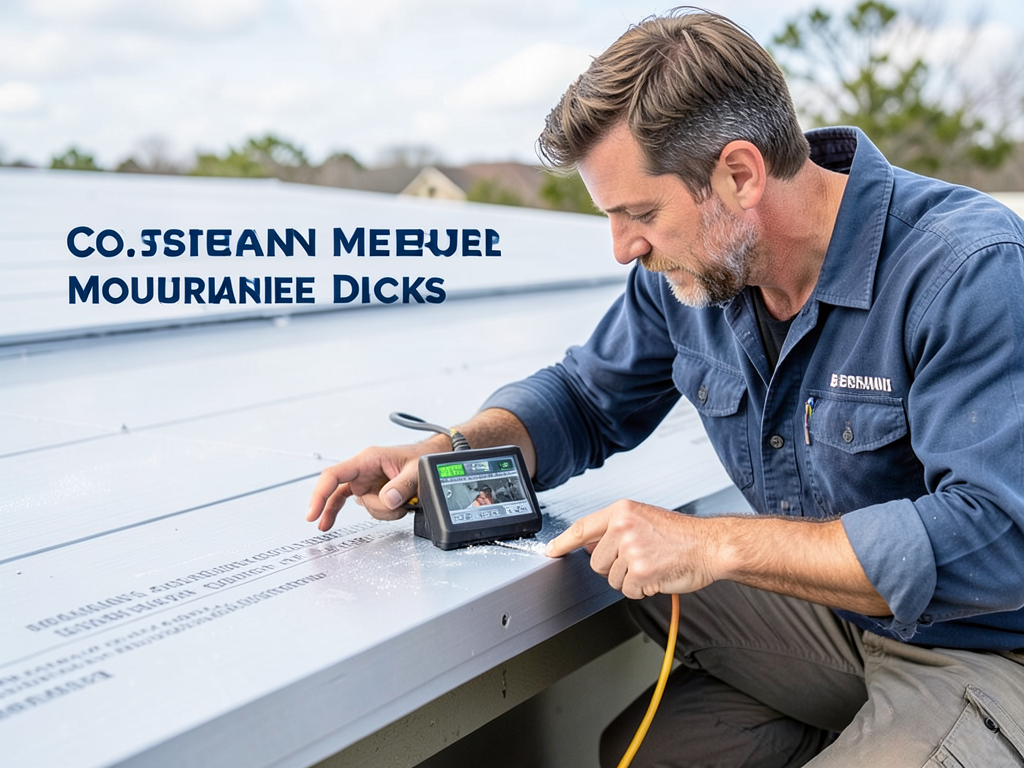
Image: Technician performing a moisture meter test on a composite roof deck in St. Bernard, demonstrating the diagnostic process used to ensure proper substrate conditions before installation.
The Installation Process for Composite Slate in St. Bernard
Proper installation is critical for maximizing the performance and longevity of composite roofing materials. The process begins with a thorough roof deck inspection to ensure the structure can support the new roofing system. While composite materials are significantly lighter than natural slate, the existing deck must be evaluated for rot, water damage, or structural weakness. Any compromised decking is replaced, and the surface is cleaned to provide a solid foundation for underlayment installation. How to Get Your Cincinnati Roof Replaced After a Major Hail Storm.
Underlayment selection follows International Building Code requirements for ice barrier protection in Ohio’s climate zone. The code mandates ice barrier installation extending at least 24 inches inside the exterior wall line for homes in areas prone to ice damming. This typically involves applying a self-adhering polymer-modified bitumen membrane in critical areas, followed by a high-quality synthetic underlayment across the entire roof surface. The underlayment provides secondary water protection and improves the roof’s wind uplift resistance.
Flashing details are particularly important for composite slate installations. The material’s dimensional profile requires careful attention to wall flashing, chimney flashing, and valley flashing details. Step flashing is installed in conjunction with each course of roofing material, ensuring water is directed away from vulnerable areas. For St. Bernard homes with complex roof geometries common in historic architecture, experienced installers use custom-fabricated flashings to maintain watertight integrity while preserving the roof’s aesthetic character.
The actual tile installation follows manufacturer-specific patterns and fastening requirements. Most composite slate products use a combination of nails and adhesive strips to secure the tiles while allowing for thermal movement. Installers work from the bottom up, carefully aligning each course to maintain straight lines and consistent exposure. The process requires attention to detail, as improper spacing or fastening can lead to premature failure or wind damage. A typical installation crew can complete 15-20 squares per day under favorable conditions, compared to 5-8 squares for natural slate.
Final inspection and cleanup complete the installation process. The completed roof undergoes a comprehensive quality check, including verification of proper fastening, alignment, and flashing details. All debris is removed from the property, and the site is left clean and orderly. Many contractors provide homeowners with a maintenance guide specific to their new composite roof, including recommendations for periodic inspections and cleaning to maximize the system’s service life.
Cost Analysis: Composite vs. Natural Slate in the St. Bernard Market
Understanding the true cost of roofing replacement requires looking beyond initial installation prices. Natural slate’s premium pricing reflects not only material costs but also specialized labor requirements. Skilled slate roofers command higher wages due to the technical expertise needed for proper installation, and projects often take 2-3 times longer than conventional roofing. Transportation costs are also higher, as natural slate is heavy and requires careful handling to prevent breakage during delivery and installation.
Composite materials offer several cost advantages beyond the lower per-square price. Installation efficiency translates to reduced labor costs, as crews can work faster and standard roofing techniques apply. The lighter weight eliminates the need for structural reinforcement in most cases, avoiding expensive engineering studies and framing modifications. Additionally, many composite products qualify for energy efficiency tax credits when installed with appropriate underlayment and ventilation systems, providing potential savings of $500-$1,500 on the total project cost.
Long-term cost considerations also favor composite materials for many St. Bernard homeowners. While natural slate can last 100+ years under ideal conditions, damage from severe weather, falling tree limbs, or maintenance errors can be costly to repair. Matching replacement slate to existing weathered material is challenging, often resulting in visible patches. Composite tiles are designed for easier replacement, with individual tiles that can be removed and replaced without affecting surrounding materials. Most manufacturers also offer 40-50 year warranties that cover manufacturing defects and sometimes include coverage for wind damage up to 110 mph. Reliable Flat Roof Repair Services for Over-the-Rhine Business Owners.
Insurance considerations add another dimension to the cost analysis. Some insurance companies offer premium discounts for impact-resistant roofing materials, which many composite products qualify for due to their Class 4 impact ratings. In Ohio’s hail-prone climate, this can translate to annual savings of $100-$300 on homeowner’s insurance premiums. Additionally, the improved fire resistance of composite materials (Class A rating) may provide additional insurance benefits in areas where wildfire risk, though minimal in St. Bernard, is considered in premium calculations.
When evaluating total cost of ownership, composite roofing typically breaks even with natural slate within 15-20 years when factoring in installation efficiency, maintenance requirements, and potential insurance savings. For homeowners planning to stay in their homes for 10-15 years, composite materials often represent the better financial choice while still providing the aesthetic appeal of natural slate.
Image: Technician conducting a thermal imaging scan of a completed composite roof installation in St. Bernard, demonstrating the diagnostic tools used to verify proper underlayment installation and identify potential heat loss areas.
Maintaining Your Composite Slate Roof in St. Bernard’s Climate
While composite roofing requires less maintenance than natural slate, proper care ensures maximum performance and longevity. The Ohio River Valley’s climate creates specific maintenance considerations for St. Bernard homeowners. High humidity levels, particularly during summer months, can promote algae and moss growth on any roofing surface. Most quality composite products include algae-resistant additives, but periodic cleaning may still be necessary in heavily shaded areas where moisture persists.
Annual visual inspections help identify potential issues before they become costly problems. Homeowners should look for damaged or missing tiles, particularly after severe weather events common in the Cincinnati area. The inspection should also check flashing details, as compromised flashing is a leading cause of roof leaks regardless of the roofing material. Pay particular attention to areas around chimneys, skylights, and roof penetrations where flashing is most critical.
Cleaning composite slate roofs requires gentle methods to avoid damaging the surface texture. Pressure washing is generally not recommended, as high-pressure water can force moisture under tiles and damage protective coatings. Instead, use a soft-bristle brush and a solution of mild detergent and water to remove dirt and organic growth. For stubborn algae or moss, specialized roof cleaning products designed for synthetic materials are available through roofing supply companies. Always work from a stable ladder rather than walking on the roof when possible, as composite tiles can be slippery when wet.
Gutter maintenance plays a crucial role in composite roof performance. Clogged gutters cause water to back up under roofing materials, potentially leading to deck rot and interior water damage. St. Bernard’s mature tree canopy means gutters often fill with leaves and debris, particularly during fall months. Installing gutter guards can reduce maintenance requirements while ensuring proper water drainage away from the foundation. Check downspouts regularly to ensure they direct water at least 5-6 feet from the foundation, preventing moisture problems in the basement or crawl space.
Professional maintenance every 3-5 years provides additional peace of mind for composite roof owners. A qualified roofing contractor can perform detailed inspections using moisture meters and thermal imaging to detect early signs of water intrusion or ventilation problems. They can also reseal flashing details, replace damaged tiles, and ensure ventilation systems are functioning properly. This preventive maintenance typically costs $300-$500 but can prevent thousands in potential repair costs by identifying issues early.
Frequently Asked Questions
How long does composite slate roofing typically last in Cincinnati’s climate?
Quality composite slate roofing materials installed in the Cincinnati area typically last 40-50 years with proper maintenance. The materials are engineered to withstand Ohio’s freeze-thaw cycles, high humidity, and occasional severe weather events. Most manufacturers provide 40-50 year warranties covering manufacturing defects and sometimes including wind damage protection up to 110 mph.
Will composite slate look authentic on my historic St. Bernard home?
Yes, modern composite slate materials are specifically engineered to replicate the dimensional texture, color variations, and visual depth of natural slate. Premium manufacturers like DaVinci and Brava offer products that are virtually indistinguishable from natural slate when viewed from street level. Many products also develop a natural patina over time that enhances their authentic appearance.
What maintenance is required for composite slate roofing?
Composite slate roofing requires minimal maintenance compared to natural slate. Annual visual inspections, periodic cleaning of debris and organic growth in shaded areas, and gutter maintenance are typically sufficient. Professional inspections every 3-5 years can identify potential issues early. Unlike natural slate, individual damaged tiles can be easily replaced without affecting surrounding materials.
How does composite slate perform during Ohio’s severe weather events?
Quality composite slate materials are engineered to withstand Ohio’s weather challenges. Most products carry Class 4 impact ratings, providing excellent resistance to hail damage. The flexible polymer construction allows the material to expand and contract with temperature changes without cracking. Wind ratings typically range from 110-130 mph when properly installed according to manufacturer specifications. Flexible Financing Options for Your New Cincinnati Roof Installation.
Is composite slate roofing approved for use in St. Bernard’s historic districts?
Composite slate roofing is generally approved for use in historic districts, but approval from the Hamilton County Historic Preservation Office may be required before installation. Many manufacturers offer products that meet historic preservation guidelines, and some can create custom color blends to match existing weathered slate. Working with a contractor familiar with local historic district requirements ensures a smooth approval process.
Making the Right Choice for Your St. Bernard Home
Selecting the appropriate roofing material for your St. Bernard home involves balancing aesthetic preferences, budget constraints, and long-term performance expectations. Composite slate materials offer a compelling solution for homeowners who want the authentic appearance of natural slate without the associated costs and maintenance challenges. The technology has advanced to the point where these synthetic alternatives provide durability and visual appeal that rivals traditional materials while offering practical advantages for today’s homeowners.
When evaluating your options, consider your specific circumstances. If you plan to stay in your home for many years and want to minimize long-term maintenance, composite slate provides an excellent balance of performance and value. If historic authenticity is your primary concern and budget is less of a constraint, natural slate remains the traditional choice. For homeowners seeking a middle ground, composite materials deliver the historic look with modern reliability at a more accessible price point.
The decision ultimately depends on your priorities, but one thing is clear: modern composite roofing materials have transformed the options available to St. Bernard homeowners. These products allow you to maintain the architectural character of your historic home while benefiting from contemporary material science and installation techniques. Whether you’re replacing a failing roof or planning a renovation, composite slate deserves serious consideration as a practical, attractive solution for your roofing needs.
Ready to Upgrade Your St. Bernard Home’s Roof?
Choosing the right roofing material is a significant decision that affects your home’s appearance, value, and protection for decades to come. At First Choice Roofing Cincinnati, we understand the unique needs of St. Bernard homeowners and the importance of maintaining your home’s historic character while incorporating modern performance standards.
Our team has extensive experience with composite slate installations throughout the Greater Cincinnati area, including numerous successful projects in St. Bernard’s historic neighborhoods. We’ll help you navigate material selection, local permitting requirements, and installation options to ensure your new roof meets both your aesthetic vision and practical needs.
Don’t wait until minor issues become major problems. Call (513) 223-5511 today to schedule your free consultation and learn how composite slate roofing can transform your St. Bernard home. Our experts will assess your current roof condition, discuss your goals, and provide detailed recommendations tailored to your specific situation.
Pick up the phone and call (513) 223-5511 before the next storm hits. Your home deserves the protection and beauty that modern composite slate roofing provides. Let us help you make the right choice for your St. Bernard home’s future.
- Assess Your Current Roof Condition
Schedule a professional inspection to evaluate your existing roof’s condition, identify any structural issues, and determine if your home can support composite slate materials without reinforcement.
- Research Material Options
Compare different composite slate manufacturers, examining their product specifications, warranty terms, color options, and performance ratings for Ohio’s climate conditions.
- Verify Local Requirements
Check with Hamilton County’s Historic Preservation Office if your home is in a designated historic district, and confirm that your chosen materials meet all local building code requirements.
- Obtain Professional Installation Quotes
Get detailed quotes from qualified roofing contractors who have experience with composite slate installations in the Cincinnati area, ensuring they understand local weather challenges and building requirements.
- Review and Compare Proposals
Evaluate proposals based on material quality, installation experience, warranty coverage, and total project cost including any necessary structural modifications or permitting fees.
{
“@context”: “https://schema.org”,
“@type”: “BlogPosting”,
“headline”: “Maintaining the Historic Slate Look with Modern Composite Materials in St. Bernard”,
“description”: “Discover how modern composite roofing materials can replicate the historic slate look for St. Bernard homes while offering superior durability and cost savings.”,
“wordCount”: 2953,
“datePublished”: “2026-05-10T14:00:00.000Z”,
“dateModified”: “2026-05-10T14:00:00.000Z”,
“inLanguage”: “en-US”,
“mainEntityOfPage”: {
“@type”: “WebPage”,
“@id”: “https://firstchoiceroofingcincinnati.com”
},
“publisher”: {
“@type”: “LocalBusiness”,
“name”: “First Choice Roofing Cincinnati”,
“url”: “https://firstchoiceroofingcincinnati.com”
},
“author”: {
“@type”: “Organization”,
“name”: “First Choice Roofing Cincinnati”,
“url”: “https://firstchoiceroofingcincinnati.com”
}
}
{
“@context”: “https://schema.org”,
“@type”: “RoofingContractor”,
“name”: “First Choice Roofing Cincinnati”,
“url”: “https://firstchoiceroofingcincinnati.com”,
“address”: {
“@type”: “PostalAddress”,
“addressLocality”: “Cincinnati”
},
“areaServed”: {
“@type”: “City”,
“name”: “Cincinnati”
}
}
{
“@context”: “https://schema.org”,
“@type”: “FAQPage”,
“mainEntity”: [
{
“@type”: “Question”,
“name”: “How long does composite slate roofing typically last in Cincinnati’s climate?”,
“acceptedAnswer”: {
“@type”: “Answer”,
“text”: “Quality composite slate roofing materials installed in the Cincinnati area typically last 40-50 years with proper maintenance. The materials are engineered to withstand Ohio’s freeze-thaw cycles, high humidity, and occasional severe weather events. Most manufacturers provide 40-50 year warranties covering manufacturing defects and sometimes including wind damage protection up to 110 mph.”
}
},
{
“@type”: “Question”,
“name”: “Will composite slate look authentic on my historic St. Bernard home?”,
“acceptedAnswer”: {
“@type”: “Answer”,
“text”: “Yes, modern composite slate materials are specifically engineered to replicate the dimensional texture, color variations, and visual depth of natural slate. Premium manufacturers like DaVinci and Brava offer products that are virtually indistinguishable from natural slate when viewed from street level. Many products also develop a natural patina over time that enhances their authentic appearance.”
}
},
{
“@type”: “Question”,
“name”: “What maintenance is required for composite slate roofing?”,
“acceptedAnswer”: {
“@type”: “Answer”,
“text”: “Composite slate roofing requires minimal maintenance compared to natural slate. Annual visual inspections, periodic cleaning of debris and organic growth in shaded areas, and gutter maintenance are typically sufficient. Professional inspections every 3-5 years can identify potential issues early. Unlike natural slate, individual damaged tiles can be easily replaced without affecting surrounding materials.”
}
},
{
“@type”: “Question”,
“name”: “How does composite slate perform during Ohio’s severe weather events?”,
“acceptedAnswer”: {
“@type”: “Answer”,
“text”: “Quality composite slate materials are engineered to withstand Ohio’s weather challenges. Most products carry Class 4 impact ratings, providing excellent resistance to hail damage. The flexible polymer construction allows the material to expand and contract with temperature changes without cracking. Wind ratings typically range from 110-130 mph when properly installed according to manufacturer specifications. Flexible Financing Options for Your New Cincinnati Roof Installation.”
}
},
{
“@type”: “Question”,
“name”: “Is composite slate roofing approved for use in St. Bernard’s historic districts?”,
“acceptedAnswer”: {
“@type”: “Answer”,
“text”: “Composite slate roofing is generally approved for use in historic districts, but approval from the Hamilton County Historic Preservation Office may be required before installation. Many manufacturers offer products that meet historic preservation guidelines, and some can create custom color blends to match existing weathered slate. Working with a contractor familiar with local historic district requirements ensures a smooth approval process.”
}
},
{
“@type”: “Question”,
“name”: “Ready to Upgrade Your St. Bernard Home’s Roof?”,
“acceptedAnswer”: {
“@type”: “Answer”,
“text”: “Choosing the right roofing material is a significant decision that affects your home’s appearance, value, and protection for decades to come. At First Choice Roofing Cincinnati, we understand the unique needs of St. Bernard homeowners and the importance of maintaining your home’s historic character while incorporating modern performance standards.”
}
}
]
}
{
“@context”: “https://schema.org”,
“@type”: “HowTo”,
“name”: “How to Choose Composite Slate Roofing”,
“step”: [
{
“@type”: “HowToStep”,
“position”: 1,
“name”: “Assess Your Current Roof Condition”,
“text”: “Schedule a professional inspection to evaluate your existing roof’s condition, identify any structural issues, and determine if your home can support composite slate materials without reinforcement.”
},
{
“@type”: “HowToStep”,
“position”: 2,
“name”: “Research Material Options”,
“text”: “Compare different composite slate manufacturers, examining their product specifications, warranty terms, color options, and performance ratings for Ohio’s climate conditions.”
},
{
“@type”: “HowToStep”,
“position”: 3,
“name”: “Verify Local Requirements”,
“text”: “Check with Hamilton County’s Historic Preservation Office if your home is in a designated historic district, and confirm that your chosen materials meet all local building code requirements.”
},
{
“@type”: “HowToStep”,
“position”: 4,
“name”: “Obtain Professional Installation Quotes”,
“text”: “Get detailed quotes from qualified roofing contractors who have experience with composite slate installations in the Cincinnati area, ensuring they understand local weather challenges and building requirements.”
},
{
“@type”: “HowToStep”,
“position”: 5,
“name”: “Review and Compare Proposals”,
“text”: “Evaluate proposals based on material quality, installation experience, warranty coverage, and total project cost including any necessary structural modifications or permitting fees.”
}
]
}
{
“@context”: “https://schema.org”,
“@type”: “BreadcrumbList”,
“itemListElement”: [
{
“@type”: “ListItem”,
“position”: 1,
“name”: “Home”,
“item”: “https://firstchoiceroofingcincinnati.com”
},
{
“@type”: “ListItem”,
“position”: 2,
“name”: “Blog”,
“item”: “https://firstchoiceroofingcincinnati.com/blog”
},
{
“@type”: “ListItem”,
“position”: 3,
“name”: “Maintaining the Historic Slate Look with Modern Composite Materials in St. Bernard”
}
]
}
{
“@context”: “https://schema.org”,
“@type”: “Service”,
“serviceType”: “Roofing”,
“provider”: {
“@type”: “LocalBusiness”,
“name”: “First Choice Roofing Cincinnati”,
“url”: “https://firstchoiceroofingcincinnati.com”
},
“areaServed”: {
“@type”: “City”,
“name”: “Cincinnati”
},
“description”: “Discover how modern composite roofing materials can replicate the historic slate look for St. Bernard homes while offering superior durability and cost savings.”
}