
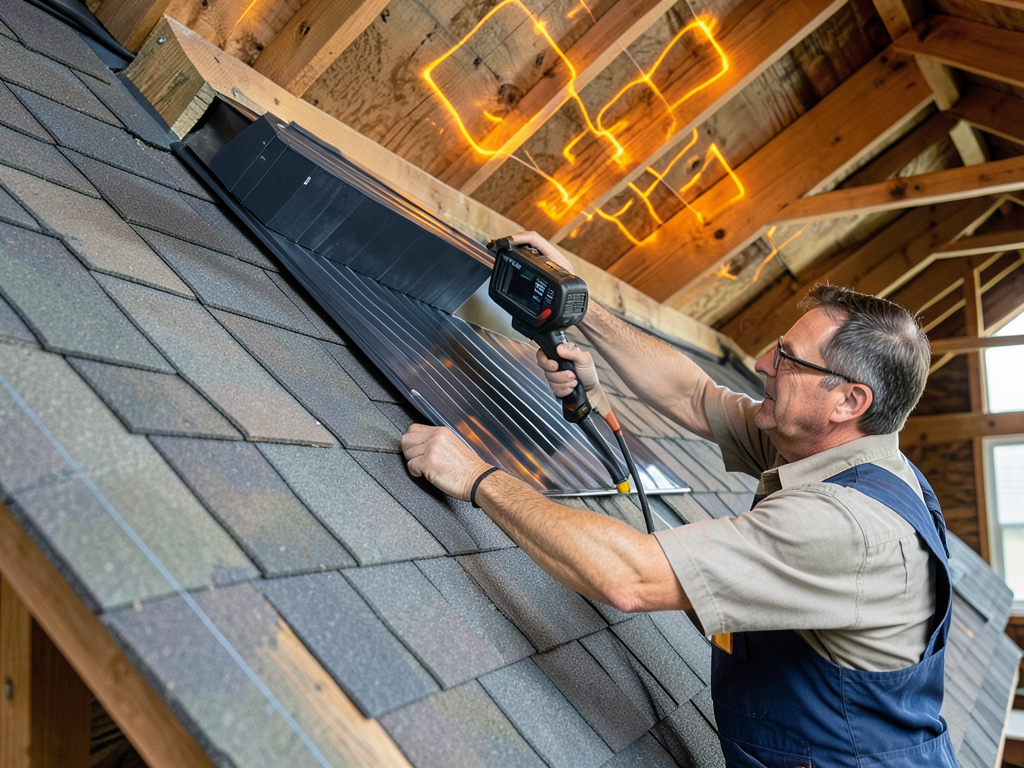
Choosing Between Ridge Vents and Solar Powered Attic Fans for Your Blue Ash Home
Hot attics in summer and moisture buildup in winter can damage your roof and drive up energy bills. In Blue Ash’s humid summers and cold winters, proper attic ventilation is not optional—it’s essential for protecting your home and extending the life of your roofing system. The right ventilation setup balances airflow to keep your attic temperature and humidity in check year-round. Is Metal Roofing Worth the Investment for Your Anderson Township Home?.
Blue Ash homes face unique ventilation challenges. Many were built in the 1970s through 1990s with minimal airflow planning, leading to trapped heat and moisture. This article breaks down ridge vents and solar powered attic fans, explains how Cincinnati’s climate affects your choices, and helps you decide which system works best for your specific home. How to Get Your Cincinnati Roof Replaced After a Major Hail Storm.
How Cincinnati’s Climate Affects Your Ventilation Needs
Blue Ash sits in the Ohio River Valley where summers bring high humidity and temperatures often exceed 90°F. Your attic can reach 150°F on sunny days, baking asphalt shingles and warping wood. Winter brings freeze-thaw cycles that create ice dams when warm attic air melts snow on the roof, then refreezes at the colder eaves. Ohio Building Code Chapter 9.
According to the Ohio Building Code (OBC) Chapter 9, residential attics require a minimum of 1 square foot of net free ventilation area for every 150 square feet of attic space. In humid climates like Cincinnati’s, that ratio improves to 1:300 when using a balanced intake-exhaust system. Without proper ventilation, you risk mold growth, wood rot, and premature shingle failure.
Key Climate Factors:
- July humidity averages 70-80%, creating attic condensation risks
- January temperatures drop below freezing 15-20 days annually
- Spring thunderstorms bring 3-4 inches of rain monthly
- Prevailing westerly winds affect roof pressure zones
Ridge Vents: Passive Protection for Your Roof
Ridge vents run along the peak of your roof, creating a continuous exhaust path for hot air. As warm air rises naturally, it escapes through the ridge vent while cooler air enters through soffit vents below. This passive system works 24/7 without electricity, making it energy-efficient and quiet.
Installation requires cutting a slot along the roof peak and covering it with a weatherproof vent cap. The system depends on proper soffit ventilation to function correctly. Without adequate intake, ridge vents can actually pull conditioned air from your living space, increasing cooling costs.
Ridge Vent Advantages:
- No operating costs or maintenance
- Works during power outages
- Blends with roofline for better aesthetics
- Provides uniform ventilation across roof peak
Ridge Vent Limitations:
- Requires proper soffit ventilation to work effectively
- Less effective on complex roof designs with multiple valleys
- Installation can be labor-intensive on existing roofs
- May not provide enough airflow for extremely hot attics
Solar Powered Attic Fans: Active Airflow Control
Solar powered attic fans mount on your roof and use sunlight to power an electric fan that actively pulls hot air from your attic. These units typically move 800-1,600 cubic feet per minute (CFM) of air, providing targeted ventilation where you need it most.
The fan activates when sunlight hits the solar panel, ramping up during the hottest parts of the day when attic temperatures peak. Most models include adjustable thermostats so the fan only runs when attic temperatures exceed your set point, usually around 95°F.
Solar Fan Advantages:
- High airflow capacity for rapid temperature reduction
- Works independently of other ventilation systems
- Can be installed on almost any roof type
- Reduces cooling costs by up to 30% in summer
Solar Fan Limitations:
- Higher upfront cost ($300-600 per unit)
- Requires roof penetration and potential leak points
- Performance drops on cloudy days
- May create negative pressure if not balanced with intake vents
Intake vs. Exhaust: The Ventilation Balance
Successful attic ventilation requires equal parts intake and exhaust. Without proper soffit vents, neither ridge vents nor solar fans work effectively. Soffit vents allow cool air to enter at the eaves while exhaust vents at the ridge or roof surface let hot air escape.
The Ohio Building Code mandates that intake vents provide at least 50% of total ventilation area. In older Blue Ash homes, blocked or missing soffit vents are common problems. Insulation often falls into soffit areas, completely blocking airflow.
Common Intake Vent Types:
- Continuous soffit vents along eaves
- Individual soffit vents spaced every 4-6 feet
- Drip edge vents installed during roof replacement
- Gable vents for cross-ventilation
Testing Your Current System:
- Check attic on sunny afternoon – feel for air movement at ridge
- Inspect soffit vents from outside – ensure they’re not blocked
- Look for moisture stains on underside of roof deck
- Check insulation levels – proper R-38 to R-49 prevents heat transfer
Cost Comparison for Blue Ash Homes
Installation costs vary based on roof complexity and existing ventilation. Here’s what Blue Ash homeowners typically invest in ventilation upgrades:
| Ventilation Type | Material Cost | Installation Cost | Total Cost | Lifespan |
|---|---|---|---|---|
| Ridge Vent (40-foot home) | $200-400 | $800-1,200 | $1,000-1,600 | 20-25 years |
| Solar Attic Fan | $300-600 | $400-600 | $700-1,200 | 10-15 years |
| Combined System | $500-800 | $1,200-1,800 | $1,700-2,600 | 15-20 years |
Energy savings typically offset costs within 3-5 years. Solar fans reduce cooling costs by $15-30 monthly during summer, while proper ventilation prevents $2,000-5,000 in premature roof replacement.
Common Ventilation Problems in Blue Ash Homes
Many Blue Ash homes built before 2000 have inadequate ventilation. Here are the most common issues we diagnose during roof inspections:
Blocked Soffit Vents: Insulation pushed into soffit areas prevents air intake. This creates negative pressure that pulls conditioned air through ceiling penetrations.
Undersized Exhaust: Small mushroom vents or turbines cannot move enough air for modern insulation levels. A 2,000 square foot attic needs 8-10 square feet of net free area.
Complex Roof Designs: Multiple valleys, dormers, and hip roofs create ventilation dead zones where air cannot circulate effectively.
Mixed Ventilation Types: Combining ridge vents with powered fans or gable vents creates airflow conflicts that reduce overall effectiveness.
Ice Dam Prevention Through Proper Ventilation
Ice dams form when attic heat melts snow on the roof, then refreezes at the colder eaves. This creates water backup that can leak under shingles and into your home. Proper ventilation keeps the entire roof deck cold, preventing snow melt.
According to Ohio Building Code R905.1.2, ice barrier requirements mandate self-adhering polymer-modified bitumen underlayment extending from the eave edge up the roof slope. However, ventilation is your first defense against ice dams.
Ice Dam Prevention Checklist:
- Ensure 1:300 ventilation ratio for balanced airflow
- Keep soffit vents clear of insulation
- Install baffles to maintain air channel from soffit to ridge
- Maintain proper attic insulation (R-38 minimum)
- Consider heat cables for problem areas
Ice dams cause $3,000-8,000 in damage when they lead to interior water leaks. Prevention through ventilation costs $1,000-2,500 and protects your home for decades.
Building Code Requirements for Blue Ash Homes
Hamilton County follows the Ohio Building Code, which adopts the International Residential Code with local amendments. For attic ventilation, key requirements include:
Net Free Area Requirements: Minimum 1 square foot per 150 square feet of attic floor area, or 1:300 when using a balanced system with vapor barriers.
Ventilation Placement: At least 40% of ventilation must be located in the upper portion of the roof, within 3 feet of the ridge. The remaining 60% must be in the lower portion, typically through soffit vents.
Material Requirements: Vents must be corrosion-resistant and meet ASTM standards. Ridge vents require minimum 9-inch net free area per linear foot.
Local permits are required for any ventilation modifications that involve roof penetration or structural changes. First Choice Roofing handles all permitting and ensures compliance with Hamilton County inspections.. Read more about Managing the unique roofing challenges of 1950s ranch homes in Mt Healthy.
Making the Right Choice for Your Home
Choose ridge vents when:
- Your home has simple roof design with continuous ridge line
- You want minimal maintenance and operating costs
- Your current soffit ventilation is adequate
- You prefer passive, energy-free operation
Choose solar fans when:
- Your attic has complex geometry or multiple levels
- You need targeted ventilation in specific areas
- Your home lacks adequate soffit ventilation
- You want active cooling during peak summer heat
Many Blue Ash homeowners benefit from a hybrid approach. Install ridge vents for continuous baseline ventilation, then add solar fans to boost airflow in problem areas like bonus rooms or finished attics.
Professional Assessment Factors:
- Attic square footage and volume
- Existing insulation levels and type
- Roof pitch and complexity
- Current moisture or temperature issues
- Energy efficiency goals
Installation Best Practices
Proper installation makes the difference between a ventilation system that works and one that fails. Here are critical steps our technicians follow:
Ridge Vent Installation:
- Remove existing ridge cap shingles
- Cut precise slot along roof peak (1-2 inches wide)
- Install weatherproof underlayment
- Position ridge vent with proper overlap
- Secure with corrosion-resistant fasteners
- Install new ridge cap shingles
Solar Fan Installation:
- Locate optimal position (typically 2-3 feet below ridge)
- Cut precise hole matching fan base
- Install flashing and waterproof underlayment
- Mount fan with proper pitch adjustment
- Connect wiring and test operation
- Seal all penetrations with roofing cement
Every installation includes a final airflow test using smoke pencils to verify proper intake-exhaust balance.
Energy Efficiency and Cost Savings
Proper attic ventilation reduces cooling costs by 10-30% in Cincinnati’s climate. Here’s how it works:
Summer Benefits: Hot air escapes through ridge vents or fans, reducing heat transfer through your ceiling. This means your air conditioner runs less frequently and maintains cooler temperatures more efficiently.
Winter Benefits: Moisture from daily activities (showers, cooking, breathing) rises into your attic. Without ventilation, this moisture condenses on cold roof surfaces, leading to mold, wood rot, and reduced insulation effectiveness.
Long-term Savings: Proper ventilation extends shingle life by 5-10 years. Asphalt shingles in poorly ventilated attics can fail in 12-15 years instead of the expected 20-25 years.
Energy audits show ventilated attics maintain temperatures 20-30°F cooler than unventilated spaces during summer peaks. This translates to $200-400 annual cooling cost reductions for typical Blue Ash homes.
Maintenance and Troubleshooting
Both ridge vents and solar fans require minimal maintenance, but periodic checks ensure optimal performance:
Annual Inspection Checklist:
- Clear soffit vents of debris and insulation
- Check ridge vent for animal nests or debris
- Inspect solar panel for dirt or snow buildup
- Verify fan operation during sunny days
- Look for moisture stains on roof deck
Common Issues and Solutions:
- Weak airflow – check for blocked soffit vents or undersized system
- Excessive heat – may need additional exhaust capacity
- Moisture problems – verify intake-exhaust balance and insulation levels
- Animal intrusion – install proper screening at all vent openings
Most ventilation problems develop gradually over years. Annual inspections catch issues before they cause roof damage or energy waste.
Your Next Steps
Proper attic ventilation protects your home investment and improves comfort year-round. The right system depends on your home’s specific design, existing ventilation, and energy efficiency goals.
First Choice Roofing offers free attic ventilation assessments for Blue Ash homeowners. Our technicians use thermal imaging to identify heat buildup patterns and moisture detection equipment to find hidden problems. We’ll provide a detailed report with recommendations specific to your home’s needs.
Call (513) 223-5511 today to schedule your attic ventilation assessment. Don’t wait until heat damage or ice dams cause expensive repairs. Pick up the phone and call (513) 223-5511 before the next storm hits. EPA Ventilation Guidelines.
Frequently Asked Questions
How do I know if my attic has proper ventilation?
Check your attic on a sunny afternoon. If it feels significantly hotter than outside and you don’t feel air movement, you likely have ventilation problems. Look for moisture stains, mold, or excessive heat buildup as warning signs. Signs You Need a New Roof.
Can I install ridge vents on my existing roof?
Yes, ridge vents can be retrofitted to most existing roofs. The process involves removing the existing ridge cap shingles, cutting a slot along the peak, and installing the new vent system. This is often done during roof replacement but can be a standalone project.
How many solar attic fans do I need?
Calculate based on attic square footage. A typical 2,000 square foot attic needs 800-1,600 CFM of exhaust. Most solar fans provide 800-1,200 CFM, so one to two fans usually suffice. Complex roof designs may need additional units for complete coverage.
Will proper ventilation void my shingle warranty?
Actually, proper ventilation is required to maintain most asphalt shingle warranties. Manufacturers specify minimum ventilation requirements, and failure to meet these can void your warranty. Ridge vents and solar fans both meet warranty requirements when properly installed.
How much can I save on cooling costs with better ventilation?
Homeowners typically see 10-30% reductions in cooling costs after improving attic ventilation. For a typical Blue Ash home spending $1,500 annually on cooling, that’s $150-450 in annual savings. The investment usually pays for itself within 3-5 years through energy savings and extended roof life.
- Visual Inspection
Look for blocked soffit vents, check ridge vent condition, and inspect for moisture stains on roof deck.
- Temperature Test
Feel attic temperature on sunny afternoon. It should be no more than 10-15°F hotter than outside.
- Airflow Check
Use a smoke pencil or tissue near vents to verify air movement. You should feel steady airflow.
- Moisture Assessment
Look for condensation, mold, or water stains that indicate humidity problems.
You may also find this helpful. Why your Reading bungalow is so prone to ice dams every winter.
{
“@context”: “https://schema.org”,
“@type”: “BlogPosting”,
“headline”: “Choosing Between Ridge Vents and Solar Powered Attic Fans for Your Blue Ash Home”,
“description”: “Compare ridge vents vs solar attic fans for Blue Ash homes. Learn attic ventilation options, Cincinnati climate impact, and building code requirements. Call (513) 223-5511.”,
“wordCount”: 2208,
“datePublished”: “2026-05-06T12:54:00.000Z”,
“dateModified”: “2026-05-06T12:54:00.000Z”,
“inLanguage”: “en-US”,
“mainEntityOfPage”: {
“@type”: “WebPage”,
“@id”: “https://firstchoiceroofingcincinnati.com”
},
“publisher”: {
“@type”: “LocalBusiness”,
“name”: “First Choice Roofing Cincinnati”,
“url”: “https://firstchoiceroofingcincinnati.com”
},
“author”: {
“@type”: “Organization”,
“name”: “First Choice Roofing Cincinnati”,
“url”: “https://firstchoiceroofingcincinnati.com”
},
“image”: {
“@type”: “ImageObject”,
“url”: “https://firstchoiceroofingcincinnati.com/wp-content/uploads/2026/03/choosing-between-ridge-vents-and-solar-powered-att-1.png”
}
}
{
“@context”: “https://schema.org”,
“@type”: “RoofingContractor”,
“name”: “First Choice Roofing Cincinnati”,
“url”: “https://firstchoiceroofingcincinnati.com”,
“address”: {
“@type”: “PostalAddress”,
“addressLocality”: “Cincinnati”
},
“areaServed”: {
“@type”: “City”,
“name”: “Cincinnati”
}
}
{
“@context”: “https://schema.org”,
“@type”: “FAQPage”,
“mainEntity”: [
{
“@type”: “Question”,
“name”: “How do I know if my attic has proper ventilation?”,
“acceptedAnswer”: {
“@type”: “Answer”,
“text”: “Check your attic on a sunny afternoon. If it feels significantly hotter than outside and you don’t feel air movement, you likely have ventilation problems. Look for moisture stains, mold, or excessive heat buildup as warning signs. Signs You Need a New Roof.”
}
},
{
“@type”: “Question”,
“name”: “Can I install ridge vents on my existing roof?”,
“acceptedAnswer”: {
“@type”: “Answer”,
“text”: “Yes, ridge vents can be retrofitted to most existing roofs. The process involves removing the existing ridge cap shingles, cutting a slot along the peak, and installing the new vent system. This is often done during roof replacement but can be a standalone project.”
}
},
{
“@type”: “Question”,
“name”: “Will proper ventilation void my shingle warranty?”,
“acceptedAnswer”: {
“@type”: “Answer”,
“text”: “Actually, proper ventilation is required to maintain most asphalt shingle warranties. Manufacturers specify minimum ventilation requirements, and failure to meet these can void your warranty. Ridge vents and solar fans both meet warranty requirements when properly installed.”
}
},
{
“@type”: “Question”,
“name”: “How much can I save on cooling costs with better ventilation?”,
“acceptedAnswer”: {
“@type”: “Answer”,
“text”: “Homeowners typically see 10-30% reductions in cooling costs after improving attic ventilation. For a typical Blue Ash home spending $1,500 annually on cooling, that’s $150-450 in annual savings. The investment usually pays for itself within 3-5 years through energy savings and extended roof life.”
}
}
]
}
{
“@context”: “https://schema.org”,
“@type”: “HowTo”,
“name”: “How to Check Your Attic Ventilation”,
“step”: [
{
“@type”: “HowToStep”,
“position”: 1,
“name”: “Visual Inspection”,
“text”: “Look for blocked soffit vents, check ridge vent condition, and inspect for moisture stains on roof deck.”
},
{
“@type”: “HowToStep”,
“position”: 2,
“name”: “Temperature Test”,
“text”: “Feel attic temperature on sunny afternoon. It should be no more than 10-15°F hotter than outside.”
},
{
“@type”: “HowToStep”,
“position”: 3,
“name”: “Airflow Check”,
“text”: “Use a smoke pencil or tissue near vents to verify air movement. You should feel steady airflow.”
},
{
“@type”: “HowToStep”,
“position”: 4,
“name”: “Moisture Assessment”,
“text”: “Look for condensation, mold, or water stains that indicate humidity problems.”
}
],
“image”: “https://firstchoiceroofingcincinnati.com/wp-content/uploads/2026/03/choosing-between-ridge-vents-and-solar-powered-att-1.png”
}
{
“@context”: “https://schema.org”,
“@type”: “BreadcrumbList”,
“itemListElement”: [
{
“@type”: “ListItem”,
“position”: 1,
“name”: “Home”,
“item”: “https://firstchoiceroofingcincinnati.com”
},
{
“@type”: “ListItem”,
“position”: 2,
“name”: “Blog”,
“item”: “https://firstchoiceroofingcincinnati.com/blog”
},
{
“@type”: “ListItem”,
“position”: 3,
“name”: “Choosing Between Ridge Vents and Solar Powered Attic Fans for Your Blue Ash Home”
}
]
}
{
“@context”: “https://schema.org”,
“@type”: “Service”,
“serviceType”: “Roofing”,
“provider”: {
“@type”: “LocalBusiness”,
“name”: “First Choice Roofing Cincinnati”,
“url”: “https://firstchoiceroofingcincinnati.com”
},
“areaServed”: {
“@type”: “City”,
“name”: “Cincinnati”
},
“description”: “Compare ridge vents vs solar attic fans for Blue Ash homes. Learn attic ventilation options, Cincinnati climate impact, and building code requirements. Call (513) 223-5511.”
}