Comparing Real Slate vs Synthetic Shingles for Your High End Wyoming Home
Real slate and synthetic shingles offer distinct advantages for Wyoming homeowners seeking premium roofing materials. Real slate delivers unmatched authenticity and century-long durability while synthetic options provide modern performance at lighter weights. Both materials create the sophisticated appearance that high-end Wyoming properties demand but understanding their differences helps you make the right investment. Wyoming Building Code Section 1504.01.
Real slate comes from quarried stone split into thin sheets. Each piece shows unique color variations and textures that synthetic products try to replicate. Synthetic slate uses molded polymer composites designed to look like natural stone but with added benefits like impact resistance and lighter weight. The choice between these materials affects not just your home’s appearance but also structural requirements energy efficiency and long-term maintenance costs. Synthetic Roofing Manufacturers Association.
Key Differences Between Real and Synthetic Slate
Real slate weighs 800 to 1,500 pounds per square while synthetic options range from 200 to 400 pounds per square. This weight difference matters for Wyoming homes especially those built before 1980 when many structures weren’t designed for heavy roofing materials. Real slate lasts 100 years or more when properly installed. Synthetic slate typically offers 40 to 50 years of service life. The shorter lifespan of synthetic products comes with advantages like easier installation and lower upfront costs. Is Metal Roofing Worth the Investment for Your Anderson Township Home?.
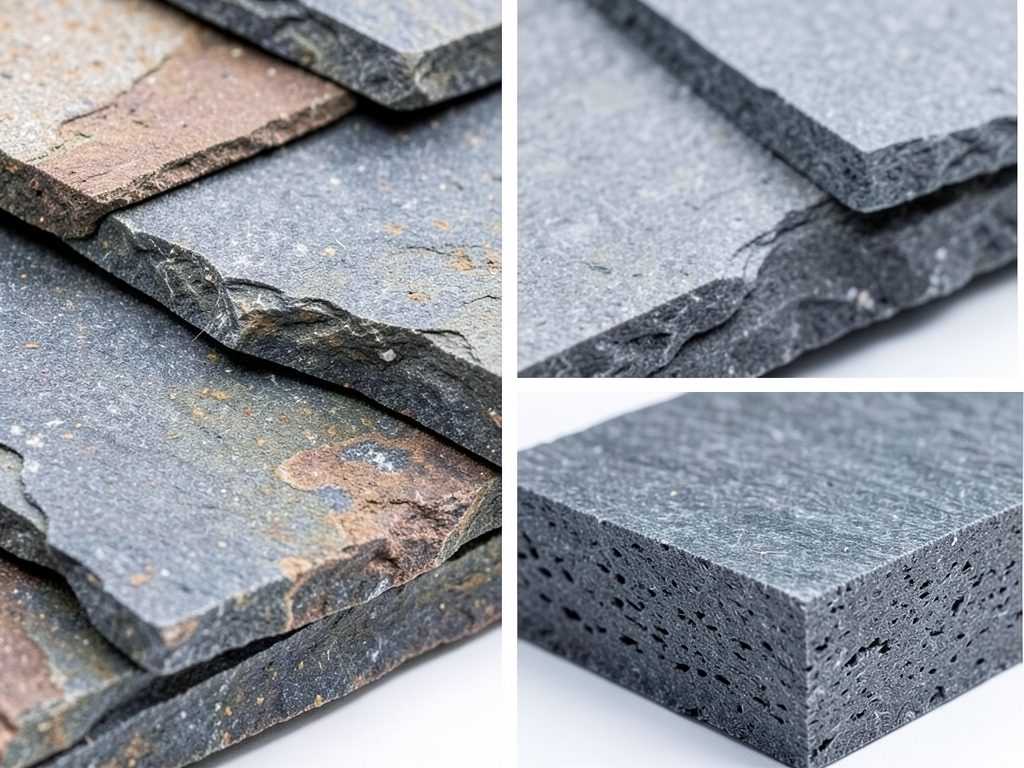
Image Description: Side-by-side comparison showing real slate’s natural color variations against synthetic slate’s uniform appearance with magnified view of polymer composite structure.
Cost Comparison for Wyoming Market
Material Type
Material Cost per Square
Installation Cost per Square
Total Cost per Square
Real Slate
$800 – $1,200
$600 – $900
$1,400 – $2,100
Synthetic Slate
$300 – $500
$400 – $600
$700 – $1,100
able>
Wyoming roofing contractors typically charge 20% more for real slate installation due to specialized skills required. The weight factor also increases labor costs since crews need additional safety equipment and often require longer installation times. Shipping costs affect both materials differently. Real slate often comes from Vermont or Virginia quarries adding $100 to $200 per square in transportation fees. Synthetic slate ships from regional distribution centers keeping transport costs under $50 per square.
Weather Performance in Wyoming Climate
Wyoming’s freeze-thaw cycles test roofing materials throughout winter months. Real slate handles these temperature swings exceptionally well since natural stone expands and contracts at predictable rates. The material’s density prevents water absorption that leads to cracking in other stone products. Synthetic slate uses advanced polymer technology designed specifically for freeze-thaw resistance. Quality synthetic products carry Class 4 impact ratings the highest available for roofing materials. This matters in Wyoming where hailstorms can damage lesser materials.
Wyoming’s high altitude creates intense UV exposure that affects roofing materials differently. Real slate’s natural composition resists UV damage without additional treatments. Synthetic slate manufacturers often add UV inhibitors but these can degrade over time especially on south-facing slopes. Both materials benefit from Wyoming’s generally low humidity which reduces mold and algae growth compared to more humid regions.
Structural Requirements for Wyoming Homes
Older Wyoming homes in established neighborhoods often need structural reinforcement before installing real slate. A standard asphalt roof weighs about 250 pounds per square. Adding 1,000 pounds per square requires engineering assessment and possible rafter reinforcement. The Wyoming Building Code Section 1504.01 requires structural engineers to certify homes can support additional roof loads. This process adds $1,000 to $2,000 to project costs but prevents catastrophic failures.
Synthetic slate eliminates structural concerns for most homes. The lightweight material works on any roof that supports standard asphalt shingles. This makes synthetic slate attractive for homeowners wanting the slate look without engineering complications. Wyoming’s building codes recognize synthetic slate as an approved alternative to natural slate when installed according to manufacturer specifications.
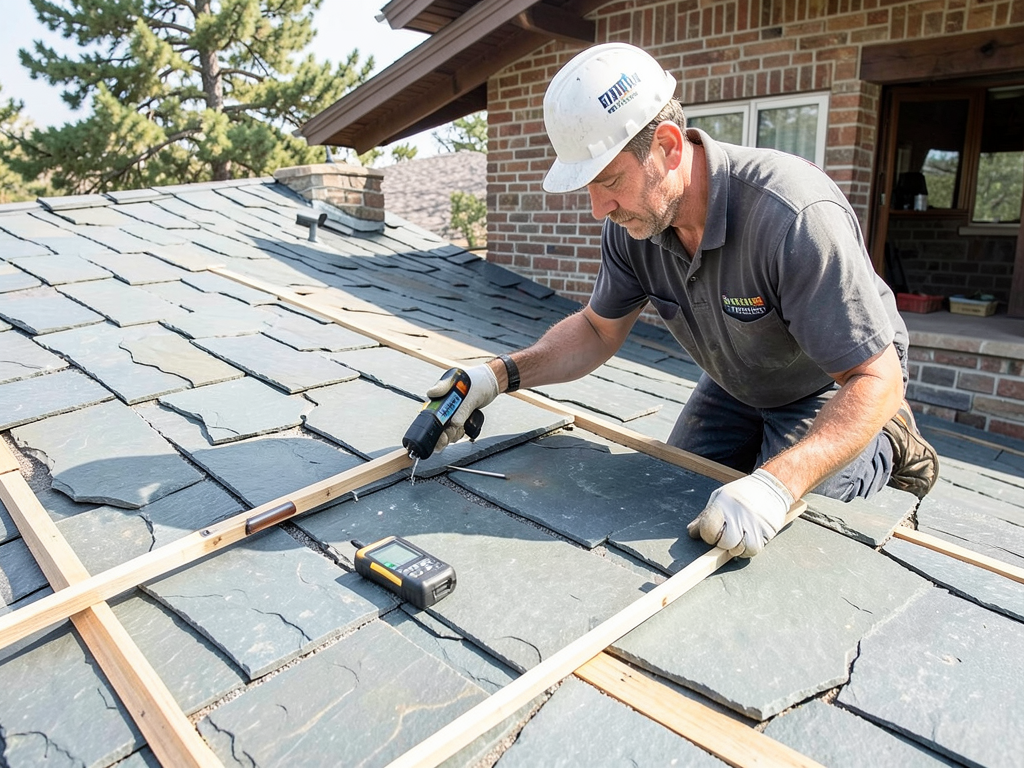
Image Description: Technician using a moisture meter to test roof deck integrity before installing heavy slate materials on a historic Wyoming home.
Installation Process and Timeline
Real slate installation requires craftsmen with specific training. Each piece must be hand-cut to fit roof contours and nailed with precise spacing. A typical 2,000 square foot roof takes 2 to 3 weeks to complete with a crew of 4 to 6 specialists. Synthetic slate installs faster using standard roofing techniques. Contractors can use nail guns instead of hand-nailing and pieces snap together for easier alignment. The same 2,000 square foot roof finishes in 1 to 2 weeks with a standard 3-person crew.
Wyoming’s weather patterns affect installation differently than other regions. High winds common in Wyoming require additional fastening for both materials. Real slate’s weight provides natural wind resistance but individual pieces can still lift in extreme gusts. Synthetic slate uses specialized fastening systems designed to withstand Wyoming’s wind conditions. Both materials require proper underlayment and ice and water shields to handle Wyoming’s occasional heavy snow loads.
Maintenance Requirements Over Time
Real slate needs minimal maintenance when properly installed. The material resists water penetration and UV damage naturally. Wyoming homeowners should inspect flashing and fasteners every 5 to 7 years. Individual damaged pieces can be replaced without affecting surrounding areas. The dry climate in Wyoming reduces the moss and algae growth that plagues roofs in more humid regions. How to Get Your Cincinnati Roof Replaced After a Major Hail Storm.
Synthetic slate requires more frequent attention. The polymer material expands more than natural stone potentially loosening fasteners over time. Manufacturers recommend annual inspections and tightening of loose pieces. The color also fades gradually especially on southern exposures exposed to intense Wyoming sunlight. Both materials benefit from clean gutters and proper attic ventilation. Wyoming’s cold winters make ventilation critical for preventing ice dam formation.
Environmental Impact and Sustainability
Real slate offers excellent sustainability credentials. The material lasts over 100 years and is fully recyclable at end of life. Quarrying does create environmental impact but the long lifespan offsets this over time. Wyoming’s natural slate deposits in the Medicine Bow Mountains provide local sourcing options reducing transportation emissions. Many Wyoming historic districts prefer real slate for its authentic appearance and durability.
Synthetic slate uses petroleum-based products but offers advantages in transportation emissions. The lightweight material requires less fuel to ship than heavy stone. Some manufacturers now use recycled materials in production reducing environmental impact. Wyoming’s high elevation means both materials receive more UV exposure affecting their long-term performance differently. Real slate’s natural composition handles UV better while synthetic products may need replacement sooner despite their lower initial environmental cost.
Resale Value and Curb Appeal
Real slate adds significant value to Wyoming homes especially in established neighborhoods. The material signals quality construction and attention to detail. Appraisers recognize real slate as a premium feature often adding $15,000 to $25,000 to home values in desirable areas. Wyoming’s architectural heritage includes many historic buildings with original slate roofs that remain functional after a century of service.
Synthetic slate provides good curb appeal at lower cost. From street level most people cannot distinguish quality synthetic products from real slate. The material works well for homeowners wanting the luxury look without the luxury price tag. Wyoming’s wide open landscapes and big sky country create unique lighting conditions that affect how roofing materials appear from different angles and distances.
Image Description: Completed installation showing synthetic slate on a modern Wyoming home with close-up detail of impact-resistant polymer tiles.
Making Your Final Decision
Choose real slate if your home has proper structural support and you plan to stay 20+ years. The material’s longevity and authenticity justify the higher upfront investment for many homeowners. Real slate also makes sense for historic preservation projects where authenticity matters. Wyoming’s extreme weather conditions favor real slate’s proven track record of durability.
Select synthetic slate for lighter weight requirements budget constraints or when you want easier installation. Modern synthetic products offer excellent durability and appearance at 40% to 60% less cost than real slate. The material works well for most Wyoming homes built after 1970. Wyoming’s building codes accept synthetic slate as a legitimate alternative when installed properly.
Consider your neighborhood’s character and any local requirements. Some Wyoming communities have specific guidelines about roofing materials especially in historic districts. Check with local building authorities before making final decisions. Wyoming’s building departments can provide specific requirements for your area.
Professional Installation Matters Most
Neither material performs well with poor installation. Real slate requires craftsmen who understand proper fastening techniques and layout patterns. Synthetic slate needs installers familiar with manufacturer specifications and expansion gaps. Wyoming’s unique climate conditions require installers who understand local weather patterns and building requirements.
Look for contractors with specific experience in your chosen material. Ask for references from similar projects and verify warranty coverage. Quality installation determines whether your investment performs as expected for decades to come. Wyoming’s extreme temperature swings require proper installation techniques to prevent material failure.
Both materials require proper underlayment ice and water shields and ventilation systems. These components matter as much as the visible roofing material for long-term performance. Wyoming’s building codes specify minimum requirements for these components to ensure proper roof performance.
Frequently Asked Questions
How long does synthetic slate really last compared to real slate?
Synthetic slate typically lasts 40 to 50 years while real slate can last over 100 years. The shorter lifespan of synthetic products comes with benefits like lower weight and easier installation. Quality synthetic materials from reputable manufacturers often carry 50-year warranties. Wyoming’s UV exposure may affect synthetic products more than real slate.
Can my older Wyoming home support real slate roofing?
Many pre-1980 homes need structural reinforcement for real slate. The Wyoming Building Code requires engineering assessment when adding heavy roofing materials. A structural engineer can evaluate your home’s framing and recommend necessary upgrades which typically cost $1,000 to $2,000. Wyoming’s building departments can provide specific requirements for your area.
Does synthetic slate look fake compared to real slate?
Quality synthetic slate looks remarkably similar to real slate from street level. Close inspection reveals differences in texture and color variation. Premium synthetic products use multiple colors and surface textures to mimic natural stone’s appearance. Wyoming’s lighting conditions can make these differences more or less noticeable depending on the time of day and season.
What maintenance does real slate require in Wyoming’s climate?
Real slate needs minimal maintenance beyond regular gutter cleaning and attic ventilation checks. Inspect flashing and fasteners every 5 to 7 years. Individual damaged pieces can be replaced without affecting surrounding areas making repairs straightforward. Wyoming’s dry climate reduces the moss and algae growth that plagues roofs in more humid regions. Reliable Flat Roof Repair Services for Over-the-Rhine Business Owners.
Is synthetic slate more energy efficient than real slate?
Synthetic slate often includes reflective coatings that reduce heat absorption improving cooling efficiency. Real slate’s thermal mass helps regulate temperatures but also absorbs heat. Both materials benefit from proper attic ventilation which matters more than the roofing material itself. Wyoming’s high altitude means both materials receive more UV exposure affecting their long-term performance differently.
How do I choose between real and synthetic slate for my Wyoming home?
Consider your budget structural requirements and how long you plan to stay in the home. Real slate makes sense for long-term ownership and historic preservation. Synthetic slate works well for budget-conscious homeowners wanting the slate appearance without structural modifications. Wyoming’s building codes accept synthetic slate as a legitimate alternative when installed properly.
Get Expert Advice for Your Wyoming Home
Choosing between real and synthetic slate represents a significant investment in your home’s future. The right choice depends on your specific situation including your home’s structure neighborhood requirements and long-term plans. Professional assessment helps you understand the full scope of each option. Wyoming’s unique climate and building requirements make expert guidance essential.
Call (513) 223-5511 today to schedule your inspection. Our experienced team evaluates your home’s structure reviews your options and provides honest recommendations based on your needs and budget. We serve Wyoming homeowners throughout the area with both real and synthetic slate installations. Don’t wait until roofing problems force your decision. A professional inspection now helps you plan properly and avoid costly surprises.
Pick up the phone and call (513) 223-5511 before the next storm hits. Your home deserves the right roofing solution for Wyoming’s unique climate and your specific needs. Our team understands Wyoming’s building codes weather patterns and architectural styles ensuring your roofing investment performs as expected for decades to come. For more information, visit North American Slate Association.
{
“@context”: “https://schema.org”,
“@type”: “BlogPosting”,
“headline”: “Comparing Real Slate vs Synthetic Shingles for Your High End Wyoming Home”,
“description”: “Compare real slate and synthetic shingles for Wyoming homes. Learn about costs, durability, installation, and local building requirements for premium roofing materials.”,
“wordCount”: 2078,
“datePublished”: “2026-04-25T15:31:00.000Z”,
“dateModified”: “2026-04-25T15:31:00.000Z”,
“inLanguage”: “en-US”,
“mainEntityOfPage”: {
“@type”: “WebPage”,
“@id”: “https://firstchoiceroofingcincinnati.com”
},
“publisher”: {
“@type”: “LocalBusiness”,
“name”: “First Choice Roofing Cincinnati”,
“url”: “https://firstchoiceroofingcincinnati.com”
},
“author”: {
“@type”: “Organization”,
“name”: “First Choice Roofing Cincinnati”,
“url”: “https://firstchoiceroofingcincinnati.com”
},
“image”: {
“@type”: “ImageObject”,
“url”: “https://firstchoiceroofingcincinnati.com/wp-content/uploads/2026/03/comparing-real-slate-vs-synthetic-shingles-for-you-1.png”
}
}
{
“@context”: “https://schema.org”,
“@type”: “FAQPage”,
“mainEntity”: [
{
“@type”: “Question”,
“name”: “How long does synthetic slate really last compared to real slate?”,
“acceptedAnswer”: {
“@type”: “Answer”,
“text”: “Synthetic slate typically lasts 40 to 50 years while real slate can last over 100 years. The shorter lifespan of synthetic products comes with benefits like lower weight and easier installation. Quality synthetic materials from reputable manufacturers often carry 50-year warranties. Wyoming’s UV exposure may affect synthetic products more than real slate.”
}
},
{
“@type”: “Question”,
“name”: “Can my older Wyoming home support real slate roofing?”,
“acceptedAnswer”: {
“@type”: “Answer”,
“text”: “Many pre-1980 homes need structural reinforcement for real slate. The Wyoming Building Code requires engineering assessment when adding heavy roofing materials. A structural engineer can evaluate your home’s framing and recommend necessary upgrades which typically cost $1,000 to $2,000. Wyoming’s building departments can provide specific requirements for your area.”
}
},
{
“@type”: “Question”,
“name”: “Does synthetic slate look fake compared to real slate?”,
“acceptedAnswer”: {
“@type”: “Answer”,
“text”: “Quality synthetic slate looks remarkably similar to real slate from street level. Close inspection reveals differences in texture and color variation. Premium synthetic products use multiple colors and surface textures to mimic natural stone’s appearance. Wyoming’s lighting conditions can make these differences more or less noticeable depending on the time of day and season.”
}
},
{
“@type”: “Question”,
“name”: “What maintenance does real slate require in Wyoming’s climate?”,
“acceptedAnswer”: {
“@type”: “Answer”,
“text”: “Real slate needs minimal maintenance beyond regular gutter cleaning and attic ventilation checks. Inspect flashing and fasteners every 5 to 7 years. Individual damaged pieces can be replaced without affecting surrounding areas making repairs straightforward. Wyoming’s dry climate reduces the moss and algae growth that plagues roofs in more humid regions. Reliable Flat Roof Repair Services for Over-the-Rhine Business Owners.”
}
},
{
“@type”: “Question”,
“name”: “Is synthetic slate more energy efficient than real slate?”,
“acceptedAnswer”: {
“@type”: “Answer”,
“text”: “Synthetic slate often includes reflective coatings that reduce heat absorption improving cooling efficiency. Real slate’s thermal mass helps regulate temperatures but also absorbs heat. Both materials benefit from proper attic ventilation which matters more than the roofing material itself. Wyoming’s high altitude means both materials receive more UV exposure affecting their long-term performance differently.”
}
},
{
“@type”: “Question”,
“name”: “How do I choose between real and synthetic slate for my Wyoming home?”,
“acceptedAnswer”: {
“@type”: “Answer”,
“text”: “Consider your budget structural requirements and how long you plan to stay in the home. Real slate makes sense for long-term ownership and historic preservation. Synthetic slate works well for budget-conscious homeowners wanting the slate appearance without structural modifications. Wyoming’s building codes accept synthetic slate as a legitimate alternative when installed properly.”
}
}
]
}
{
“@context”: “https://schema.org”,
“@type”: “BreadcrumbList”,
“itemListElement”: [
{
“@type”: “ListItem”,
“position”: 1,
“name”: “Home”,
“item”: “https://firstchoiceroofingcincinnati.com”
},
{
“@type”: “ListItem”,
“position”: 2,
“name”: “Blog”,
“item”: “https://firstchoiceroofingcincinnati.com/blog”
},
{
“@type”: “ListItem”,
“position”: 3,
“name”: “Comparing Real Slate vs Synthetic Shingles for Your High End Wyoming Home”
}
]
}
{
“@context”: “https://schema.org”,
“@type”: “Service”,
“serviceType”: “Roofing”,
“provider”: {
“@type”: “LocalBusiness”,
“name”: “First Choice Roofing Cincinnati”,
“url”: “https://firstchoiceroofingcincinnati.com”
},
“areaServed”: {
“@type”: “City”,
“name”: “Cincinnati”
},
“description”: “Compare real slate and synthetic shingles for Wyoming homes. Learn about costs, durability, installation, and local building requirements for premium roofing materials.”
}
Contact Us
Ready to secure your property with a trustworthy, expertly installed, or repaired roof? Don’t hesitate to reach out to the dedicated professionals at First Choice Roofing Cincinnati today! We guarantee a fast response, deliver expert service backed by certified professionals, and always provide fair, transparent pricing. Contact us now to schedule your free consultation and take the first convenient step towards a stronger, more protected home or business.
This mode enables people with epilepsy to use the website safely by eliminating the risk of seizures that result from flashing or blinking animations and risky color combinations.
Visually Impaired Mode
Improves website's visuals
This mode adjusts the website for the convenience of users with visual impairments such as Degrading Eyesight, Tunnel Vision, Cataract, Glaucoma, and others.
Cognitive Disability Mode
Helps to focus on specific content
This mode provides different assistive options to help users with cognitive impairments such as Dyslexia, Autism, CVA, and others, to focus on the essential elements of the website more easily.
ADHD Friendly Mode
Reduces distractions and improve focus
This mode helps users with ADHD and Neurodevelopmental disorders to read, browse, and focus on the main website elements more easily while significantly reducing distractions.
Blindness Mode
Allows using the site with your screen-reader
This mode configures the website to be compatible with screen-readers such as JAWS, NVDA, VoiceOver, and TalkBack. A screen-reader is software for blind users that is installed on a computer and smartphone, and websites must be compatible with it.
Online Dictionary
Readable Experience
Content Scaling
Default
Text Magnifier
Readable Font
Dyslexia Friendly
Highlight Titles
Highlight Links
Font Sizing
Default
Line Height
Default
Letter Spacing
Default
Left Aligned
Center Aligned
Right Aligned
Visually Pleasing Experience
Dark Contrast
Light Contrast
Monochrome
High Contrast
High Saturation
Low Saturation
Adjust Text Colors
Adjust Title Colors
Adjust Background Colors
Easy Orientation
Mute Sounds
Hide Images
Hide Emoji
Reading Guide
Stop Animations
Reading Mask
Highlight Hover
Highlight Focus
Big Dark Cursor
Big Light Cursor
Cognitive Reading
Virtual Keyboard
Navigation Keys
Voice Navigation
Accessibility Statement
firstchoiceroofingcincinnati.com
October 27, 2026
Compliance status
We firmly believe that the internet should be available and accessible to anyone, and are committed to providing a website that is accessible to the widest possible audience,
regardless of circumstance and ability.
To fulfill this, we aim to adhere as strictly as possible to the World Wide Web Consortium’s (W3C) Web Content Accessibility Guidelines 2.1 (WCAG 2.1) at the AA level.
These guidelines explain how to make web content accessible to people with a wide array of disabilities. Complying with those guidelines helps us ensure that the website is accessible
to all people: blind people, people with motor impairments, visual impairment, cognitive disabilities, and more.
This website utilizes various technologies that are meant to make it as accessible as possible at all times. We utilize an accessibility interface that allows persons with specific
disabilities to adjust the website’s UI (user interface) and design it to their personal needs.
Additionally, the website utilizes an AI-based application that runs in the background and optimizes its accessibility level constantly. This application remediates the website’s HTML,
adapts Its functionality and behavior for screen-readers used by the blind users, and for keyboard functions used by individuals with motor impairments.
If you’ve found a malfunction or have ideas for improvement, we’ll be happy to hear from you. You can reach out to the website’s operators by using the following email
Screen-reader and keyboard navigation
Our website implements the ARIA attributes (Accessible Rich Internet Applications) technique, alongside various different behavioral changes, to ensure blind users visiting with
screen-readers are able to read, comprehend, and enjoy the website’s functions. As soon as a user with a screen-reader enters your site, they immediately receive
a prompt to enter the Screen-Reader Profile so they can browse and operate your site effectively. Here’s how our website covers some of the most important screen-reader requirements,
alongside console screenshots of code examples:
Screen-reader optimization: we run a background process that learns the website’s components from top to bottom, to ensure ongoing compliance even when updating the website.
In this process, we provide screen-readers with meaningful data using the ARIA set of attributes. For example, we provide accurate form labels;
descriptions for actionable icons (social media icons, search icons, cart icons, etc.); validation guidance for form inputs; element roles such as buttons, menus, modal dialogues (popups),
and others. Additionally, the background process scans all the website’s images and provides an accurate and meaningful image-object-recognition-based description as an ALT (alternate text) tag
for images that are not described. It will also extract texts that are embedded within the image, using an OCR (optical character recognition) technology.
To turn on screen-reader adjustments at any time, users need only to press the Alt+1 keyboard combination. Screen-reader users also get automatic announcements to turn the Screen-reader mode on
as soon as they enter the website.
These adjustments are compatible with all popular screen readers, including JAWS and NVDA.
Keyboard navigation optimization: The background process also adjusts the website’s HTML, and adds various behaviors using JavaScript code to make the website operable by the keyboard. This includes the ability to navigate the website using the Tab and Shift+Tab keys, operate dropdowns with the arrow keys, close them with Esc, trigger buttons and links using the Enter key, navigate between radio and checkbox elements using the arrow keys, and fill them in with the Spacebar or Enter key.Additionally, keyboard users will find quick-navigation and content-skip menus, available at any time by clicking Alt+1, or as the first elements of the site while navigating with the keyboard. The background process also handles triggered popups by moving the keyboard focus towards them as soon as they appear, and not allow the focus drift outside it.
Users can also use shortcuts such as “M” (menus), “H” (headings), “F” (forms), “B” (buttons), and “G” (graphics) to jump to specific elements.
Disability profiles supported in our website
Epilepsy Safe Mode: this profile enables people with epilepsy to use the website safely by eliminating the risk of seizures that result from flashing or blinking animations and risky color combinations.
Visually Impaired Mode: this mode adjusts the website for the convenience of users with visual impairments such as Degrading Eyesight, Tunnel Vision, Cataract, Glaucoma, and others.
Cognitive Disability Mode: this mode provides different assistive options to help users with cognitive impairments such as Dyslexia, Autism, CVA, and others, to focus on the essential elements of the website more easily.
ADHD Friendly Mode: this mode helps users with ADHD and Neurodevelopmental disorders to read, browse, and focus on the main website elements more easily while significantly reducing distractions.
Blindness Mode: this mode configures the website to be compatible with screen-readers such as JAWS, NVDA, VoiceOver, and TalkBack. A screen-reader is software for blind users that is installed on a computer and smartphone, and websites must be compatible with it.
Keyboard Navigation Profile (Motor-Impaired): this profile enables motor-impaired persons to operate the website using the keyboard Tab, Shift+Tab, and the Enter keys. Users can also use shortcuts such as “M” (menus), “H” (headings), “F” (forms), “B” (buttons), and “G” (graphics) to jump to specific elements.
Additional UI, design, and readability adjustments
Font adjustments – users, can increase and decrease its size, change its family (type), adjust the spacing, alignment, line height, and more.
Color adjustments – users can select various color contrast profiles such as light, dark, inverted, and monochrome. Additionally, users can swap color schemes of titles, texts, and backgrounds, with over seven different coloring options.
Animations – person with epilepsy can stop all running animations with the click of a button. Animations controlled by the interface include videos, GIFs, and CSS flashing transitions.
Content highlighting – users can choose to emphasize important elements such as links and titles. They can also choose to highlight focused or hovered elements only.
Audio muting – users with hearing devices may experience headaches or other issues due to automatic audio playing. This option lets users mute the entire website instantly.
Cognitive disorders – we utilize a search engine that is linked to Wikipedia and Wiktionary, allowing people with cognitive disorders to decipher meanings of phrases, initials, slang, and others.
Additional functions – we provide users the option to change cursor color and size, use a printing mode, enable a virtual keyboard, and many other functions.
Browser and assistive technology compatibility
We aim to support the widest array of browsers and assistive technologies as possible, so our users can choose the best fitting tools for them, with as few limitations as possible. Therefore, we have worked very hard to be able to support all major systems that comprise over 95% of the user market share including Google Chrome, Mozilla Firefox, Apple Safari, Opera and Microsoft Edge, JAWS and NVDA (screen readers).
Notes, comments, and feedback
Despite our very best efforts to allow anybody to adjust the website to their needs. There may still be pages or sections that are not fully accessible, are in the process of becoming accessible, or are lacking an adequate technological solution to make them accessible. Still, we are continually improving our accessibility, adding, updating and improving its options and features, and developing and adopting new technologies. All this is meant to reach the optimal level of accessibility, following technological advancements. For any assistance, please reach out to