
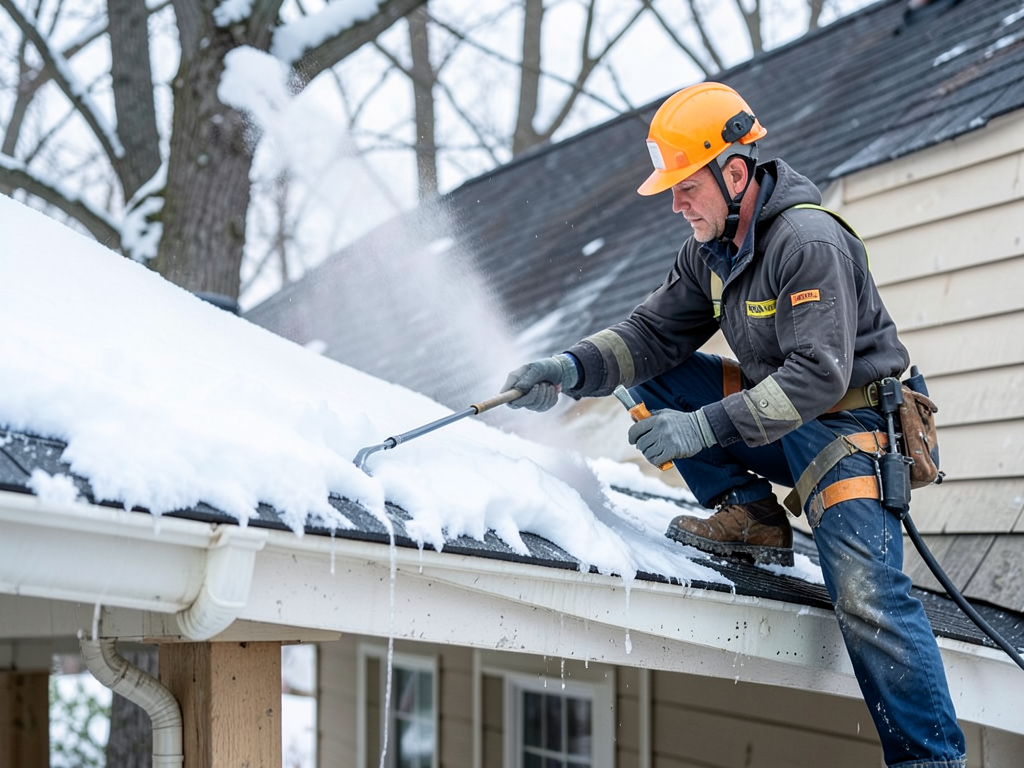
Ice dams form when heat escapes from your attic and melts snow on your roof. The water runs down and refreezes at the colder eaves, creating a barrier that traps water behind it. In Cincinnati’s freeze-thaw climate, this cycle repeats throughout winter, causing water to back up under shingles and leak into your home. How to Get Your Cincinnati Roof Replaced After a Major Hail Storm.
Cincinnati’s unique weather patterns make ice dams a common winter threat. The Ohio Valley’s humidity combined with frequent temperature swings creates perfect conditions for ice dam formation. When daytime temperatures hover around freezing and drop below at night, snow melts and refreezes repeatedly on your roof edges.
Ice dams can cause thousands of dollars in damage to your Cincinnati home. Water intrusion leads to stained ceilings, damaged insulation, warped drywall, and even structural rot. The weight of heavy ice buildup can also stress your roof structure and gutters, potentially causing them to pull away from your home.
Understanding how ice dams form is the first step to preventing them. The problem isn’t your roof’s surface—it’s what’s happening inside your attic. Poor insulation and inadequate ventilation allow warm air to rise and heat your roof deck from below, melting snow from the underside.. Read more about How Poor Attic Ventilation Can Destroy Your New Roof in Fairfield.
Modern building codes require specific ice barrier protection in Cincinnati. According to the Ohio Residential Code (ORC) Chapter 9, ice barrier underlayment must extend from the roof edge up the roof slope to a point at least 24 inches inside the exterior wall line. This creates a waterproof shield against ice dam water intrusion.
The most effective way to prevent ice dams is to keep your roof cold. This means sealing air leaks from your living space into the attic, adding proper insulation, and ensuring adequate ventilation. These three steps work together to maintain a uniform roof temperature and prevent snow melt.
Professional ice dam removal requires specialized equipment and expertise. Using hammers, chisels, or chemicals can damage your shingles and void warranties. Low-pressure steam removal is the safest method, melting ice without harming roofing materials or creating additional water intrusion. Is Metal Roofing Worth the Investment for Your Anderson Township Home?.
Cincinnati’s historic neighborhoods face unique ice dam challenges. Older homes in Clifton, Over-the-Rhine, and Hyde Park often have inadequate attic insulation and ventilation systems designed for different climate conditions. These architectural treasures require specialized solutions that preserve their character while preventing winter damage.
Heat cables can provide temporary relief in problem areas, but they’re not a permanent solution. These electric cables create channels for water to escape, preventing ice buildup in critical areas like roof valleys and eaves. However, they require electricity and regular maintenance to function properly.
Attic insulation plays a crucial role in ice dam prevention. The Department of Energy recommends R-49 to R-60 insulation levels for Cincinnati’s climate zone. This translates to approximately 16-20 inches of fiberglass or cellulose insulation, depending on the material’s R-value per inch. EPA guidance on attic ventilation.
Proper attic ventilation works hand-in-hand with insulation. Soffit vents draw cold air in at the eaves while ridge vents allow warm air to escape at the peak. This continuous airflow keeps the entire roof deck cold and prevents the temperature variations that cause snow melt.
Ice dam damage often extends beyond the roof. Water that backs up under shingles can travel along rafters and into wall cavities, causing hidden damage to insulation, wiring, and framing. This moisture creates ideal conditions for mold growth and wood rot if not addressed promptly.
Emergency ice dam removal services are available 24/7 in Cincinnati. When you notice water stains on your ceiling or walls during winter, immediate action is crucial to prevent further damage. Professional teams use thermal imaging to locate ice dams and steam equipment to remove them safely. Who to Call for 24-Hour Emergency Roof Leak Repair in Cincinnati.
Preventive maintenance can save you thousands in potential repairs. Annual gutter cleaning, checking attic insulation levels, and inspecting ventilation systems before winter can identify problems early. A professional roof inspection can reveal hidden vulnerabilities that contribute to ice dam formation. Reliable Flat Roof Repair Services for Over-the-Rhine Business Owners.
Cincinnati’s freeze-thaw cycles are particularly damaging to roofing materials. The expansion and contraction of water as it freezes and thaws can cause shingles to crack, nails to loosen, and flashing to separate. These small failures become entry points for water during ice dam events.
Insurance coverage for ice dam damage varies by policy. Most homeowners insurance covers sudden and accidental water damage from ice dams, but may not cover the cost of ice dam removal itself. Review your policy and consider adding coverage for preventive services if available.
Professional ice dam prevention involves a comprehensive approach. This includes sealing attic bypasses where warm air escapes, upgrading insulation to current code standards, installing proper ventilation, and applying ice and water shield underlayment during roof replacement or repair.
The cost of ice dam prevention is typically much lower than the cost of damage repair. While professional prevention services might cost $2,000-$5,000 depending on your home’s size and condition, water damage repairs can easily exceed $10,000-$20,000 when you factor in ceiling repair, insulation replacement, and mold remediation.
Cincinnati’s building inspectors pay close attention to ice barrier installation during roof inspections. Proper ice and water shield application is not optional—it’s a code requirement that protects both your home and the roofing contractor from liability in case of ice dam formation.
Heat loss through recessed lighting, bathroom fans, and chimney chases are common culprits in ice dam formation. These penetrations allow warm air to escape into the attic, creating hot spots on your roof. Sealing these bypasses with fire-rated caulk or expanding foam can significantly reduce heat transfer.
Roof pitch affects ice dam severity. Low-slope roofs (under 4:12 pitch) are more susceptible to ice dam formation because water cannot drain as quickly. Steeper roofs allow water to run off before it can refreeze, though they’re not immune to ice dam problems in extreme conditions.. Read more about Quick and Affordable Roof Patching Services in Northside and College Hill.
Ice dam prevention is especially important for Cincinnati’s many historic homes. These structures often have balloon framing that allows fire and moisture to spread quickly between floors. Water from ice dams can travel through these channels, causing damage far from the original entry point.
Professional roofers use moisture meters to detect water intrusion from ice dams. These devices measure the moisture content in wood and drywall, helping identify affected areas that may not be visible to the naked eye. Early detection can prevent mold growth and structural damage.
Ventilation calculations are critical for ice dam prevention. The International Residential Code requires 1 square foot of net free ventilation area for every 150 square feet of attic floor space. In high-humidity areas like Cincinnati, some experts recommend doubling this ratio for optimal performance.
Ice dam removal should never be attempted with sharp tools or excessive force. Chipping away at ice can damage shingles, remove protective granules, and create new vulnerabilities for water intrusion. Professional removal uses controlled steam application that melts ice without damaging roofing materials.
Cincinnati’s proximity to the Ohio River affects local weather patterns and ice dam formation. The river valley creates unique microclimates where temperature inversions can trap cold air near the ground while warmer air flows overhead, creating conditions that promote ice dam development.
Preventive measures should be implemented before winter arrives. Once ice dams form, options become limited and more expensive. Fall is the ideal time for attic inspections, insulation upgrades, and ventilation improvements that will protect your home throughout the winter months.
Professional ice dam prevention services include thermal imaging to identify heat loss patterns in your attic. This technology reveals hot spots where insulation is missing or compressed, allowing targeted improvements that maximize energy efficiency and ice dam prevention.
The weight of ice buildup can cause structural damage beyond water intrusion. Heavy ice dams can pull gutters away from fascia boards, damage downspouts, and even cause roof collapse in extreme cases. The pressure can also force ice under shingles, creating pathways for water entry.
Cincinnati’s building code requires ice barrier underlayment in all new construction and roof replacements. This self-adhering membrane provides a waterproof barrier that protects your home even if ice dams form. The membrane extends from the eave to at least 24 inches inside the exterior wall line.
Professional ice dam removal teams carry liability insurance specifically for this work. The combination of heights, winter conditions, and water damage creates unique risks that require specialized coverage. Always verify that contractors have proper insurance before allowing ice dam removal work on your home.
Ice dam formation is a symptom of underlying problems with your home’s building envelope. While removal addresses the immediate issue, prevention requires a holistic approach to your home’s insulation, ventilation, and air sealing systems. This integrated strategy provides year-round benefits beyond just ice dam prevention.
Call (513) 223-5511 today to schedule your ice dam prevention consultation. Our team of Cincinnati roofing experts will inspect your attic, identify problem areas, and recommend solutions tailored to your home’s specific needs. Don’t wait until water is dripping through your ceiling—preventive action now can save you thousands in repairs later.
Ice Dam Prevention vs. Removal Cost Comparison
| Service Type | Average Cost | Timeline | Long-term Benefit |
|---|---|---|---|
| Preventive Insulation Upgrade | $2,500 – $5,000 | 1-2 days | Prevents future ice dams |
| Professional Steam Removal | $300 – $600 per hour | 2-6 hours | Temporary solution |
| Ventilation System Installation | $1,500 – $3,000 | 1-2 days | Continuous prevention |
| Ice & Water Shield Replacement | $1,000 – $2,500 | 1-2 days | Waterproof barrier |
Common Ice Dam Formation Areas in Cincinnati Homes
- Roof Valleys – Snow accumulates and melts slower in these channels
- Eaves and Overhangs – These areas stay coldest and first to freeze
- Chimney Flashing – Heat from chimneys creates melt patterns
- Attic Penetrations – Recessed lights and vents create heat escape points
- Complex Roof Designs – Multiple levels create varied temperature zones
Ice Dam Warning Signs to Watch For
- Large icicles hanging from gutters
- Water stains on ceilings or walls
- Ice buildup along roof edges
- Gutters pulling away from fascia
- Unusual sounds from roof during freeze-thaw cycles
Frequently Asked Questions
How do I know if I have an ice dam?
Look for large icicles hanging from your gutters, ice buildup along roof edges, or water stains appearing on interior ceilings and walls during winter. You might also notice gutters pulling away from your home or hear cracking sounds from your roof during freeze-thaw cycles.
Can I remove ice dams myself?
DIY ice dam removal is dangerous and can damage your roof. Using hammers, chisels, or chemicals can void your shingle warranty and create new leak points. Professional steam removal is the only safe method that won’t harm your roofing materials.
How much does ice dam prevention cost?
Preventive measures typically cost $2,000-$5,000 depending on your home’s size and current condition. This includes upgrading insulation to R-49 to R-60 levels, improving ventilation, and sealing air leaks. These improvements also reduce heating costs year-round.
Will my insurance cover ice dam damage?
Most homeowners insurance policies cover sudden and accidental water damage from ice dams, but may not cover the cost of ice dam removal itself. Check your policy details and consider adding coverage for preventive services if available.
How long does ice dam removal take?
Professional steam ice dam removal typically takes 2-6 hours depending on the size and severity of the ice buildup. Emergency services are available 24/7, but scheduling during normal business hours can save you money on after-hours rates. Emergency Tarping Service.
Steps to Prevent Ice Dams This Winter
- Schedule Professional Inspection
Have a roofing expert examine your attic insulation, ventilation, and roof condition before winter. They’ll identify problem areas and recommend specific improvements for your home.
- Upgrade Attic Insulation
Install R-49 to R-60 insulation throughout your attic. This may require adding new insulation over existing material or complete replacement if current insulation is damaged or inadequate.
- Improve Ventilation
Ensure proper soffit and ridge ventilation to create continuous airflow. This keeps your roof deck cold and prevents the temperature variations that cause snow melt.
- Seal Air Leaks
Identify and seal attic bypasses where warm air escapes from your living space. Common areas include recessed lighting, bathroom fans, chimney chases, and plumbing vents.
- Install Ice & Water Shield
Apply self-adhering waterproof membrane from the eave up the roof slope at least 24 inches inside the exterior wall line. This provides backup protection if ice dams form.
- Maintain Gutters
Clean gutters and downspouts in late fall to ensure proper drainage. Consider installing gutter guards to prevent debris buildup that can contribute to ice dam formation.
- Monitor During Winter
Check your roof after heavy snowfalls for signs of ice dam formation. Early detection allows for prompt professional removal before significant damage occurs.
Ice dams represent a serious threat to Cincinnati homes during winter months. The combination of our freeze-thaw climate, historic architecture, and building practices creates perfect conditions for ice dam formation. However, with proper prevention strategies and professional expertise, you can protect your home from costly water damage.
The key to ice dam prevention is addressing the root cause: heat loss from your living space into the attic. By improving insulation, ventilation, and air sealing, you create a cold roof deck that prevents snow melt. This comprehensive approach not only prevents ice dams but also reduces heating costs and improves year-round comfort.
Professional ice dam removal should only be performed by experienced contractors using low-pressure steam equipment. DIY methods using hammers, chemicals, or hot water can cause more damage than the ice dam itself. The cost of professional prevention is minimal compared to the potential thousands in water damage repairs.
Cincinnati’s building codes require specific ice barrier protection for good reason. These requirements protect homeowners from the very problems ice dams cause. When replacing your roof or performing major repairs, ensure your contractor follows all local code requirements for ice and water shield installation.
Don’t wait until you see water stains on your ceiling to take action. By then, damage has already occurred and will require expensive repairs. Schedule your ice dam prevention consultation today and enjoy peace of mind this winter knowing your Cincinnati home is protected from ice dam damage.
Pick up the phone and call (513) 223-5511 before the next storm hits. Our Cincinnati roofing experts are ready to inspect your home, identify vulnerabilities, and implement solutions that will keep your roof ice-free all winter long. Protect your investment and avoid the stress of emergency repairs with professional ice dam prevention services. For more information, visit FEMA ice dam prevention tips.
{
“@context”: “https://schema.org”,
“@type”: “BlogPosting”,
“headline”: “Protecting Your Cincinnati Home Against Heavy Midwest Snow and Ice Dams”,
“description”: “Learn how to prevent ice dams and protect your Cincinnati home from winter damage. Expert tips on attic insulation, ventilation, and emergency removal services.”,
“wordCount”: 2435,
“datePublished”: “2026-02-26T11:20:00.000Z”,
“dateModified”: “2026-02-26T11:20:00.000Z”,
“inLanguage”: “en-US”,
“mainEntityOfPage”: {
“@type”: “WebPage”,
“@id”: “https://firstchoiceroofingcincinnati.com”
},
“publisher”: {
“@type”: “LocalBusiness”,
“name”: “First Choice Roofing Cincinnati”,
“url”: “https://firstchoiceroofingcincinnati.com”
},
“author”: {
“@type”: “Organization”,
“name”: “First Choice Roofing Cincinnati”,
“url”: “https://firstchoiceroofingcincinnati.com”
},
“image”: {
“@type”: “ImageObject”,
“url”: “https://firstchoiceroofingcincinnati.com/wp-content/uploads/2026/03/protecting-your-cincinnati-home-against-heavy-midw-1.png”
}
}
{
“@context”: “https://schema.org”,
“@type”: “RoofingContractor”,
“name”: “First Choice Roofing Cincinnati”,
“url”: “https://firstchoiceroofingcincinnati.com”,
“address”: {
“@type”: “PostalAddress”,
“addressLocality”: “Cincinnati”
},
“areaServed”: {
“@type”: “City”,
“name”: “Cincinnati”
}
}
{
“@context”: “https://schema.org”,
“@type”: “FAQPage”,
“mainEntity”: [
{
“@type”: “Question”,
“name”: “How do I know if I have an ice dam?”,
“acceptedAnswer”: {
“@type”: “Answer”,
“text”: “Look for large icicles hanging from your gutters, ice buildup along roof edges, or water stains appearing on interior ceilings and walls during winter. You might also notice gutters pulling away from your home or hear cracking sounds from your roof during freeze-thaw cycles.”
}
},
{
“@type”: “Question”,
“name”: “Can I remove ice dams myself?”,
“acceptedAnswer”: {
“@type”: “Answer”,
“text”: “DIY ice dam removal is dangerous and can damage your roof. Using hammers, chisels, or chemicals can void your shingle warranty and create new leak points. Professional steam removal is the only safe method that won’t harm your roofing materials.”
}
},
{
“@type”: “Question”,
“name”: “How much does ice dam prevention cost?”,
“acceptedAnswer”: {
“@type”: “Answer”,
“text”: “Preventive measures typically cost $2,000-$5,000 depending on your home’s size and current condition. This includes upgrading insulation to R-49 to R-60 levels, improving ventilation, and sealing air leaks. These improvements also reduce heating costs year-round.”
}
},
{
“@type”: “Question”,
“name”: “Will my insurance cover ice dam damage?”,
“acceptedAnswer”: {
“@type”: “Answer”,
“text”: “Most homeowners insurance policies cover sudden and accidental water damage from ice dams, but may not cover the cost of ice dam removal itself. Check your policy details and consider adding coverage for preventive services if available.”
}
},
{
“@type”: “Question”,
“name”: “How long does ice dam removal take?”,
“acceptedAnswer”: {
“@type”: “Answer”,
“text”: “Professional steam ice dam removal typically takes 2-6 hours depending on the size and severity of the ice buildup. Emergency services are available 24/7, but scheduling during normal business hours can save you money on after-hours rates. Emergency Tarping Service.”
}
}
]
}
{
“@context”: “https://schema.org”,
“@type”: “HowTo”,
“name”: “Prevent Ice Dams”,
“step”: [
{
“@type”: “HowToStep”,
“position”: 1,
“name”: “Schedule Professional Inspection”,
“text”: “Have a roofing expert examine your attic insulation, ventilation, and roof condition before winter. They’ll identify problem areas and recommend specific improvements for your home.”
},
{
“@type”: “HowToStep”,
“position”: 2,
“name”: “Upgrade Attic Insulation”,
“text”: “Install R-49 to R-60 insulation throughout your attic. This may require adding new insulation over existing material or complete replacement if current insulation is damaged or inadequate.”
},
{
“@type”: “HowToStep”,
“position”: 3,
“name”: “Improve Ventilation”,
“text”: “Ensure proper soffit and ridge ventilation to create continuous airflow. This keeps your roof deck cold and prevents the temperature variations that cause snow melt.”
},
{
“@type”: “HowToStep”,
“position”: 4,
“name”: “Seal Air Leaks”,
“text”: “Identify and seal attic bypasses where warm air escapes from your living space. Common areas include recessed lighting, bathroom fans, chimney chases, and plumbing vents.”
},
{
“@type”: “HowToStep”,
“position”: 5,
“name”: “Install Ice & Water Shield”,
“text”: “Apply self-adhering waterproof membrane from the eave up the roof slope at least 24 inches inside the exterior wall line. This provides backup protection if ice dams form.”
},
{
“@type”: “HowToStep”,
“position”: 6,
“name”: “Maintain Gutters”,
“text”: “Clean gutters and downspouts in late fall to ensure proper drainage. Consider installing gutter guards to prevent debris buildup that can contribute to ice dam formation.”
},
{
“@type”: “HowToStep”,
“position”: 7,
“name”: “Monitor During Winter”,
“text”: “Check your roof after heavy snowfalls for signs of ice dam formation. Early detection allows for prompt professional removal before significant damage occurs.”
}
],
“image”: “https://firstchoiceroofingcincinnati.com/wp-content/uploads/2026/03/protecting-your-cincinnati-home-against-heavy-midw-1.png”
}
{
“@context”: “https://schema.org”,
“@type”: “BreadcrumbList”,
“itemListElement”: [
{
“@type”: “ListItem”,
“position”: 1,
“name”: “Home”,
“item”: “https://firstchoiceroofingcincinnati.com”
},
{
“@type”: “ListItem”,
“position”: 2,
“name”: “Blog”,
“item”: “https://firstchoiceroofingcincinnati.com/blog”
},
{
“@type”: “ListItem”,
“position”: 3,
“name”: “Protecting Your Cincinnati Home Against Heavy Midwest Snow and Ice Dams”
}
]
}
{
“@context”: “https://schema.org”,
“@type”: “Service”,
“serviceType”: “Roofing”,
“provider”: {
“@type”: “LocalBusiness”,
“name”: “First Choice Roofing Cincinnati”,
“url”: “https://firstchoiceroofingcincinnati.com”
},
“areaServed”: {
“@type”: “City”,
“name”: “Cincinnati”
},
“description”: “Learn how to prevent ice dams and protect your Cincinnati home from winter damage. Expert tips on attic insulation, ventilation, and emergency removal services.”
}