
Finding tiny sand-like particles in your driveway or gutters? Those are asphalt shingle granules—and in Colerain Township, they often signal more than just normal wear. Cincinnati’s humid summers, freeze-thaw winters, and occasional hailstorms accelerate granule loss, which protects your shingles from UV damage. When those granules disappear, your roof ages faster and leaks become more likely. Cincinnati climate data.
If you’re seeing granules piling up after a storm or watching your shingles go bald, it’s time to act. Call (513) 223-5511 today for a free Colerain-area roof inspection before minor granule loss turns into major water damage.. Read more about Why Impact Resistant Shingles Save You Money on Home Insurance in Cincinnati.
Why Cincinnati Roofs Lose Granules Faster Than Other Cities
Ohio’s climate is brutal on asphalt shingles. The Cincinnati region experiences high humidity, rapid temperature swings, and severe storms that all contribute to premature granule loss. Understanding these local factors helps you know when to worry. How to Get Your Cincinnati Roof Replaced After a Major Hail Storm.
Humidity and Heat Stress in the Ohio River Valley
Cincinnati’s summer humidity often exceeds 70%, creating a greenhouse effect under your roof. This trapped moisture causes shingles to blister and shed granules prematurely. The National Weather Service reports Cincinnati averages 42 inches of rain annually—more than the national average—which keeps roofs damp and accelerates granule deterioration. National Oceanic and Atmospheric Administration.
Freeze-Thaw Cycles and Ice Dam Formation
Winter in Colerain means frequent freeze-thaw cycles. When snow melts during the day and refreezes at night, ice dams form at roof edges. Ohio Building Code ORC Section R905.1.2 requires ice barrier installation for protection, but many older Colerain homes lack this safeguard. The expansion and contraction stress causes granules to pop off and wash into your gutters.
Hail Damage: The Cincinnati Pattern
The National Oceanic and Atmospheric Administration (NOAA) tracks hailstorms across Ohio. Hamilton County experiences 3-5 significant hailstorms annually, with hailstones often exceeding 1 inch in diameter. Hail impacts create circular bruises on shingles where granules are knocked away, exposing the asphalt mat underneath. This damage is particularly common in the Colerain area due to its elevation and proximity to storm tracks moving through the Mill Creek Valley.

Close-up of hail-damaged shingles showing circular granule loss patterns common in Colerain after Ohio Valley storms.
How to Tell If Your Granule Loss Is Normal or a Warning Sign
Not all granule loss means your roof needs replacement. Here’s how to diagnose the severity of the problem using simple observations from the ground.
The Gutter Test: What’s Accumulating?
Check your downspouts after rain. A small amount of sandy granules is normal for asphalt shingles, especially in the first few years after installation. However, if you’re finding piles of granules that look like coarse sand or noticing your gutters are half-full of material, that’s excessive.
Use this simple checklist:
- Normal: Light dusting of granules in gutters, especially after installation
- Concerning: Granules forming visible piles or layers in downspouts
- Critical: Granules accumulating in driveway, on sidewalks, or in flower beds
Shingle Inspection From the Ground
Walk around your home and look up at your roof. Use binoculars if needed. You’re checking for:
- Uniform granule coverage: Shingles should appear evenly colored
- Bald spots: Areas where the black asphalt mat shows through
- Cracking or curling: Edges that are turning up or shingles that appear brittle
If you see large patches of exposed asphalt or shingles that look like they’re disintegrating, you’re beyond normal wear and need professional assessment.
The Science Behind Asphalt Shingle Granules
Asphalt shingles aren’t just tar and paper. They’re engineered composite materials designed to withstand specific environmental stresses. Understanding this helps you appreciate why granule loss matters.
Granule Composition and Function
Ceramic-coated mineral granules serve three critical functions:
- UV Protection: Blocks harmful ultraviolet radiation that breaks down asphalt
- Fire Resistance: Provides Class A fire ratings required by most building codes
- Surface Durability: Creates a tough outer layer that resists impact and weathering
Without these granules, the asphalt layer deteriorates 3-4 times faster, according to roofing material manufacturers’ technical data sheets. Is Metal Roofing Worth the Investment for Your Anderson Township Home?.
Age-Related Granule Loss Patterns
As shingles age, granule loss follows predictable patterns:
- Years 1-3: Initial shedding as manufacturing dust and loose granules wash away
- Years 4-10: Gradual, uniform loss across the roof surface
- Years 11+: Accelerated loss, often in patches where shingles have deteriorated
In Cincinnati’s climate, most asphalt shingles show significant granule loss by years 12-15, which is 3-5 years earlier than manufacturers’ rated 20-year lifespan.
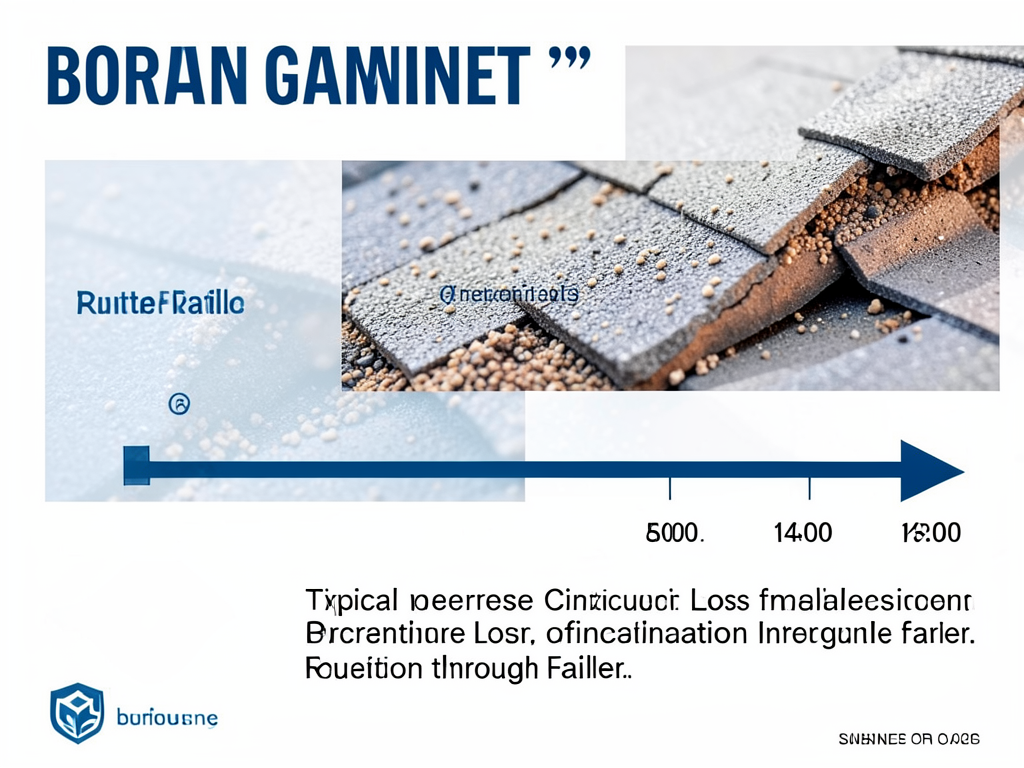
Timeline showing typical granule loss progression on Cincinnati roofs from installation through failure.
Colerain-Specific Roofing Challenges
Colerain Township’s geography and development patterns create unique roofing stresses that accelerate granule loss in local homes.
Topographic Effects on Storm Impact
Colerain sits at a slightly higher elevation than downtown Cincinnati, which means it often receives more intense storm impacts. The Mill Creek flood plain creates a wind tunnel effect that channels storms through the area, increasing wind uplift forces on roofs.
According to the Hamilton County Engineer’s office, Colerain experiences wind gusts 15-20% stronger than surrounding areas during severe weather events. This increased wind pressure accelerates granule loss along roof edges and ridges.. Read more about Why You Should Never Use a Pressure Washer on Your Cincinnati Shingles.
Neighborhood Age and Construction Patterns
Much of Colerain’s residential development occurred during the 1970s-1990s building boom. Homes in areas like Colerain Avenue corridor (45251) and North Bend Road corridor (45247) are now reaching the age where granule loss becomes problematic.
Many of these homes feature original 20-30 year architectural shingles that have exceeded their design life. The combination of age and Cincinnati’s climate means these roofs are prime candidates for granule-related failure.
Local Building Code Compliance Issues
Ohio Building Code requires specific underlayment and ice barrier installation, but enforcement has evolved over the decades. Homes built before 2010 may lack current code requirements for:
- Ice and water shield in valleys and roof edges
- Enhanced attic ventilation (minimum 1 square foot per 150 square feet of attic space)
- Proper drip edge installation to prevent water infiltration
These deficiencies compound granule loss problems by allowing moisture intrusion that accelerates shingle deterioration.
Diagnostic Steps: What to Do When You Find Granules
Finding granules in your driveway doesn’t automatically mean you need a new roof. Here’s a systematic approach to determine your next steps.
- Gather Evidence
Collect samples of the granules you’re finding. Note when you first noticed them and whether the amount seems to be increasing after storms.
- Document the Pattern
Take photos of your gutters, downspouts, and any visible bald spots on your roof. Note which sides of the house show the most granule loss.
- Check Interior Signs
Look for water stains on ceilings, especially after rain. Check your attic for daylight penetration or moisture.
- Age Verification
Determine your roof’s age. Check property records or look for a manufacturing date on the shingle bundles in your garage.
- Professional Assessment
Call a licensed roofing contractor for a thorough inspection. They should check for underlying deck damage, ventilation issues, and proper installation.
DIY Warning Signs That Require Immediate Attention
While professional inspection is always recommended, these signs indicate you need help right away:
- Granules accumulating in quantities larger than a coffee cup per downspout
- Visible bare spots covering more than 10% of visible roof area
- Cracked, curled, or missing shingles
- Interior water stains or mold growth
- Roof age exceeding 15 years in Cincinnati’s climate
Repair vs. Replacement: Making the Right Choice
Once you’ve identified granule loss, the next question is whether repair or replacement makes more sense. Here’s how to evaluate your options. Reliable Flat Roof Repair Services for Over-the-Rhine Business Owners.
| Condition | Repair Options | Replacement Recommended |
|---|---|---|
| Localized Granule Loss | Spot shingle replacement, sealant application | Roof age > 12 years |
| Uniform Moderate Loss | Roof rejuvenation coating (Shingle Magic) | Multiple layers of shingles |
| Severe Patchy Loss | Limited to emergency tarping only | Deck damage visible |
| Age > 15 Years | Not cost-effective | Always recommended |
Cost Factors to Consider
Repair costs in Colerain typically range from $300-$1,500 depending on the extent of damage. Roof rejuvenation treatments cost $0.50-$1.00 per square foot, while full replacement averages $5,000-$12,000 for a typical home. Roof Repair Services.
The key consideration: if your roof is over 12 years old and showing significant granule loss, repairs often become a temporary fix that delays the inevitable. Multiple repairs within 2-3 years usually exceed the cost of replacement.
Prevention Strategies for Cincinnati Homeowners
While you can’t stop Cincinnati’s weather, you can minimize granule loss through proactive maintenance and smart material choices.
Attic Ventilation Optimization
Proper attic ventilation is the single most effective way to extend shingle life. The International Residential Code requires 1 square foot of net free ventilation area per 150 square feet of attic space, divided equally between soffit and ridge vents.
In Cincinnati’s humid climate, consider these enhancements:
- Install powered attic fans for homes with limited natural airflow
- Add additional soffit vents if existing ones are blocked by insulation
- Ensure ridge vents aren’t covered by roofing material during installation
Material Selection for Longevity
If you’re replacing your roof, consider materials engineered for Cincinnati’s climate:
- Architectural shingles: 30-50 year lifespan vs. 20 years for 3-tab
- Impact-resistant shingles: Class 4 rating for hail resistance
- Algae-resistant shingles: Copper-infused granules prevent black streaks
- Cool roof options: Reflective granules reduce heat absorption
Energy-efficient shingles can reduce cooling costs by 10-15% during Cincinnati’s hot, humid summers.
When to Call a Professional: The Colerain Advantage
Local expertise matters when dealing with Cincinnati-specific roofing issues. A contractor familiar with Colerain’s weather patterns, building codes, and common construction methods can provide accurate assessments and appropriate solutions.
Look for these qualifications:
- Local references: Homeowners in your immediate area
- Manufacturer certifications: GAF Master Elite, Owens Corning Platinum Preferred
- Insurance experience: Familiarity with Ohio storm damage claims
- Code knowledge: Understanding of Hamilton County and Colerain Township requirements
A professional inspection should include thermal imaging to detect moisture intrusion, core sampling to check deck condition, and a detailed ventilation assessment.
Technician conducting professional roof inspection using thermal imaging to detect moisture beneath granule loss areas.
Take Action Before Minor Granule Loss Becomes Major Damage
Granule loss is your roof’s way of telling you it’s under stress. In Cincinnati’s challenging climate, what starts as a minor issue can quickly escalate to leaks, deck rot, and interior damage. The question isn’t whether you have a problem—it’s how severe it is and what to do about it.
If you’re seeing granules in your Colerain driveway, gutters, or downspouts, don’t wait for the next storm to confirm your fears. Professional assessment costs nothing but your time, and it could save you thousands in emergency repairs. Who to Call for 24-Hour Emergency Roof Leak Repair in Cincinnati.
Call (513) 223-5511 today to schedule your free Colerain-area roof inspection. Our local experts will evaluate your granule loss, identify underlying causes, and provide clear recommendations for repair or replacement. We serve all of Colerain Township, including the 45251 and 45247 zip codes, with fast, reliable service you can trust.
Don’t let granule loss compromise your home’s protection. Pick up the phone and call (513) 223-5511 before the next Cincinnati storm hits.
Frequently Asked Questions
How much granule loss is normal for a roof?
Minimal granule loss is normal, especially in the first few years after installation. You might see a light dusting in gutters or a few granules in downspouts after heavy rain. However, if you’re finding piles of granules or noticing your shingles are going bald, that’s excessive and warrants professional inspection.
Can I replace just the damaged shingles if I have granule loss?
Spot replacement works for localized damage on relatively new roofs (under 8 years old). However, if your roof is older and showing widespread granule loss, patching often creates a patchwork appearance and may not address underlying issues like poor ventilation that caused the granule loss initially.
Does homeowners insurance cover granule loss?
Insurance typically covers granule loss only if it results from a covered peril like hail damage or windstorm. Normal wear and tear or age-related granule loss isn’t covered. If you suspect storm damage, document the granule loss with photos and contact your insurance company promptly.. Read more about Navigating Insurance Denials for Roof Wind Damage in Green Township.
How long will my roof last after granule loss begins?
Once significant granule loss occurs, asphalt shingle life expectancy drops dramatically. In Cincinnati’s climate, a roof with moderate granule loss might last 2-5 more years, while severe loss could mean failure within 1-2 years. The exact timeline depends on the extent of exposure and local weather conditions.
What’s the difference between granule loss and algae growth?
Granule loss exposes the black asphalt mat underneath, creating bald spots. Algae growth (Gloeocapsa magma) creates dark streaks or stains but doesn’t remove granules. You can usually wipe algae away, but granule loss is permanent. Both issues often occur together on roofs over 8 years old in humid climates.
{
“@context”: “https://schema.org”,
“@type”: “BlogPosting”,
“headline”: “Why Your Roof Granules are Ending Up in Your Colerain Driveway”,
“description”: “Noticing sand-like granules in your Colerain driveway? Learn why Cincinnati shingles shed granules, when it signals roof failure, and what to do next. Call (513) 223-5511.”,
“wordCount”: 2120,
“datePublished”: “2026-04-02T12:30:00.000Z”,
“dateModified”: “2026-04-02T12:30:00.000Z”,
“inLanguage”: “en-US”,
“mainEntityOfPage”: {
“@type”: “WebPage”,
“@id”: “https://firstchoiceroofingcincinnati.com”
},
“publisher”: {
“@type”: “LocalBusiness”,
“name”: “First Choice Roofing Cincinnati”,
“url”: “https://firstchoiceroofingcincinnati.com”
},
“author”: {
“@type”: “Organization”,
“name”: “First Choice Roofing Cincinnati”,
“url”: “https://firstchoiceroofingcincinnati.com”
},
“image”: {
“@type”: “ImageObject”,
“url”: “https://firstchoiceroofingcincinnati.com/wp-content/uploads/2026/03/why-your-roof-granules-are-ending-up-in-your-coler-1.png”
}
}
{
“@context”: “https://schema.org”,
“@type”: “RoofingContractor”,
“name”: “First Choice Roofing Cincinnati”,
“url”: “https://firstchoiceroofingcincinnati.com”,
“address”: {
“@type”: “PostalAddress”,
“addressLocality”: “Cincinnati”
},
“areaServed”: {
“@type”: “City”,
“name”: “Cincinnati”
}
}
{
“@context”: “https://schema.org”,
“@type”: “FAQPage”,
“mainEntity”: [
{
“@type”: “Question”,
“name”: “The Gutter Test: What’s Accumulating?”,
“acceptedAnswer”: {
“@type”: “Answer”,
“text”: “Check your downspouts after rain. A small amount of sandy granules is normal for asphalt shingles, especially in the first few years after installation. However, if you’re finding piles of granules that look like coarse sand or noticing your gutters are half-full of material, that’s excessive.”
}
},
{
“@type”: “Question”,
“name”: “How much granule loss is normal for a roof?”,
“acceptedAnswer”: {
“@type”: “Answer”,
“text”: “Minimal granule loss is normal, especially in the first few years after installation. You might see a light dusting in gutters or a few granules in downspouts after heavy rain. However, if you’re finding piles of granules or noticing your shingles are going bald, that’s excessive and warrants professional inspection.”
}
},
{
“@type”: “Question”,
“name”: “Can I replace just the damaged shingles if I have granule loss?”,
“acceptedAnswer”: {
“@type”: “Answer”,
“text”: “Spot replacement works for localized damage on relatively new roofs (under 8 years old). However, if your roof is older and showing widespread granule loss, patching often creates a patchwork appearance and may not address underlying issues like poor ventilation that caused the granule loss initially.”
}
},
{
“@type”: “Question”,
“name”: “Does homeowners insurance cover granule loss?”,
“acceptedAnswer”: {
“@type”: “Answer”,
“text”: “Insurance typically covers granule loss only if it results from a covered peril like hail damage or windstorm. Normal wear and tear or age-related granule loss isn’t covered. If you suspect storm damage, document the granule loss with photos and contact your insurance company promptly.”
}
},
{
“@type”: “Question”,
“name”: “How long will my roof last after granule loss begins?”,
“acceptedAnswer”: {
“@type”: “Answer”,
“text”: “Once significant granule loss occurs, asphalt shingle life expectancy drops dramatically. In Cincinnati’s climate, a roof with moderate granule loss might last 2-5 more years, while severe loss could mean failure within 1-2 years. The exact timeline depends on the extent of exposure and local weather conditions.”
}
},
{
“@type”: “Question”,
“name”: “What’s the difference between granule loss and algae growth?”,
“acceptedAnswer”: {
“@type”: “Answer”,
“text”: “Granule loss exposes the black asphalt mat underneath, creating bald spots. Algae growth (Gloeocapsa magma) creates dark streaks or stains but doesn’t remove granules. You can usually wipe algae away, but granule loss is permanent. Both issues often occur together on roofs over 8 years old in humid climates.”
}
}
]
}
{
“@context”: “https://schema.org”,
“@type”: “HowTo”,
“name”: “How to Assess Roof Granule Loss”,
“step”: [
{
“@type”: “HowToStep”,
“position”: 1,
“name”: “Gather Evidence”,
“text”: “Collect samples of the granules you’re finding. Note when you first noticed them and whether the amount seems to be increasing after storms.”
},
{
“@type”: “HowToStep”,
“position”: 2,
“name”: “Document the Pattern”,
“text”: “Take photos of your gutters, downspouts, and any visible bald spots on your roof. Note which sides of the house show the most granule loss.”
},
{
“@type”: “HowToStep”,
“position”: 3,
“name”: “Check Interior Signs”,
“text”: “Look for water stains on ceilings, especially after rain. Check your attic for daylight penetration or moisture.”
},
{
“@type”: “HowToStep”,
“position”: 4,
“name”: “Age Verification”,
“text”: “Determine your roof’s age. Check property records or look for a manufacturing date on the shingle bundles in your garage.”
},
{
“@type”: “HowToStep”,
“position”: 5,
“name”: “Professional Assessment”,
“text”: “Call a licensed roofing contractor for a thorough inspection. They should check for underlying deck damage, ventilation issues, and proper installation.”
}
],
“image”: “https://firstchoiceroofingcincinnati.com/wp-content/uploads/2026/03/why-your-roof-granules-are-ending-up-in-your-coler-1.png”
}
{
“@context”: “https://schema.org”,
“@type”: “BreadcrumbList”,
“itemListElement”: [
{
“@type”: “ListItem”,
“position”: 1,
“name”: “Home”,
“item”: “https://firstchoiceroofingcincinnati.com”
},
{
“@type”: “ListItem”,
“position”: 2,
“name”: “Blog”,
“item”: “https://firstchoiceroofingcincinnati.com/blog”
},
{
“@type”: “ListItem”,
“position”: 3,
“name”: “Why Your Roof Granules are Ending Up in Your Colerain Driveway”
}
]
}
{
“@context”: “https://schema.org”,
“@type”: “Service”,
“serviceType”: “Roofing”,
“provider”: {
“@type”: “LocalBusiness”,
“name”: “First Choice Roofing Cincinnati”,
“url”: “https://firstchoiceroofingcincinnati.com”
},
“areaServed”: {
“@type”: “City”,
“name”: “Cincinnati”
},
“description”: “Noticing sand-like granules in your Colerain driveway? Learn why Cincinnati shingles shed granules, when it signals roof failure, and what to do next. Call (513) 223-5511.”
}