
What Happens if Your Roofer Finds Rotten Wood Decking After Tearing Off Shingles
When your roofing crew tears off old shingles, they expect to see solid wood decking underneath. But sometimes they find something else entirely: spongy, discolored, or crumbling wood that can’t support new roofing materials. This happens more often than you might think, especially in Cincinnati’s humid climate where moisture damage accelerates wood rot. How to Get Your Cincinnati Roof Replaced After a Major Hail Storm.
The discovery of rotten decking changes everything about your roof replacement timeline and budget. Here’s what actually happens next and why it matters for your home’s protection.. Read more about Common Signs Your Roof Decking is Getting Soft in Finneytown.
Initial Inspection and Assessment
After removing your old shingles, your roofer will walk the entire deck surface checking for structural integrity. They’re looking for several warning signs: boards that flex under weight, visible mold or mildew growth, water stains, and areas where the wood has lost its structural strength. Signs You Need a New Roof.
The inspection process typically takes 30-60 minutes depending on your roof size. Your roofer will use a screwdriver or similar tool to probe suspicious areas. If the tool sinks into the wood easily, that section needs replacement. This hands-on diagnostic approach reveals damage that visual inspection alone would miss.. Read more about How the Humidity in the Ohio River Valley Affects Your Roof’s Lifespan.
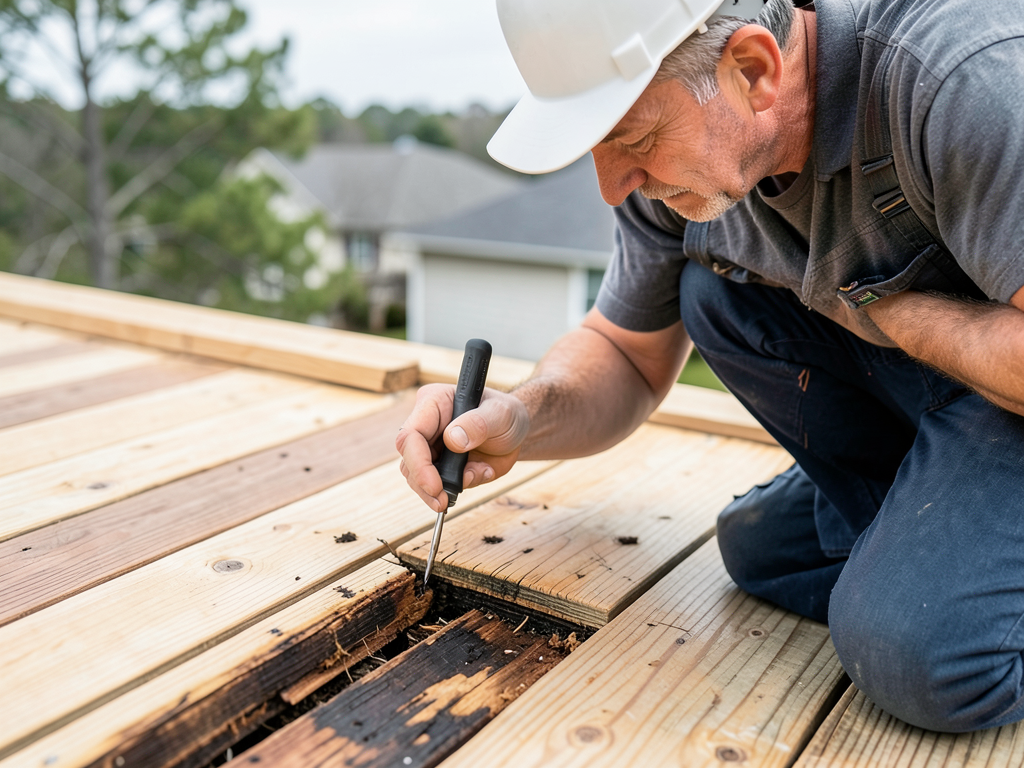
Technician using a screwdriver to test wood decking integrity during a Cincinnati roof replacement, showing the diagnostic process for identifying rotted sections.
Common Signs of Rotten Decking Cincinnati Roofers Find
Rotten wood decking shows specific characteristics that experienced Cincinnati roofers recognize immediately. The wood often appears darker than surrounding areas, may have a musty odor, and feels soft or spongy when pressed. In severe cases, you can see through the gaps between boards.
Local building patterns contribute to these problems. Many Cincinnati homes built before the 1980s used thinner decking materials that deteriorate faster. Homes in areas like Mount Lookout and Hyde Park often have original decking that’s now 40-50 years old and reaching the end of its useful life.
Ohio’s freeze-thaw cycles accelerate decking deterioration. Water seeps into small cracks during winter, freezes, expands, and creates larger gaps. This process repeats annually, gradually weakening the wood structure until it fails completely. Ohio Residential Code Section 3781.06.
Ohio Building Code Requirements for Decking Replacement
Ohio Residential Code Section R905.2.2 requires solid sheathing for asphalt shingle roofs. This means any rotted or damaged decking must be replaced before new roofing materials can be installed. The code specifically addresses minimum thickness requirements based on rafter spacing. Is Metal Roofing Worth the Investment for Your Anderson Township Home?.
For Cincinnati homes, the most common replacement is 7/16-inch oriented strand board (OSB) or 1/2-inch CDX plywood. These materials provide adequate strength for typical residential roof loads. Your roofer must ensure all replacement decking meets these specifications for code compliance.. Read more about Common Reasons Why Your Roof Leaks Around the Chimney Flashing.
Local building inspectors in Hamilton County verify that replacement decking matches existing materials in thickness and quality. This inspection requirement means your roofer cannot simply patch small areas but must ensure uniform decking across the entire roof surface.
Cost Factors for Decking Replacement in Cincinnati
Decking replacement costs vary significantly based on several factors specific to the Cincinnati market. Material costs for OSB and plywood fluctuate with national lumber prices, but local labor rates remain relatively stable.
Most Cincinnati roofing contractors charge between $75-125 per sheet for decking replacement, including both materials and installation. A standard 4×8 sheet covers 32 square feet. For a typical 2,000-square-foot home, you might need 60-80 sheets depending on your roof’s complexity.. Read more about How Poor Drip Edge Installation Causes Water to Rot Your Cincinnati Home.
Steep roof pitches increase labor costs because workers must use additional safety equipment and work more slowly. Homes in hilly areas like Clifton or Mount Adams often have steeper roofs, which can add 20-30% to decking replacement costs.
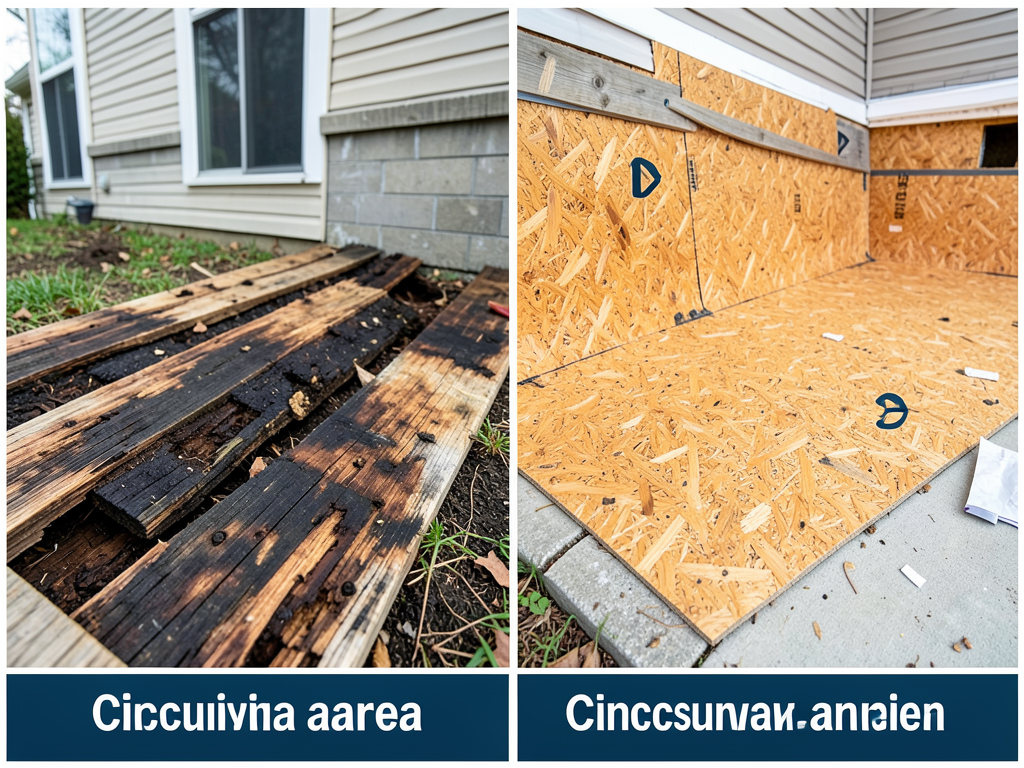
Side-by-side comparison showing rotted wood decking being removed and new OSB panels being installed on a Cincinnati-area home, demonstrating the replacement process.
Partial vs. Full Deck Replacement Scenarios
Not every roof with some rotted decking needs complete replacement. Your roofer will assess whether you have isolated problem areas or widespread deterioration. This evaluation determines whether you need spot repairs or a full deck replacement. Reliable Flat Roof Repair Services for Over-the-Rhine Business Owners.
Partial replacement makes sense when damage is limited to specific areas: around chimneys, near valleys where water concentrates, or where previous leaks occurred. However, if rot affects more than 25-30% of your decking, full replacement often proves more cost-effective long-term.. Read more about How to Tell if Your Roof Leaks are Caused by Damaged Flashing.
Older Cincinnati homes present unique challenges. Many historic properties in neighborhoods like Over-the-Rhine have plank decking rather than modern sheet materials. Converting to OSB or plywood requires additional structural consideration and may affect your restoration budget.
Hidden Costs Beyond the Decking Sheets
Decking replacement involves more than just the cost of wood panels. Several additional expenses catch homeowners by surprise if they’re not prepared.
Hamilton County building permits for roof decking replacement typically cost $100-250 depending on your municipality. Cincinnati requires permits for any structural roofing work, and inspections ensure code compliance.
Debris removal presents another cost factor. Rotted wood weighs significantly more than old shingles, requiring larger dumpsters or additional haul-away trips. Disposal fees at Hamilton County facilities run $40-60 per ton for construction debris.. Read more about Is Your Westwood Home Too Old for a Simple Shingle Overlay?.
Underlayment replacement often accompanies decking work. Once the old deck is exposed, your roofer will likely recommend replacing ice and water shield and felt paper. This adds $300-600 to most projects but provides better long-term protection.. Read more about How to Spot Hidden Water Damage in Your Attic Before it Ruins Your Ceiling.
The Impact on Your Roof Warranty
Most roofing material manufacturers require solid, code-compliant decking for warranty coverage. Installing new shingles over rotted wood voids warranties and creates liability issues if the roof fails prematurely.
Major manufacturers like GAF and Owens Corning specifically state in their warranty documents that decking must meet local building codes. This requirement protects both you and the manufacturer from premature roof failure caused by inadequate substrate. GAF Roof Decking Requirements.
Your roofer should document any decking replacement work and provide certification that all materials meet code requirements. This documentation becomes crucial if you need to file a warranty claim in the future.
Timeline Considerations When Decking Issues Arise
Discovering rotten decking extends your roof replacement timeline by several days. While shingle installation might take 1-2 days, decking replacement adds 2-4 days depending on the extent of damage and weather conditions.
During Cincinnati’s rainy season, your roofer must work quickly to avoid exposing your home to water damage. Most contractors schedule decking replacement during dry weather windows and use tarps to protect exposed areas overnight.
Material availability can also affect timing. While OSB and plywood are generally available locally, lumber price volatility means your roofer might need to adjust quotes if material costs change significantly between estimate and installation.
Preventing Future Decking Problems
After replacing rotten decking, proper ventilation becomes critical for preventing future moisture problems. Ohio building codes require specific ventilation ratios based on attic square footage. Inadequate ventilation traps moisture, leading to the same rot problems you just fixed.
Your roofer should verify that your attic has proper intake and exhaust ventilation. Ridge vents, soffit vents, and gable vents work together to create airflow that keeps decking dry. This ventilation system protects your investment in new decking.. Read more about The Role of Soffit and Fascia in Keeping Your Cincinnati Roof Healthy.
Ice and water shield installation in valleys and along eaves provides additional protection in Cincinnati’s winter climate. This rubberized membrane prevents water infiltration from ice dams, a common cause of decking rot in older Ohio homes.
Making the Right Decision for Your Home
When your roofer discovers rotten decking, you face a critical decision: proceed with partial repairs or invest in complete replacement. Consider your home’s age, your plans for staying in the property, and your long-term budget. Roof Repair Services.
Partial repairs might save money short-term but often lead to additional problems within 5-7 years. Complete replacement, while more expensive upfront, provides better protection and may be necessary for homes over 20 years old or those with extensive damage.
Your roofer should provide detailed options with clear cost breakdowns. Ask about the percentage of decking needing replacement and whether they recommend full replacement based on your roof’s overall condition.
Call (513) 223-5511 today to schedule your inspection. Our experienced Cincinnati roofing team will assess your decking condition and provide transparent recommendations for protecting your home.
Frequently Asked Questions
How can I tell if my roof decking is rotten before the tear-off?
Look for ceiling stains, sagging areas in your roof, or visible mold in your attic. However, many homeowners don’t discover decking problems until the tear-off process begins. Professional inspections using moisture meters can identify potential issues beforehand.. Read more about The Best Way to Handle a Sagging Roofline on Older Sharonville Homes.
Does homeowners insurance cover rotten wood decking?
Insurance typically covers sudden damage from covered perils like storms but not gradual deterioration from age or poor maintenance. If decking rot results from a covered event, your policy may help with replacement costs.
Can I install new shingles over slightly damaged decking?
No. Building codes and manufacturer warranties require solid, structurally sound decking. Installing over compromised wood creates liability issues and almost guarantees premature roof failure.
How long does decking replacement add to my roof project?
Decking replacement typically adds 2-4 days to most residential roofing projects. Your roofer will need time to remove damaged sections, install new materials, and pass required inspections before proceeding with shingle installation.
What’s the difference between OSB and plywood for decking?
OSB costs less and resists warping better, while plywood handles moisture slightly better. Both meet Ohio building code requirements when properly installed. Your roofer can recommend based on your specific situation and budget.
{
“@context”: “https://schema.org”,
“@type”: “BlogPosting”,
“headline”: “What Happens if Your Roofer Finds Rotten Wood Decking After Tearing Off Shingles”,
“description”: “Discover what happens when rotten wood decking is found during a roof replacement in Cincinnati. Learn about inspection, replacement costs, and local building code requirements.”,
“wordCount”: 1580,
“datePublished”: “2026-03-22T13:31:00.000Z”,
“dateModified”: “2026-03-22T13:31:00.000Z”,
“inLanguage”: “en-US”,
“mainEntityOfPage”: {
“@type”: “WebPage”,
“@id”: “https://firstchoiceroofingcincinnati.com”
},
“publisher”: {
“@type”: “LocalBusiness”,
“name”: “First Choice Roofing Cincinnati”,
“url”: “https://firstchoiceroofingcincinnati.com”
},
“author”: {
“@type”: “Organization”,
“name”: “First Choice Roofing Cincinnati”,
“url”: “https://firstchoiceroofingcincinnati.com”
},
“image”: {
“@type”: “ImageObject”,
“url”: “https://firstchoiceroofingcincinnati.com/wp-content/uploads/2026/03/what-happens-if-your-roofer-finds-rotten-wood-deck-1.png”
}
}
{
“@context”: “https://schema.org”,
“@type”: “RoofingContractor”,
“name”: “First Choice Roofing Cincinnati”,
“url”: “https://firstchoiceroofingcincinnati.com”,
“address”: {
“@type”: “PostalAddress”,
“addressLocality”: “Cincinnati”
},
“areaServed”: {
“@type”: “City”,
“name”: “Cincinnati”
}
}
{
“@context”: “https://schema.org”,
“@type”: “FAQPage”,
“mainEntity”: [
{
“@type”: “Question”,
“name”: “How can I tell if my roof decking is rotten before the tear-off?”,
“acceptedAnswer”: {
“@type”: “Answer”,
“text”: “Look for ceiling stains, sagging areas in your roof, or visible mold in your attic. However, many homeowners don’t discover decking problems until the tear-off process begins. Professional inspections using moisture meters can identify potential issues beforehand.”
}
},
{
“@type”: “Question”,
“name”: “Does homeowners insurance cover rotten wood decking?”,
“acceptedAnswer”: {
“@type”: “Answer”,
“text”: “Insurance typically covers sudden damage from covered perils like storms but not gradual deterioration from age or poor maintenance. If decking rot results from a covered event, your policy may help with replacement costs.”
}
},
{
“@type”: “Question”,
“name”: “How long does decking replacement add to my roof project?”,
“acceptedAnswer”: {
“@type”: “Answer”,
“text”: “Decking replacement typically adds 2-4 days to most residential roofing projects. Your roofer will need time to remove damaged sections, install new materials, and pass required inspections before proceeding with shingle installation.”
}
},
{
“@type”: “Question”,
“name”: “What’s the difference between OSB and plywood for decking?”,
“acceptedAnswer”: {
“@type”: “Answer”,
“text”: “OSB costs less and resists warping better, while plywood handles moisture slightly better. Both meet Ohio building code requirements when properly installed. Your roofer can recommend based on your specific situation and budget.”
}
}
]
}
{
“@context”: “https://schema.org”,
“@type”: “BreadcrumbList”,
“itemListElement”: [
{
“@type”: “ListItem”,
“position”: 1,
“name”: “Home”,
“item”: “https://firstchoiceroofingcincinnati.com”
},
{
“@type”: “ListItem”,
“position”: 2,
“name”: “Blog”,
“item”: “https://firstchoiceroofingcincinnati.com/blog”
},
{
“@type”: “ListItem”,
“position”: 3,
“name”: “What Happens if Your Roofer Finds Rotten Wood Decking After Tearing Off Shingles”
}
]
}
{
“@context”: “https://schema.org”,
“@type”: “Service”,
“serviceType”: “Roofing”,
“provider”: {
“@type”: “LocalBusiness”,
“name”: “First Choice Roofing Cincinnati”,
“url”: “https://firstchoiceroofingcincinnati.com”
},
“areaServed”: {
“@type”: “City”,
“name”: “Cincinnati”
},
“description”: “Discover what happens when rotten wood decking is found during a roof replacement in Cincinnati. Learn about inspection, replacement costs, and local building code requirements.”
}