Menu

Commercial PVC Roof Installation in Cincinnati – Minimal Downtime for Your Operations

First Choice Roofing Cincinnati installs durable polyvinyl chloride membrane systems engineered for long-term weather resistance, energy efficiency, and business continuity across the greater Cincinnati metro area.

Slider Image 1
Slider Image 2
Slider Image 3
Slider Image 4
Slider Image 5
Slider Image 7
Slider Image 8
Slider Image 9
Slider Image 10
Slider Image 11

Why Cincinnati Commercial Buildings Depend on PVC Roofing Systems

Cincinnati's climate throws everything at flat roofs. Summer humidity sits above 70 percent for weeks, creating constant moisture exposure. Winter brings freeze-thaw cycles that crack brittle materials. Spring storms deliver wind gusts exceeding 60 mph. Your roof takes the hit, and your business absorbs the cost when water damage shuts down operations.

Commercial PVC roofing installation solves the vulnerability problem. Polyvinyl chloride membrane resists water infiltration, withstands temperature swings from 10 to 95 degrees, and performs under the environmental stress common to the Ohio River Valley. Manufacturing facilities in Norwood, distribution centers in Evendale, and office complexes in Blue Ash require roofing that does not fail when regional weather patterns shift.

PVC membrane installation delivers measurable advantages. The material reflects solar radiation, reducing cooling loads during July and August when energy demand peaks. Welded seams eliminate the weak points found in mechanically fastened systems. Chemical resistance protects roofs on industrial buildings where exhaust vents release corrosive compounds. A PVC flat roof installation minimizes the risk of ponding water, a chronic issue on Cincinnati's low-slope commercial structures.

Downtime kills profitability. A failed roof forces equipment relocation, inventory protection, and potential facility closure. PVC roofing system installation prevents those scenarios. You need a roof that works when Cincinnati weather does not cooperate. That requires the right material, proper installation, and local expertise that understands how this region punishes inadequate roofing choices.

Why Cincinnati Commercial Buildings Depend on PVC Roofing Systems
How We Execute Commercial PVC Membrane Installation

How We Execute Commercial PVC Membrane Installation

We do not guess about structural capacity or membrane compatibility. Every commercial PVC roofing installation begins with load analysis. We measure deck deflection, assess existing insulation R-value, and identify drainage deficiencies. Cincinnati's older commercial buildings often have concealed moisture damage in the substrate. We use infrared scanning to map wet insulation before membrane installation begins.

Substrate preparation determines system longevity. We remove failing built-up roofing, verify deck fastening meets current wind uplift requirements, and install tapered insulation to eliminate standing water. Ponding water degrades even high-quality PVC membrane. We engineer positive drainage to all roof drains, a critical step that many installers skip.

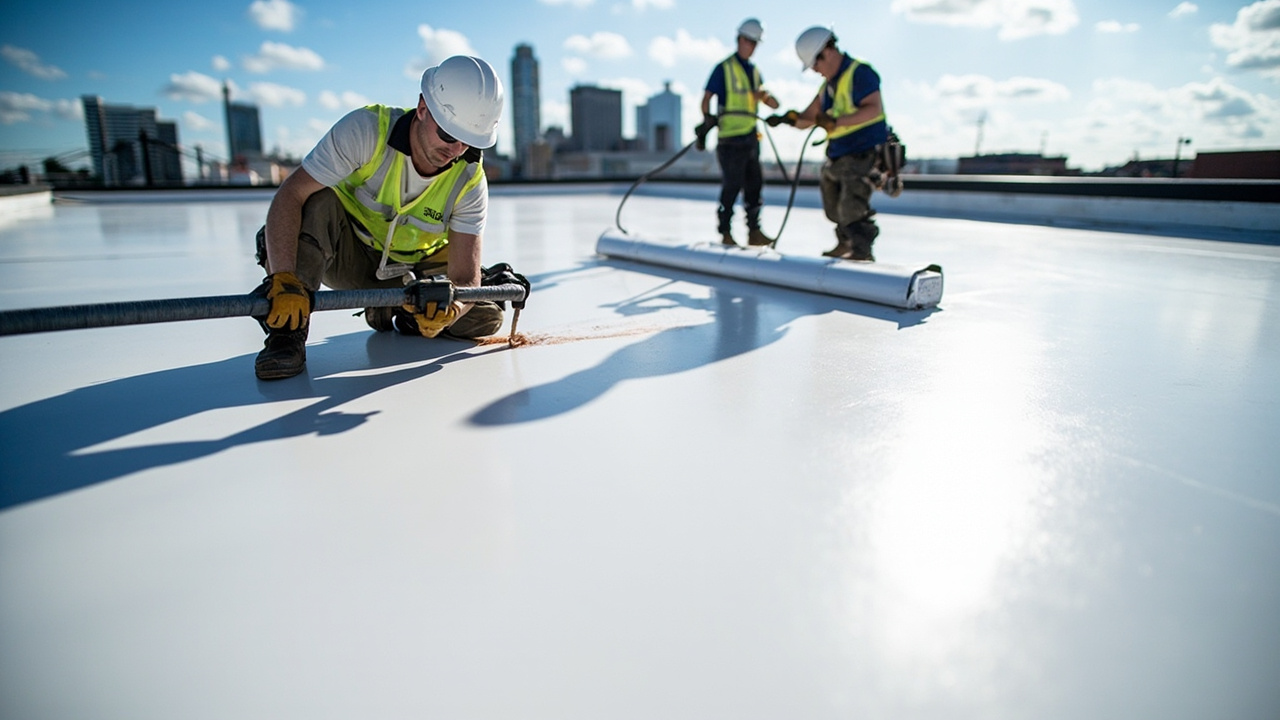
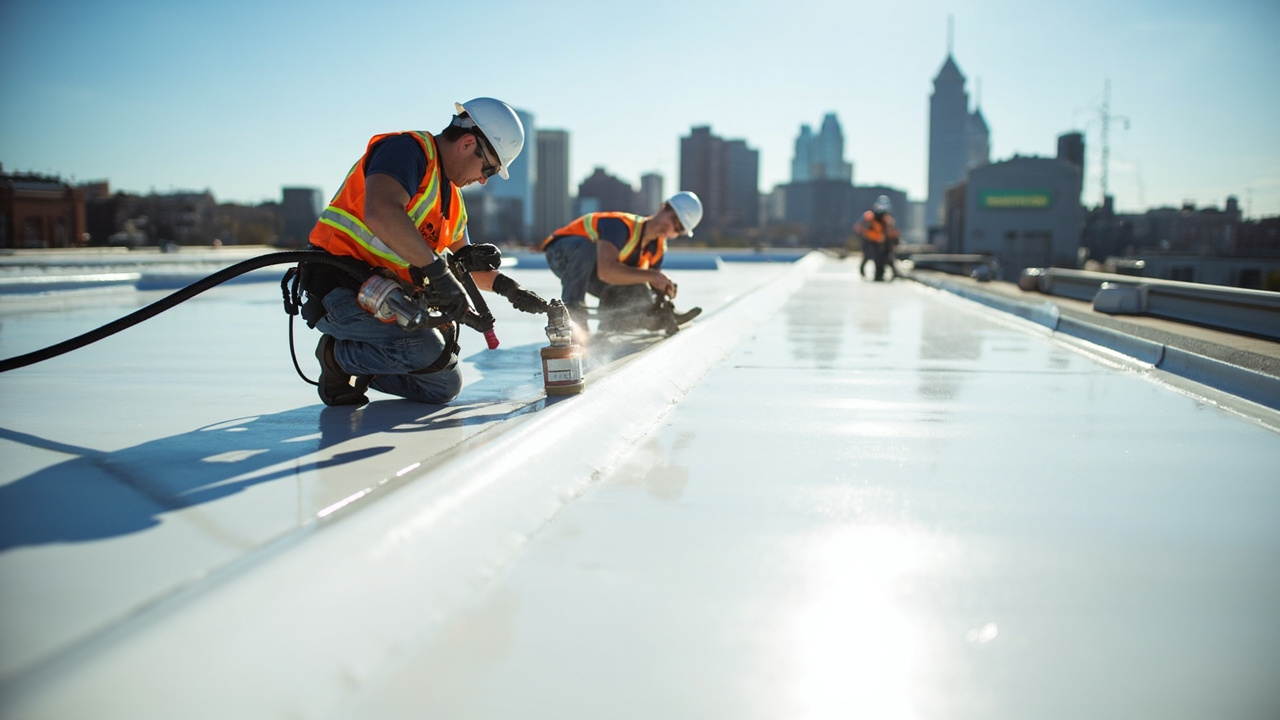
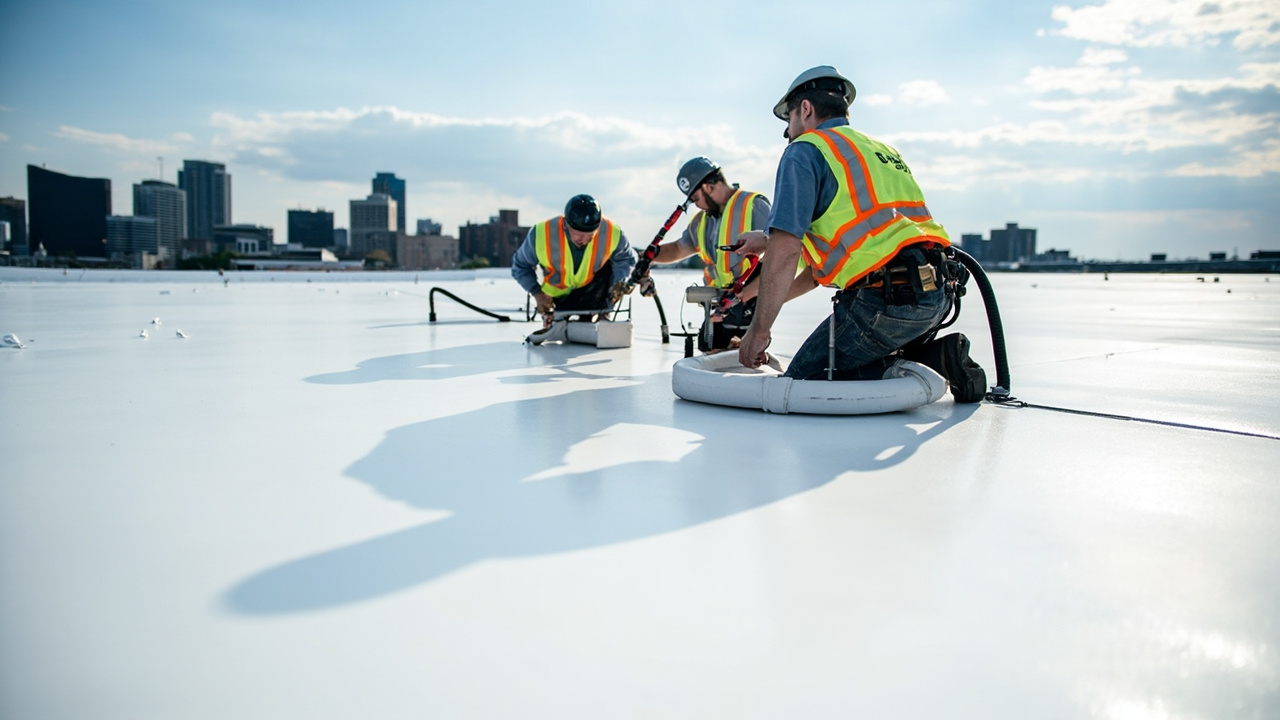
Membrane attachment follows manufacturer specifications for Cincinnati's wind zone rating. We use fully adhered or mechanically attached systems depending on building height, exposure, and occupancy requirements. Hot-air welding creates watertight seams that exceed the tensile strength of the membrane itself. We test every seam with a probe to verify bond integrity.

Penetration details separate competent installation from future leak sources. HVAC curbs, plumbing vents, and parapet walls require custom flashing. We fabricate PVC sheet metal transitions and use prefabricated pipe boots engineered for thermal expansion. Edge metal attachment meets ASTM standards for wind resistance, preventing blow-offs during severe weather events common to the Cincinnati area.

Quality control happens in real time. We document substrate conditions, insulation R-values, and seam weld temperatures. You receive a complete installation record that satisfies building officials and supports future roof certification. A PVC roofing system installation is only as good as the documentation proving it was done correctly.

What Happens During Your PVC Roof Installation

Commercial PVC Roof Installation in Cincinnati – Minimal Downtime for Your Operations
01

Site Assessment and Planning

We evaluate your existing roof system, measure building dimensions, and assess structural loading capacity. Our team coordinates with your operations manager to schedule work during low-activity periods. We identify equipment that requires protection, map utility penetrations, and establish material staging areas that do not disrupt your business. You receive a detailed installation timeline with contingency plans for weather delays.
02

Membrane Installation and Welding

We remove existing roofing materials, repair damaged decking, and install insulation with proper tapers for drainage. PVC membrane rolls are positioned, mechanically attached or fully adhered per engineering specifications, and hot-air welded at seams. All penetrations receive custom flashing. We complete sections methodically to maintain weather protection throughout the project. Your facility stays operational while installation progresses.
03

Quality Verification and Handover

Every seam undergoes probe testing to verify weld integrity. We conduct a final walkthrough, document all work performed, and provide you with maintenance guidelines specific to PVC membrane systems. You receive installation photos, material certifications, and a comprehensive record package. We review drainage performance, answer questions about routine inspections, and establish a maintenance schedule that protects your investment.

Why Cincinnati Facility Managers Choose First Choice Roofing

Commercial roofing failures cost more than repair bills. They disrupt operations, damage inventory, and create liability exposure. You need a contractor who understands that downtime is not an option and that cutting corners creates long-term problems.

First Choice Roofing Cincinnati has installed PVC roofing systems on manufacturing facilities, warehouses, and office buildings across Hamilton County. We understand local building code requirements, work with Cincinnati's commercial inspectors regularly, and know how to navigate the permitting process efficiently. Our crews have installed polyvinyl chloride roof systems on structures ranging from 10,000 to 200,000 square feet.

We operate with the capacity to handle large-scale commercial projects. Our equipment includes hot-air welding machines calibrated for consistent seam quality, material handling systems that protect membrane during installation, and safety equipment that meets OSHA standards for rooftop work. We maintain sufficient crew size to complete installations on schedule, even when weather tightens the construction window.

Local expertise matters when weather turns. Cincinnati's spring storm season brings sudden temperature drops and heavy rain. We monitor forecasts continuously during installation and adjust work schedules to protect partially completed sections. Our material suppliers stock sufficient inventory to avoid delays, and we maintain relationships with local building officials who understand our work quality.

You will work with project managers who communicate clearly, provide accurate timelines, and solve problems before they impact your operations. We coordinate with other trades, protect sensitive equipment, and clean up thoroughly at the end of each workday. Your business continues while we upgrade your roof system with a PVC membrane built to handle Cincinnati's demanding climate.

What Your Commercial PVC Roof Installation Includes

Project Timeline and Coordination

Installation timelines depend on building size, existing roof condition, and weather patterns. A 20,000 square foot warehouse typically requires two to three weeks from tearoff to completion. We schedule work to minimize operational disruption, often starting early or working weekends for facilities that operate around the clock. You receive weekly progress updates and advance notice before critical phases like crane usage or power shutdowns. We coordinate with your staff to protect sensitive areas and maintain access to loading docks and entrances. Weather delays get communicated immediately with revised completion dates.

Pre-Installation Roof Analysis

We conduct a thorough roof inspection before proposing a PVC membrane system. This includes core samples to assess insulation condition, structural analysis to verify deck attachment, and drainage evaluation to identify ponding areas. Infrared scanning reveals hidden moisture that compromises substrate integrity. We review your building's mechanical systems to understand roof loading from HVAC equipment and plan penetration details accordingly. You receive a detailed report documenting current conditions, recommended repairs, and a specification package tailored to your building's requirements. This analysis prevents surprises during installation and ensures proper system design.

Installation Quality and Performance

Your completed PVC roofing system will meet manufacturer specifications for seam strength, membrane attachment, and flashing details. We use only factory-certified materials and follow installation protocols that qualify for extended coverage options. Heat-welded seams create waterproof bonds stronger than the membrane itself. Properly tapered insulation eliminates ponding water that degrades roofing materials. Edge details and penetration flashing resist wind uplift and prevent water intrusion. The finished roof provides measurable energy savings through solar reflectance and performs reliably across Cincinnati's temperature extremes. You get a roofing system engineered for decades of service, not just code minimum compliance.

Documentation and Maintenance Support

You receive complete installation documentation including material certifications, seam test results, and as-built drawings showing all penetrations and drainage paths. This record package supports future maintenance, satisfies building inspectors, and provides evidence of proper installation if issues arise. We provide maintenance guidelines specific to PVC membrane systems, including recommended inspection frequency, debris removal procedures, and seam monitoring protocols. Routine maintenance extends roof life and prevents minor issues from becoming major failures. We offer scheduled inspection services to identify problems early and maintain your roof system's performance throughout its service life.

Frequently Asked Questions

You Have Questions,
We Have Answers

What are the disadvantages of PVC roofing? +

PVC roofing has some limitations for commercial properties in Cincinnati. Initial material costs run higher than TPO or EPDM. The membrane can become brittle in extreme cold, which matters during Indiana winters. PVC also shrinks more than other single-ply membranes, requiring careful installation to prevent seam stress. Lighter colors can show dirt accumulation faster in industrial areas. The material is less puncture-resistant than rubberized membranes, so foot traffic requires walkway pads. However, these disadvantages are manageable with proper installation and maintenance protocols. For facilities needing chemical resistance or frequent rooftop equipment access, the benefits often outweigh these concerns.

How much does it cost to install a PVC roof? +

PVC roof installation costs depend on building size, membrane thickness, insulation requirements, and existing roof condition. Commercial projects in Cincinnati typically require building code compliance and proper drainage planning. Factors affecting your investment include tear-off requirements, penetrations like HVAC units, edge detail complexity, and warranty level. Larger facilities achieve better per-square pricing due to economies of scale. Budget considerations should include lifecycle value, not just upfront expenditure. PVC offers superior chemical resistance and longevity compared to cheaper alternatives, reducing long-term maintenance expenses. Request detailed proposals from contractors familiar with Indiana commercial building codes to accurately assess project scope and total investment.

How to adhere PVC roofing? +

PVC roofing adheres through three primary methods. Hot air welding creates thermoplastic seams by melting membrane edges together, forming monolithic bonds stronger than the sheet itself. This method dominates commercial installations in Cincinnati. Mechanical attachment uses plates and fasteners through the membrane into the deck, suitable for high-wind zones. Fully adhered systems use bonding adhesive across the entire membrane surface, providing maximum wind uplift resistance. Proper substrate preparation is critical. The deck must be clean, dry, and structurally sound. Seam welding requires trained technicians and quality control testing. Edge details, penetrations, and terminations need specific flashing techniques to maintain watertight integrity and meet warranty requirements.

How long will a PVC roof last? +

A properly installed PVC roof lasts 20 to 30 years on commercial buildings in Cincinnati. Longevity depends on membrane thickness, installation quality, maintenance frequency, and environmental exposure. PVC resists UV degradation, ponding water, and chemical exposure better than many alternatives. The thermoplastic material maintains flexibility throughout its service life, unlike materials that harden with age. Cincinnati's freeze-thaw cycles and humidity levels require proper drainage design to maximize lifespan. Regular inspections catch minor issues before they escalate. Foot traffic, HVAC maintenance activity, and rooftop equipment can impact durability. Quality installation by experienced contractors and proactive maintenance programs extend service life and protect your facility investment.

How many years does a PVC ceiling last? +

PVC ceiling installations differ significantly from roofing membranes. Interior PVC ceilings in commercial spaces last 15 to 25 years depending on environment and quality. These systems resist moisture, mold, and chemical exposure in food processing plants, car washes, and industrial facilities around Cincinnati. Unlike roofing membranes exposed to UV radiation and weather extremes, ceiling systems face controlled interior conditions. Durability depends on panel thickness, mounting system quality, and cleaning product compatibility. High-humidity environments like commercial kitchens or pool enclosures benefit from PVC's waterproof properties. Proper ventilation prevents moisture accumulation above panels. Regular cleaning with appropriate products maintains appearance and extends service life in demanding commercial applications.

What is better, PVC or polycarbonate roof? +

PVC and polycarbonate serve different commercial roofing needs in Cincinnati. PVC membranes provide superior waterproofing for occupied structures, offering chemical resistance and proven 20-plus-year durability. Polycarbonate panels suit applications requiring light transmission like covered walkways, atriums, or agricultural buildings. Polycarbonate allows natural light penetration but requires different structural support and sealing methods. For primary weather protection on commercial buildings, PVC delivers better long-term performance and lower maintenance. Polycarbonate excels in skylights or translucent roof sections but lacks the watertight integrity of welded PVC membranes. Your facility's function dictates material choice. Most commercial properties in Indiana require PVC's proven waterproofing rather than polycarbonate's light transmission properties.

Which is better EPDM or PVC roofing? +

PVC and EPDM serve different commercial priorities in Cincinnati. PVC excels in chemical resistance, making it ideal for restaurants, manufacturing facilities, or buildings with rooftop grease exhaust. The heat-welded seams create watertight bonds superior to EPDM's adhesive or tape seams. PVC reflects heat better, reducing cooling costs. EPDM costs less initially and handles ponding water well. It remains flexible in extreme cold better than PVC. For Cincinnati commercial properties with significant rooftop equipment, chemical exposure, or frequent maintenance access, PVC typically delivers better long-term value. EPDM suits budget-conscious projects without chemical concerns. Consider lifecycle costs, building use, and maintenance requirements when deciding between these proven single-ply systems.

How much does it cost to roof a 2000 sq ft house? +

This question addresses residential roofing, but cost principles apply to commercial projects in Cincinnati. A 2000-square-foot facility represents a small commercial building or warehouse. Total investment depends on roof slope, existing material removal, insulation upgrades, and membrane system selection. Commercial projects require code compliance, proper drainage design, and often higher wind uplift ratings than residential applications. PVC installation on commercial structures factors in penetrations, edge details, and warranty requirements. Scale matters in commercial roofing. Larger facilities achieve better pricing efficiency. Focus on lifecycle value rather than lowest bid. Proper installation prevents costly leaks that disrupt business operations and damage inventory or equipment.

How much should an asphalt roof on a 500 sq ft house cost? +

This question concerns residential asphalt shingle roofing on a small structure. Commercial PVC roofing in Cincinnati follows different cost structures and performance requirements. A 500-square-foot commercial application might include equipment enclosures, entryways, or small ancillary structures. Commercial work requires licensed contractors, proper permitting, and code compliance regardless of size. Small commercial projects often face higher per-square costs due to mobilization, minimum project fees, and equipment requirements. PVC roofing on commercial properties provides superior durability and leak protection compared to residential shingle applications. Even small commercial roof sections justify quality single-ply membrane installation to protect business assets and maintain facility integrity.

Do you weld PVC roofing? +

Yes, PVC roofing requires heat welding to create watertight seams. Hot air welding uses specialized equipment that heats membrane edges to approximately 1000 degrees Fahrenheit, melting the thermoplastic material. As the softened edges overlap, they fuse into a homogeneous bond stronger than the base membrane. This process demands trained technicians and specific weather conditions. Cincinnati contractors must monitor ambient temperature and wind during installation. Proper welding technique prevents weak seams that cause leaks. Quality control includes destructive testing where installers peel sample seams to verify bond strength. Unlike adhesive or tape seams on other membranes, welded PVC seams create monolithic waterproofing that lasts decades without delamination.

How Cincinnati's Climate Demands Proper PVC Membrane Installation

Cincinnati sits in a transition zone where humid continental and humid subtropical climates collide. Summer heat indexes exceed 100 degrees, while January temperatures drop below 20. This 80-degree annual swing expands and contracts roofing materials relentlessly. PVC membrane handles thermal movement better than EPDM or TPO, maintaining flexibility at low temperatures and resisting UV degradation during prolonged sun exposure. The Ohio River Valley's high humidity creates persistent moisture exposure that demands a roofing system with welded seams, not mechanically fastened overlaps where water infiltrates. Commercial buildings in Oakley, Montgomery, and the Central Business District face identical environmental stress that shortens roof life when inferior materials or improper installation methods are used.

Cincinnati enforces the 2020 International Building Code with local amendments for wind load and energy efficiency. Commercial roofing projects require permits, inspections, and documentation proving compliance with insulation R-value requirements. First Choice Roofing Cincinnati works with city inspectors regularly and understands submittal requirements that prevent project delays. We maintain relationships with local suppliers who stock PVC membrane and insulation materials, eliminating shipping delays that halt construction. Our crews understand Cincinnati's commercial building stock, from pre-war masonry structures in Over-the-Rhine to modern tilt-up warehouses in Sharonville. Local expertise prevents installation errors that void material coverage and create liability exposure for building owners.
Roofing Services in The Cincinnati Area

We are proud to serve the entire Cincinnati metro area and surrounding communities, bringing our top-tier roofing expertise right to your neighborhood. Use the map below to visualize our primary service region and get directions to our main office for material samples or in-person consultations. Whether you are downtown or on the outskirts, First Choice Roofing is committed to being your most convenient and reliable local roofing partner. Contact us to confirm service availability at your specific address.

Address:
First Choice Roofing Cincinnati, 2337 Victory Pkwy, Cincinnati, OH, 45206

Additional Services We Offer

Our news updates

Latest Articles & News from The Blogs

Why your Western Hills home needs high-wind starter shingles even if you aren't in a hurricane zone Your Western Hills…

Why your Western Hills home needs high-wind starter shingles even if you aren't in a hurricane zone

Why your Western Hills home needs high-wind starter shingles even if you aren't in a hurricane zone Your Western Hills…

Understanding the structural limits of your older Norwood roof before switching to heavy clay tiles

Understanding the structural limits of your older Norwood roof before switching to heavy clay tiles Norwood’s charming older homes built…

The best roofing colors for a Dutch Colonial home in the Gaslight District of Clifton

Choosing the Perfect Roof Color for Your Dutch Colonial Home in Clifton The gambrel roof of your Dutch Colonial home…

Contact Us

Your roof protects your business operations, inventory, and equipment. Contact First Choice Roofing Cincinnati at (513) 223-5511 for a detailed assessment of your commercial roofing needs. We provide clear timelines, accurate project specifications, and installation quality that protects your investment.